

No smell, clean coil
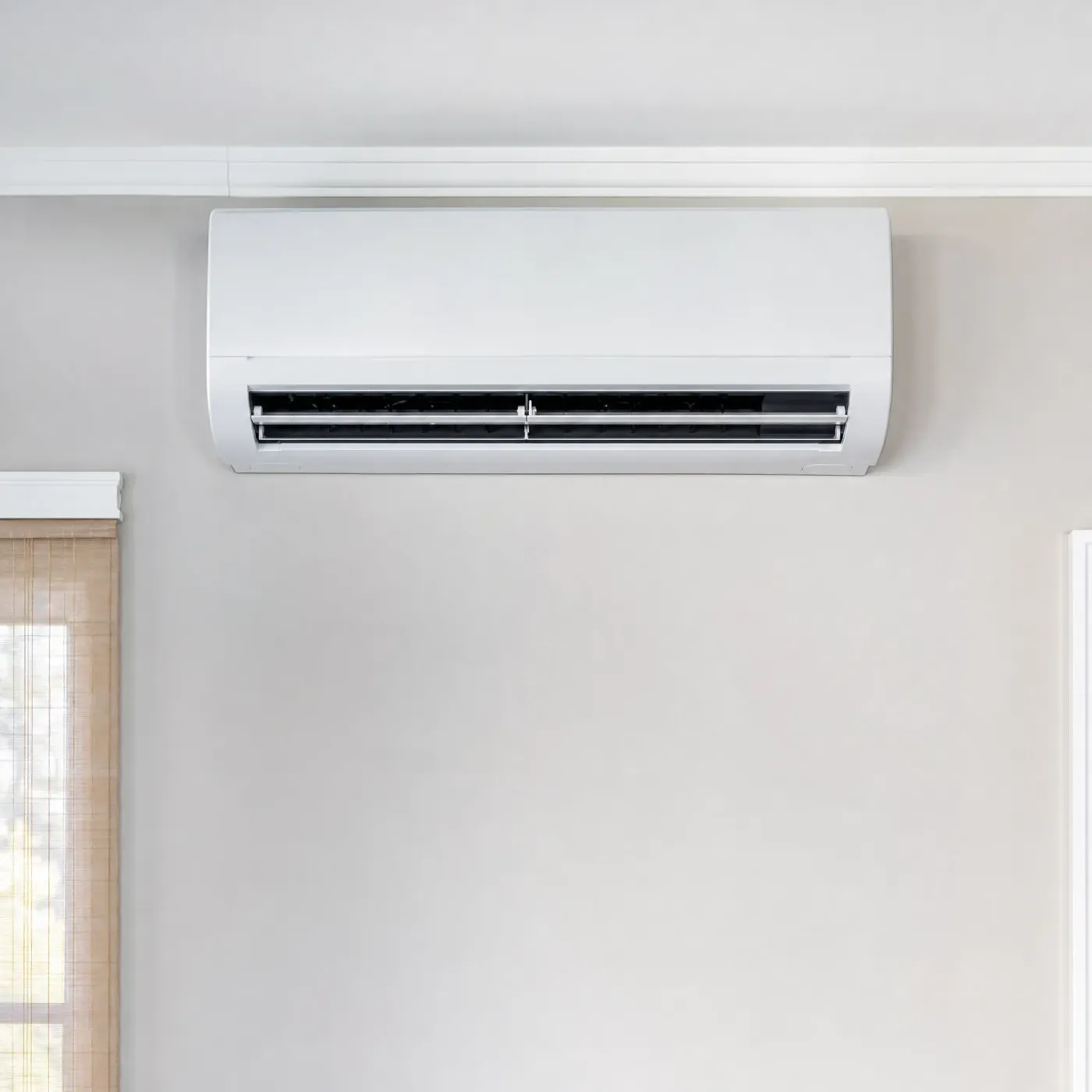
This is what a mini split looks like when the coil stays clean. No smell when it kicks on, whether it's blowing cool air in July or warm air in January. Nothing on the vents, nothing sitting on the coil for heat mode to stir up.
A musty or sour smell when your mini split switches to heat usually means dust or mold sitting on the indoor coil, and heat mode brings the smell out because warm air pulls it off the coil and pushes it right into the room. Mini splits sit idle in heating mode for months while they run cooling through the muggy Texas summer, and moisture left on the coil from all that cooling gives mold something to grow on. A burning smell is different and points to dust baking off the heating element the first time it fires up for the season, which usually clears in a few minutes. If the smell lingers past that, or smells like plastic or something electrical, the heat strip or a wire connection may be the problem, and that is not something to run and wait out.

That wet streak under the office unit isn't from winter at all. You noticed it on a summer afternoon, condensation darkening the wall below the indoor unit while the AC ran. You laid a towel down to catch the drip and went back to work. Months later, the first cold snap hits and you switch the same unit over to heat. That sour smell fills the room within minutes. The streak is long gone, painted over or faded, but whatever soaked into the wall and the coil behind it never fully dried. Heat mode just brings it back out into the air you're breathing at your desk.
A sour smell when you switch to heat usually isn't new. You'd have caught it before, when the unit was cooling and running most of the day. In heat mode it only runs in short bursts, so you might notice it most when you first turn the heat on in the morning, or when you walk past the unit and catch it for a second before it fades. Look at the wall or ceiling near the indoor unit for a faint dark patch, and check the drain line outside for a slow drip or none at all. If the smell has been there for more than a week or two, the coil likely needs a real cleaning, not just a filter swap.
This is what a mini split looks like when the coil stays clean. No smell when it kicks on, whether it's blowing cool air in July or warm air in January. Nothing on the vents, nothing sitting on the coil for heat mode to stir up.
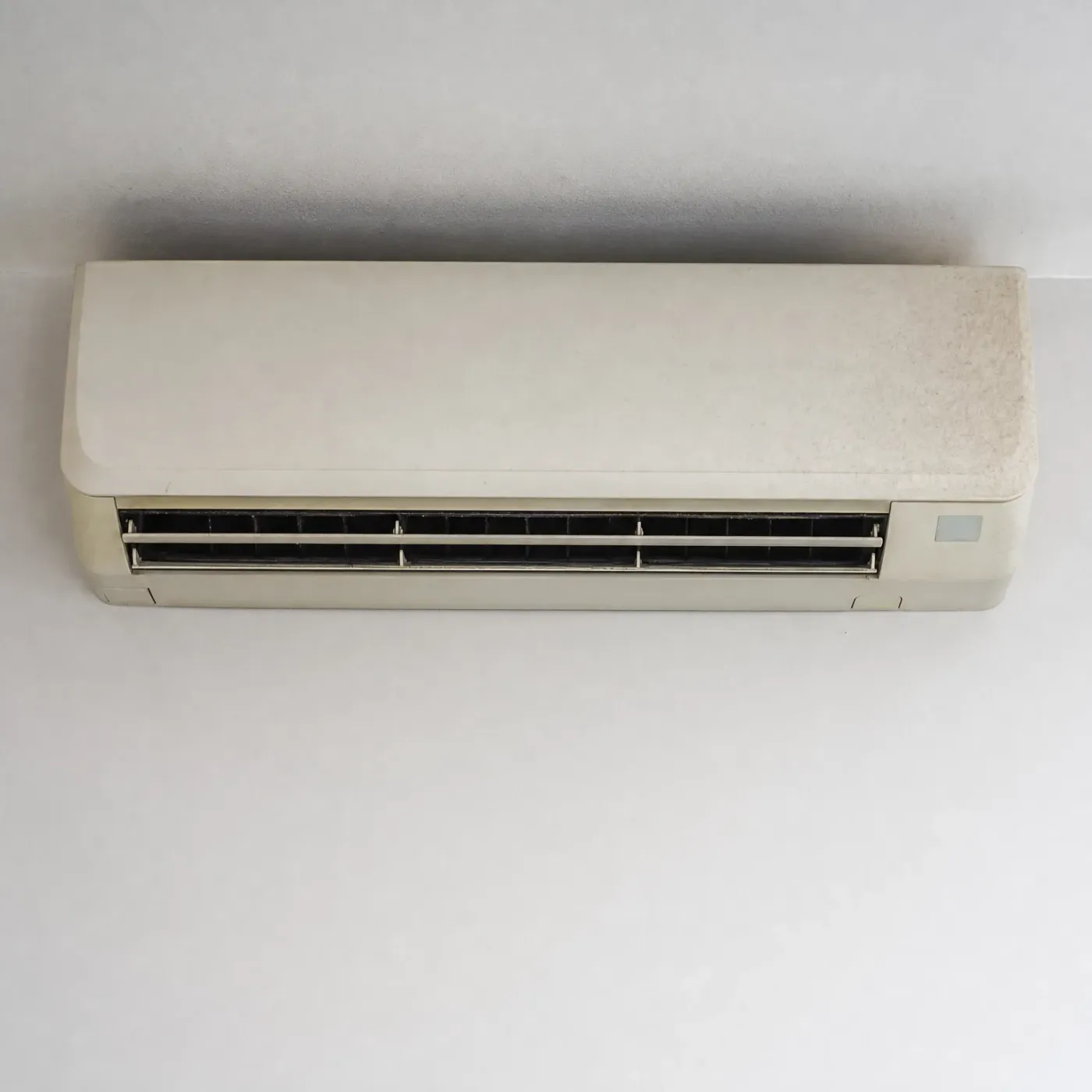
Dust sits on top of the unit and dark residue rings the vents. That residue is what's growing on the coil behind it. Heat mode warms it up and pushes the smell straight into the room, worse than it ever was running cool all summer.
You've probably already tried running the fan on its own for a while, or wiping down the filter, hoping the smell would just stop showing up. It doesn't, because the coil behind that filter is where it's actually coming from, and that's not something you can reach with a vacuum or a rag. Right now the options are calling around to a few HVAC companies, explaining the smell and when it happens, waiting on quotes, and trying to tell which contractor actually knows mini splits versus one who mostly works on central systems. Send the request instead and that work is off your plate. One contractor who knows this equipment gets your information and reaches out, so you're not spending your evenings on hold or repeating yourself to the next company on the list. Through a Texas winter, heating is the one mode you can't just avoid running. Getting the coil looked at now means you're not stuck choosing between a cold house and a smell you can't ignore.
An indoor coil holds moisture most of the summer, since that's what a mini split does when it cools your home, pulling humidity out of the air and running it off through the condensate line. Mold and bacteria grow in that film if the coil doesn't get cleaned. Switch the unit to heat and the coil goes dry and warm instead of wet and cool. Whatever was growing on it dries out and the smell left behind gets pushed into the room along with the heat. It's not that heat mode causes the problem. It's that heat mode is what finally lets you smell it.
A coil free of mold and dust doesn't hold a smell in either mode. Air passes through it and picks up nothing on the way out, whether it's cooled in July or warmed in January. A repair that addresses this cleans the coil itself, not just the filter in front of it, since the filter only catches what's floating in the air before it reaches the coil. The coil is a different surface with a different problem. Once it's clean, heat mode stops being the time you notice something was already there.




Since most Texas homes heat with electricity, every hour your mini split runs in heat mode shows up on the bill at 15.40 cents per kilowatt-hour. A dirty coil doesn't just carry a smell into the room, it makes the unit work harder to put out the same heat, so you're paying more for less.
EIA-861 2025 statewide residential average
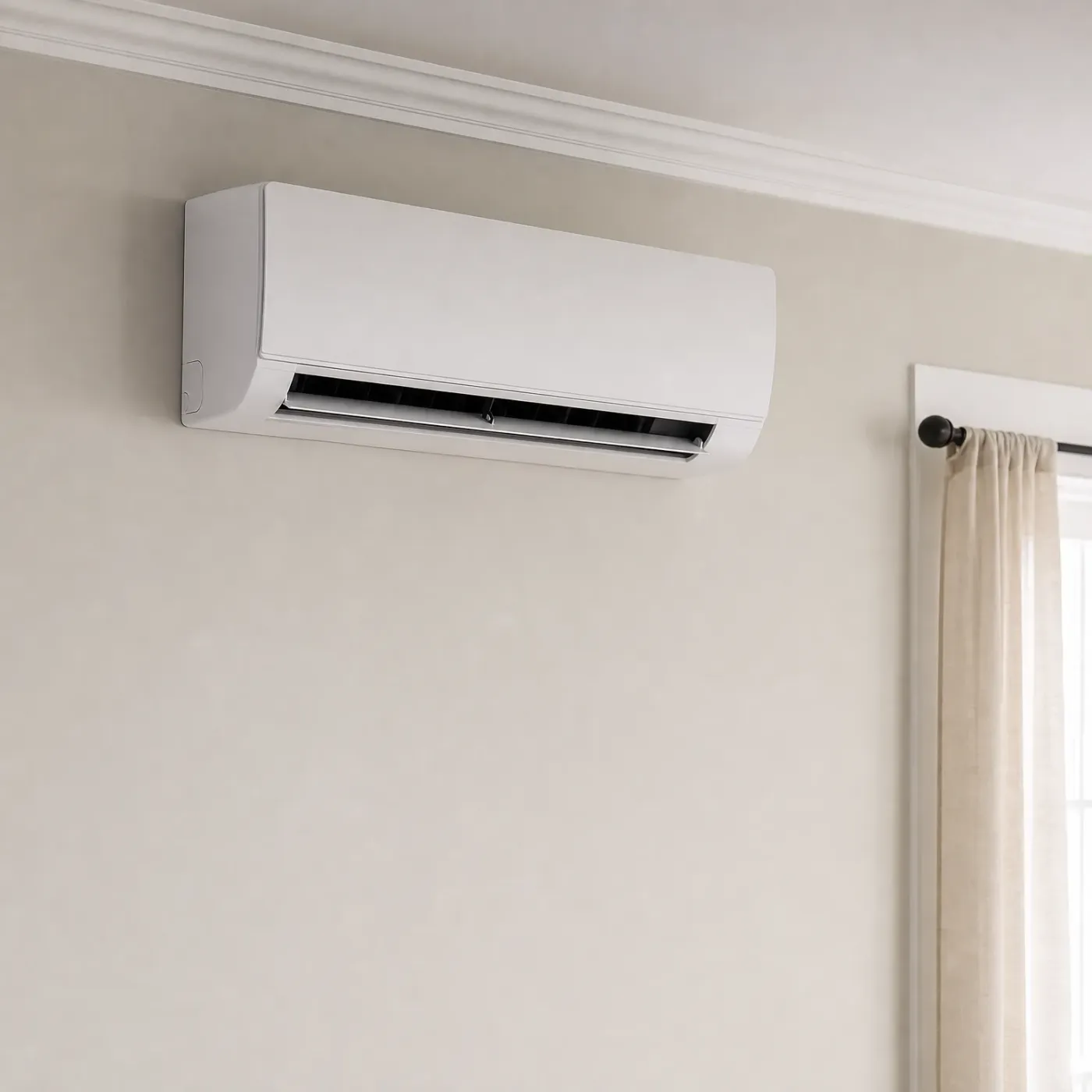
This is a mini split that isn't working for it. Mounted up near the crown molding, casing white, nothing on it. Set it to heat in December and warm air comes out with no smell attached, because there's nothing sitting on the coil for the air to pick up.
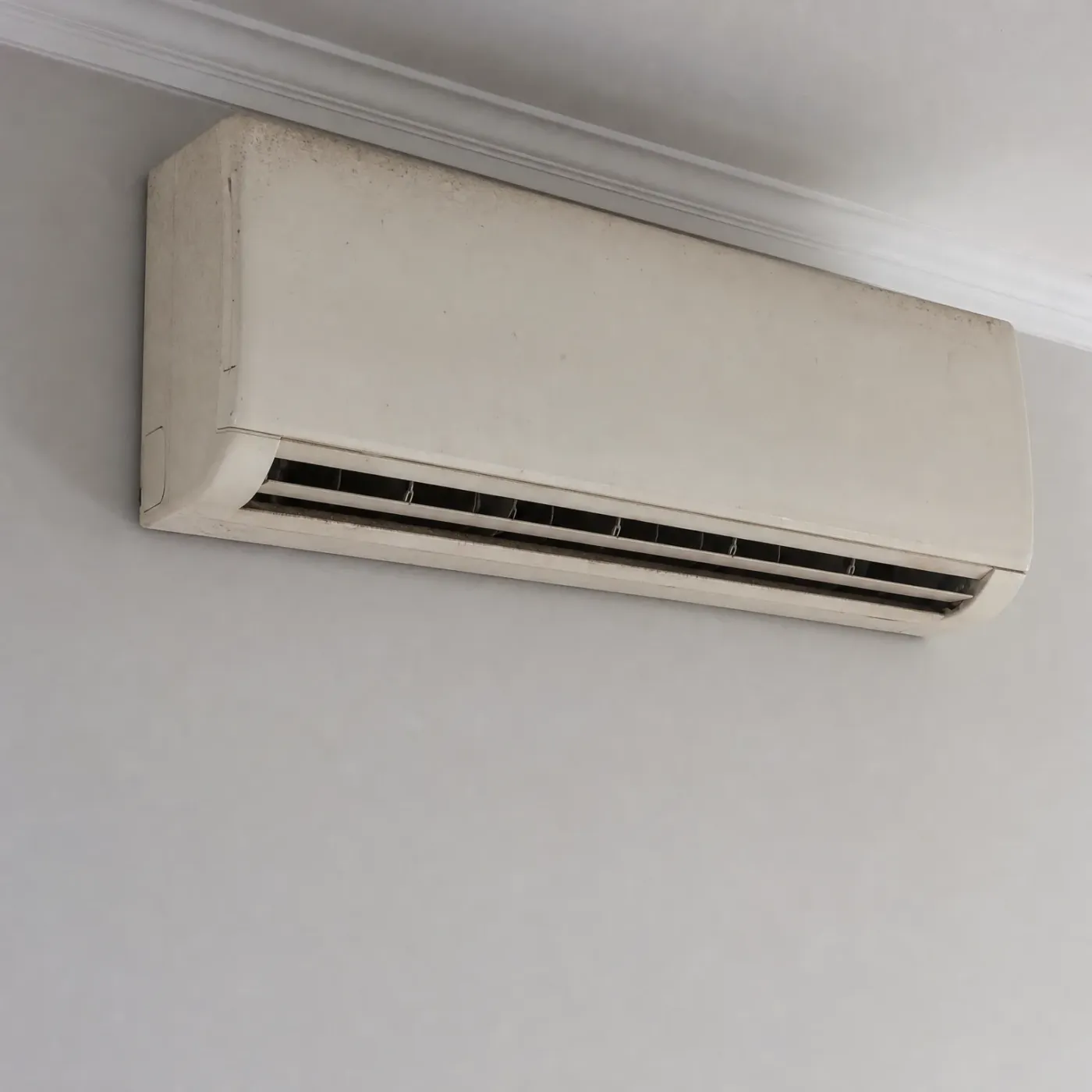
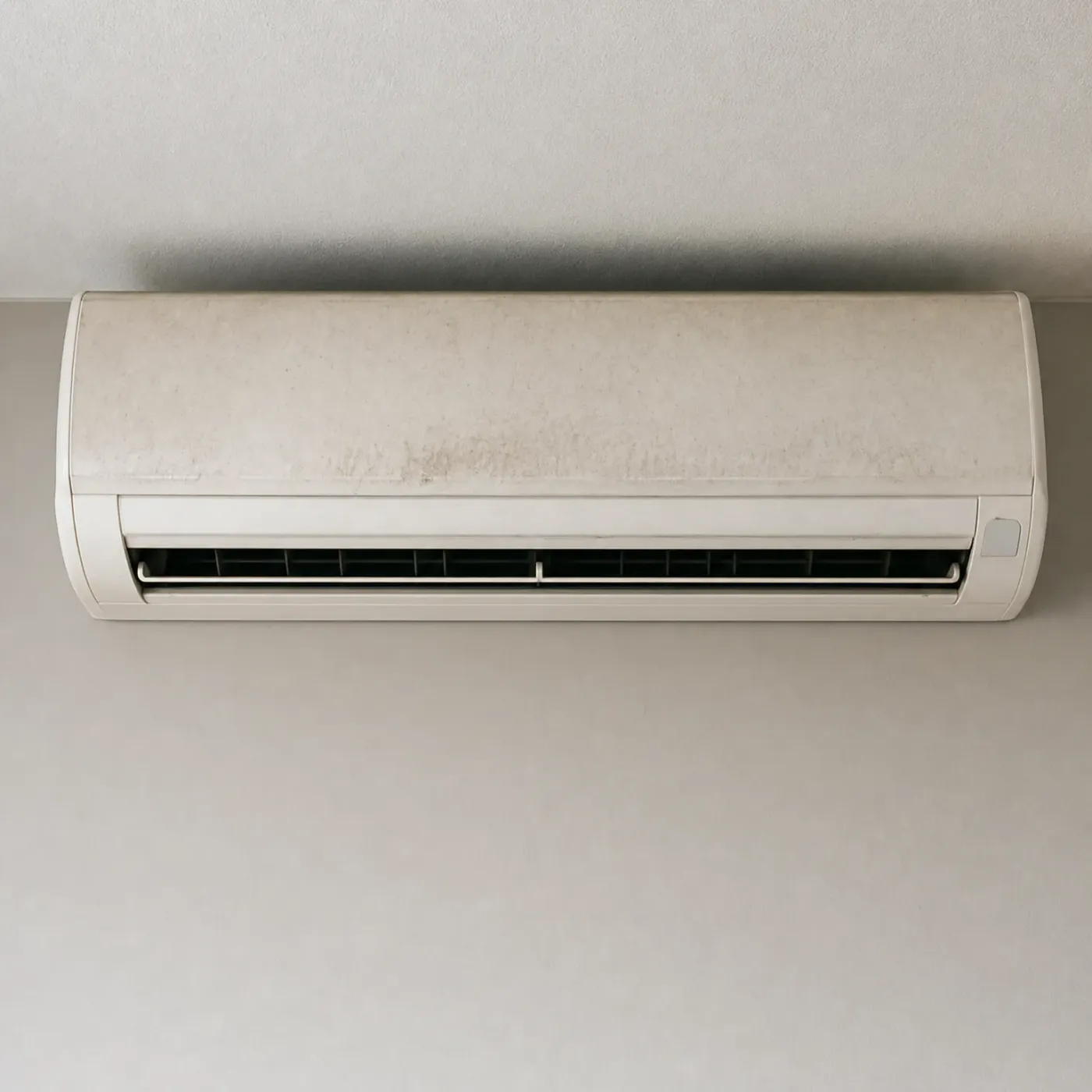
Same spot on the wall, same kind of unit, but the casing has gone grey and dusty. That's what builds up on the coil behind it too, out of sight. Switch this one to heat and the air moving across that coil carries the smell straight into the room.

A sour smell in heat mode comes from the indoor coil, not from anything wrong with winter or with the unit's wiring. Whatever's sitting on that coil from months of summer condensation gets stirred loose every time heat mode kicks on. Cleaning it is a repair job, not something a filter swap or a few hours of fan-only running will fix.
You could spend the next few days calling around, explaining the smell to three or four different shops, and comparing quotes that all sound about the same. Or you could send one form and let someone sort out who's available and qualified while you get back to your day. The smell doesn't get worse waiting on you to make calls, but there's no reason to keep smelling it in your office or bedroom either.



A coil repair clears the smell at the source instead of just airing out the room for a day. Finding someone qualified to clean a mini split coil properly usually means calling around, explaining the smell to a few different shops, and sorting through quotes before you even get someone scheduled. Send the form here and that part is done. You get matched with a licensed contractor and go straight to getting the unit fixed, without the legwork of finding them yourself.
Describe your mini split job once, to one pro.
It costs nothing to send, and you don't have to hire anyone.