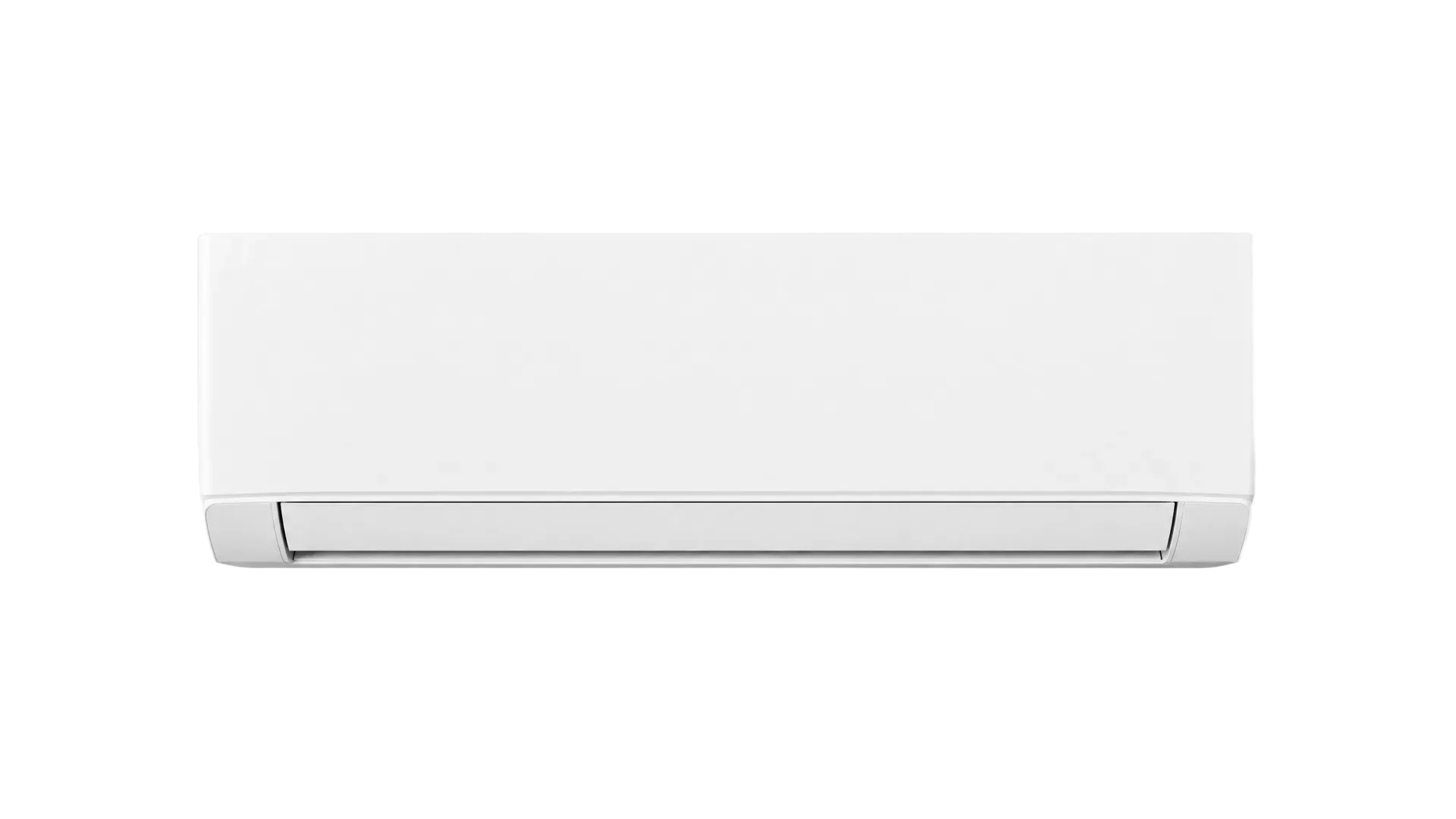
Every heating cycle
Most homes here heat with electricity, so a mini split stuck blowing cold air isn't a minor annoyance. It runs that way every time the system kicks on until someone fixes the valve.
A mini split that blows cold air when it's set to heat usually means the system is stuck in defrost, or the reversing valve that switches it between heating and cooling isn't shifting all the way back. During a Texas winter, outdoor temperatures swing enough that frost can build up on the outdoor unit, and the system briefly runs cooling to melt it off before switching back to warm air. If that switch doesn't complete, you get a steady stream of cold air instead. It can also mean the refrigerant charge is low, or the unit's sensors are misreading the temperature and never telling the compressor to heat. Since most homes here rely on electric heat, a mini split stuck like this isn't just uncomfortable, it's running power for little or no warmth. The fix depends on which part is failing, and that calls for someone to look at the unit directly.
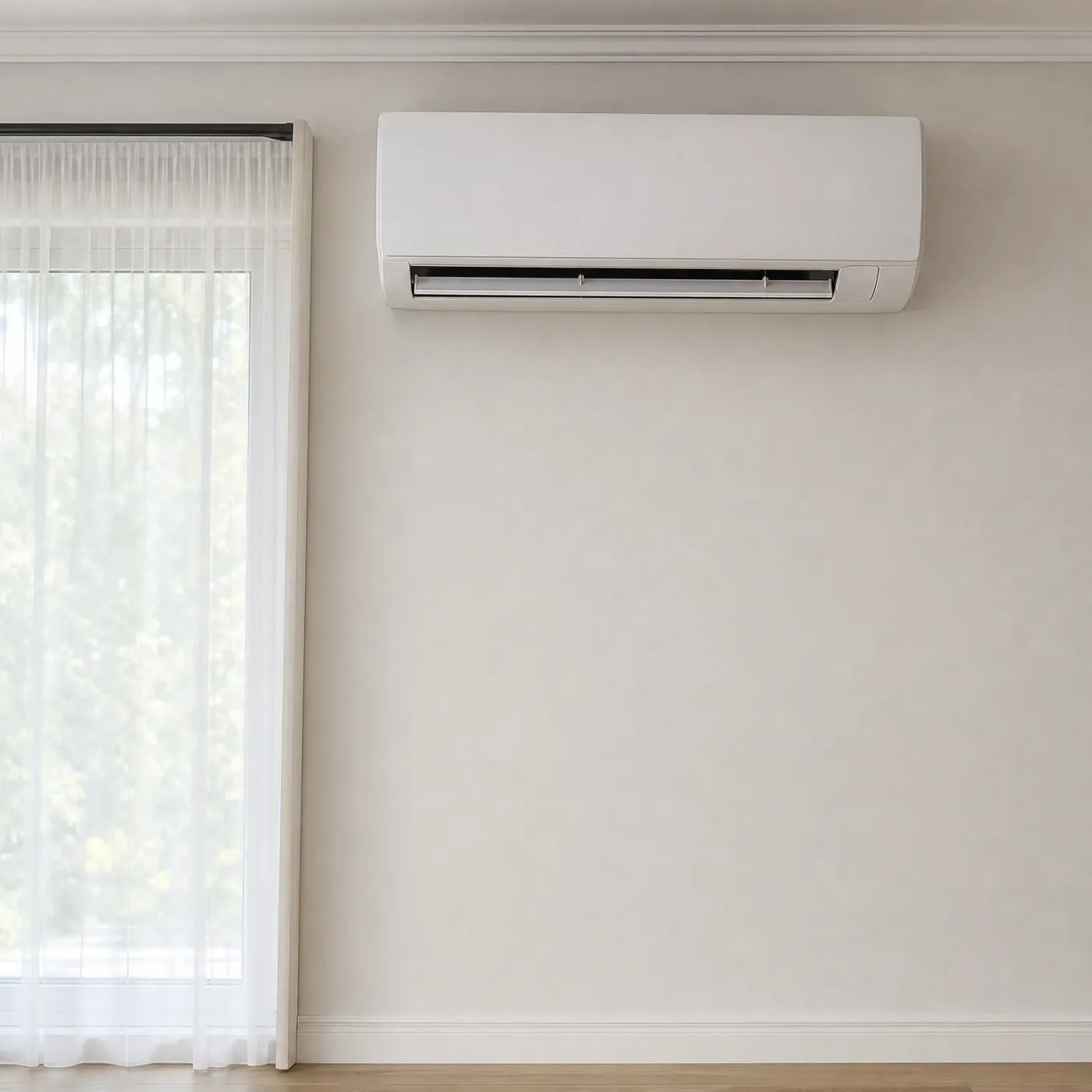
Most homes here heat with electricity, so a mini split stuck blowing cold air isn't a minor annoyance. It runs that way every time the system kicks on until someone fixes the valve.
A reversing valve that won't seat all the way is a single part failing, not a sign of a dying system. Most mini splits keep running fine once it's replaced.

A mini split stuck in cooling doesn't ease up because it's January outside. If the people in your house are relying on it to stay warm, they're sitting under vents pushing cold air while the thermostat reads heat. Most houses in Texas don't have a furnace to fall back on, so this is the heat. When it's not working right, there's nothing behind it.
You don't have to figure out whether it's the reversing valve or a defrost cycle that won't release. That's a call for someone who works on these systems daily. Send in what's happening and a contractor who handles mini splits in your area will reach out to you directly. From there it's off your plate.

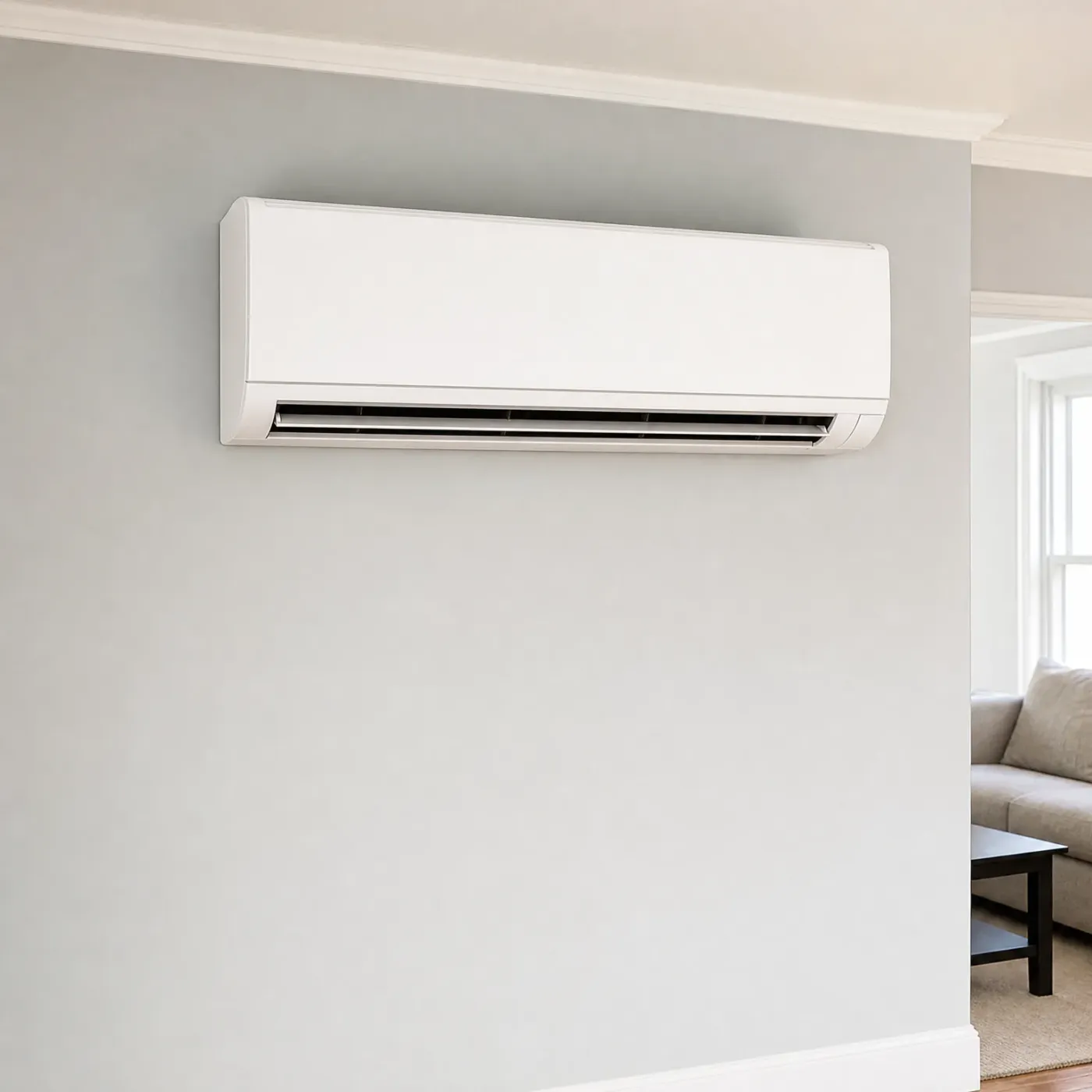
This is what heat looks like. The unit sits high on the wall, quiet, air coming out warm. The sofa and coffee table behind it tell you the room's at a normal temperature and nobody's thinking about the thermostat at all.
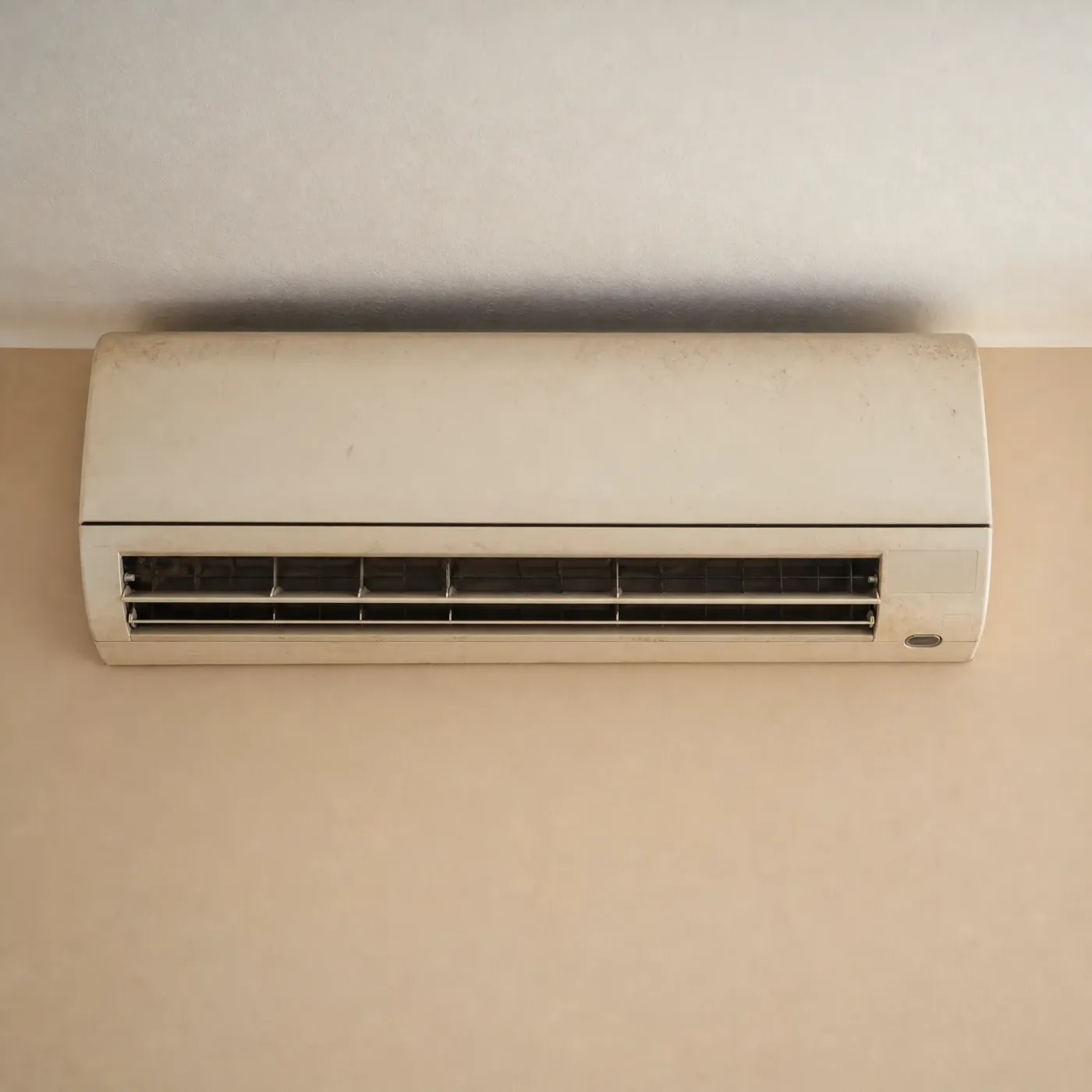
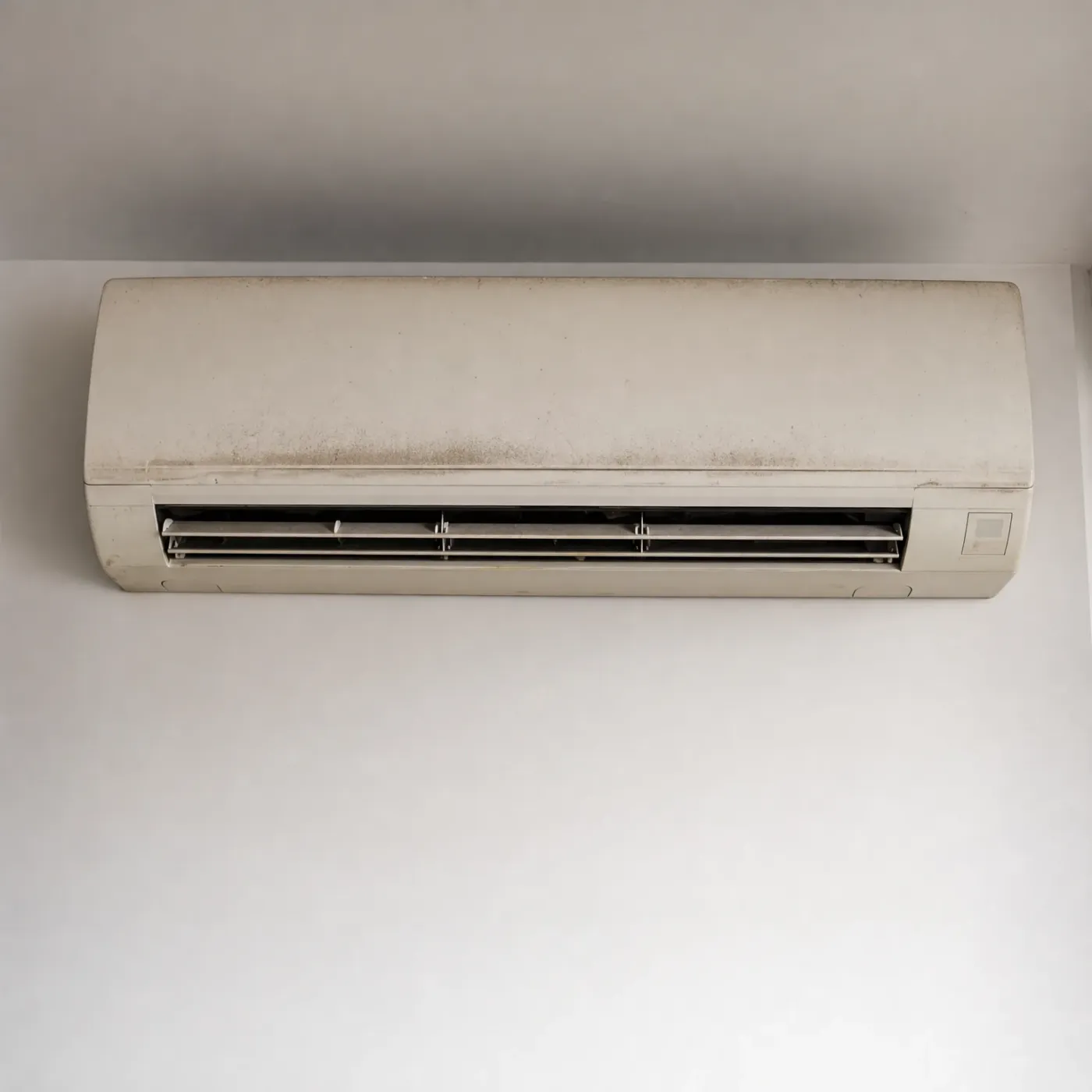
The yellowing on the case and the dust on the louvers say this unit has been running a long time without anyone looking at it closely. Set it to heat and it still pushes cold air, because the valve inside isn't switching over.
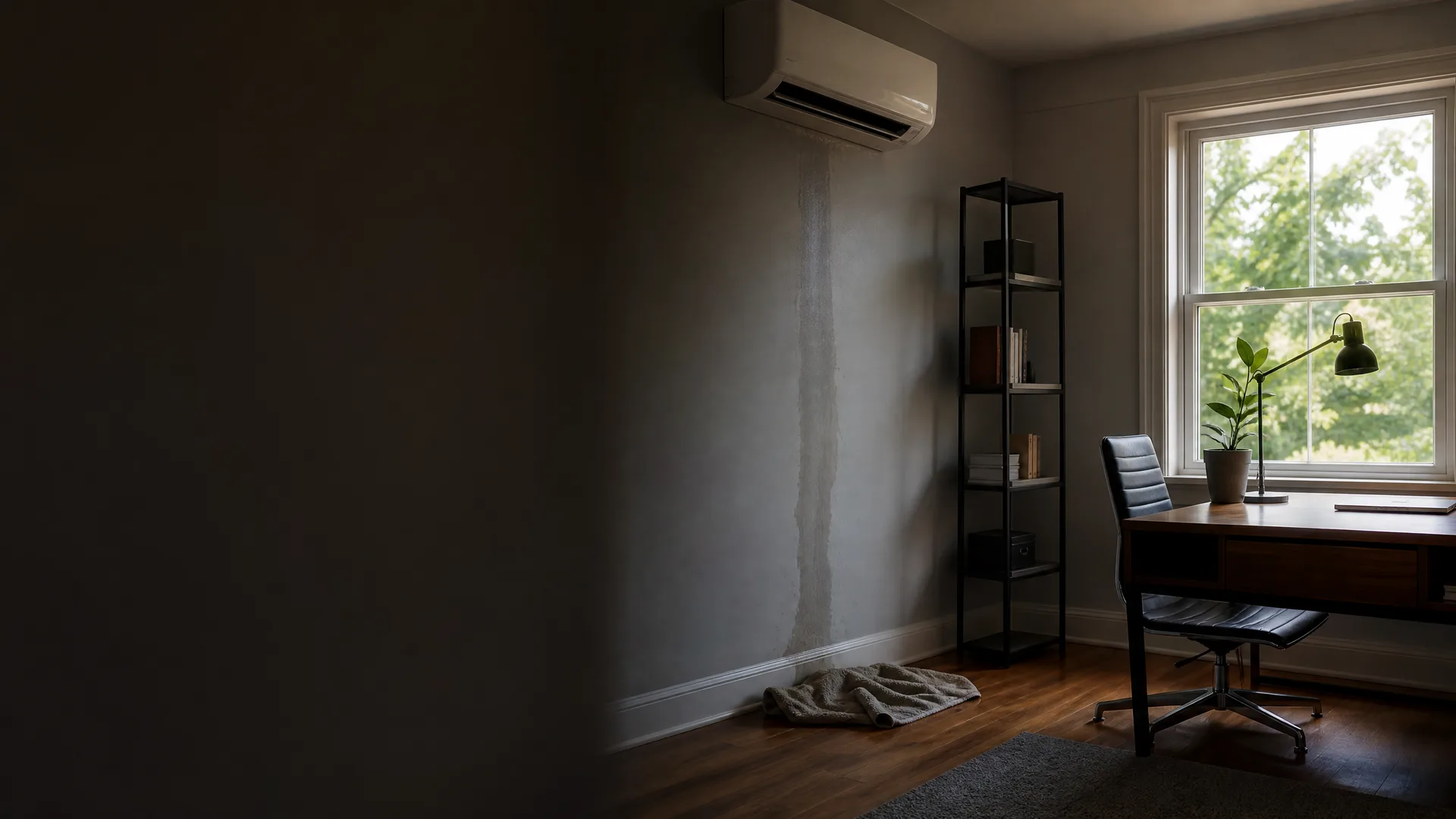
You've been at the desk since lunch, laptop propped on a stack of folders, and you notice the wall first, not the air. A streak running down from under the indoor unit, dark against the paint, following the stud line toward the baseboard. You already put a towel down this morning and it's soaked through again. The unit's been running warm air fine, but something's letting water past it in the Texas humidity, and now it's finding its way into the drywall instead of the drain line. You stand there a second, towel in hand, deciding whether to call someone now or wait and see if it spreads.
Send it once and finding someone is no longer on you.
You're not committing to anything by asking.
Space heaters in the rooms people actually use. Extra blankets at night. Checking the thermostat out of habit even though you already know what the vents are doing. Some households just turn the mini split off and stop fighting it until someone can look at the valve. It works, in the sense that nobody's actually cold, but it means running a space heater on top of a system you're still paying to have on, and someone still has to remember to unplug it before bed.
A technician checks whether the reversing valve is seating fully or stuck partway, and whether the system's defrost cycle is ending the way it should. Once the valve seats where it belongs, the indoor coil switches over and the air coming out matches what the thermostat is set to. No more space heaters staged around the house, no more checking vents with your hand before you trust them. The mini split goes back to being something nobody in the house has to think about.




Thermostat calls for heat, so the reversing valve gets a signal to switch.
The valve's slide shifts to reroute refrigerant through the indoor coil.
If the slide doesn't fully seat, refrigerant keeps flowing the cooling way.
The indoor coil runs cold because the system is still acting like summer.

A reversing valve problem doesn't ease up when the air outside gets heavier. Summer dew points here average 68°F, according to NOAA climate data, and that thick air is part of why a mini split works hard all year once something inside it is off. A unit stuck blowing cold in winter is the same valve that has to switch cleanly come summer, routing refrigerant the other way to pull moisture out of air this heavy. If it won't seat right in one direction, there's no reason to trust it in the other. You'd notice it as a room that never quite feels dry, even with the thermostat set low.
NASA POWER T2MDEW county cells weighted by homes
You set the thermostat up and the air coming out still feels cold on your hand. The room doesn't warm up no matter how many degrees you add. The outdoor unit is running, you can hear it, but nothing changes inside. Some units cycle between warm and cold without settling into one or the other. A few show a fault code on the indoor display, a few don't show anything at all. If this started after a cold snap, the valve likely froze or hung up trying to switch over. If it's been doing this for weeks, the valve isn't shifting at all, and the house will keep heating on whatever space heaters or blankets can cover until it's looked at.
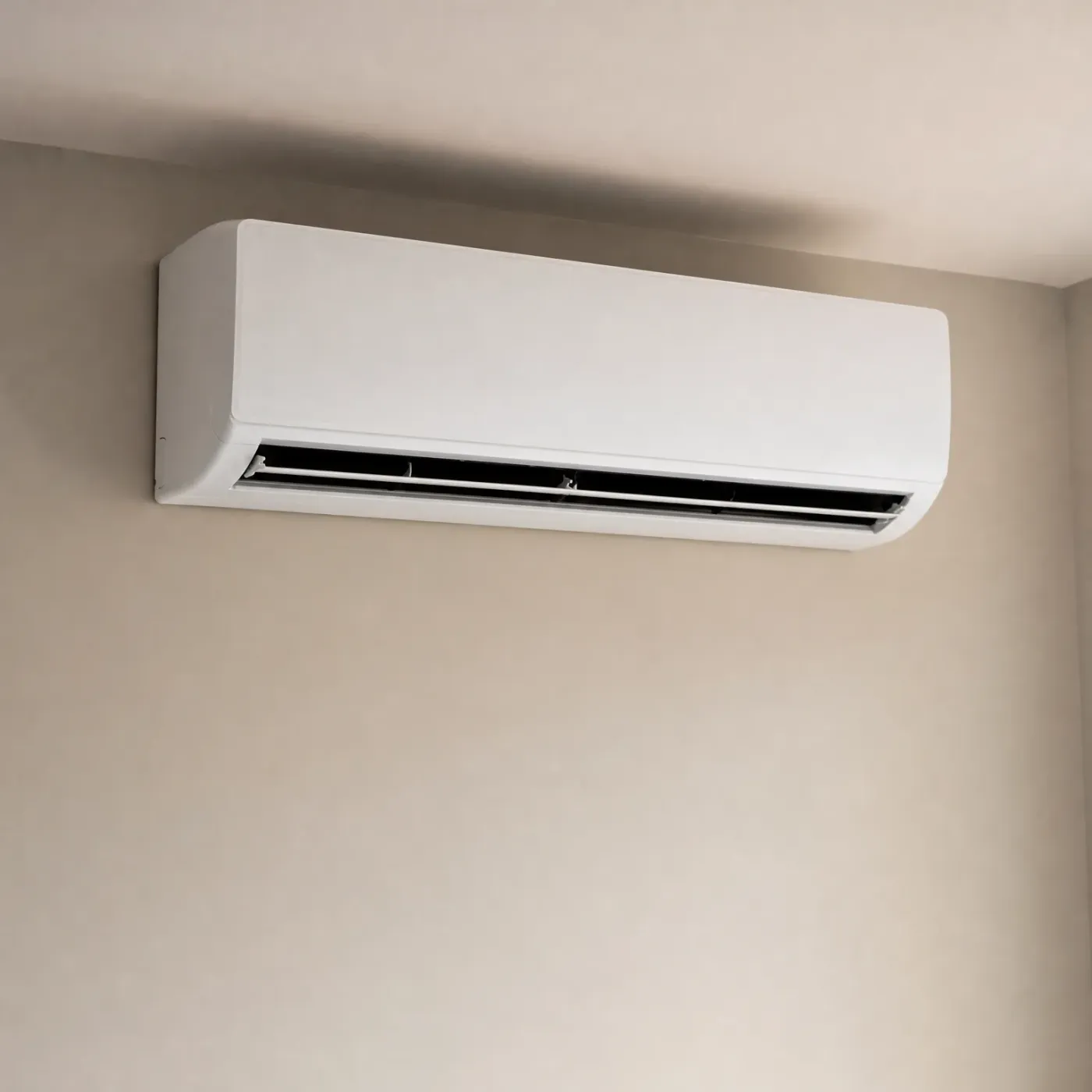
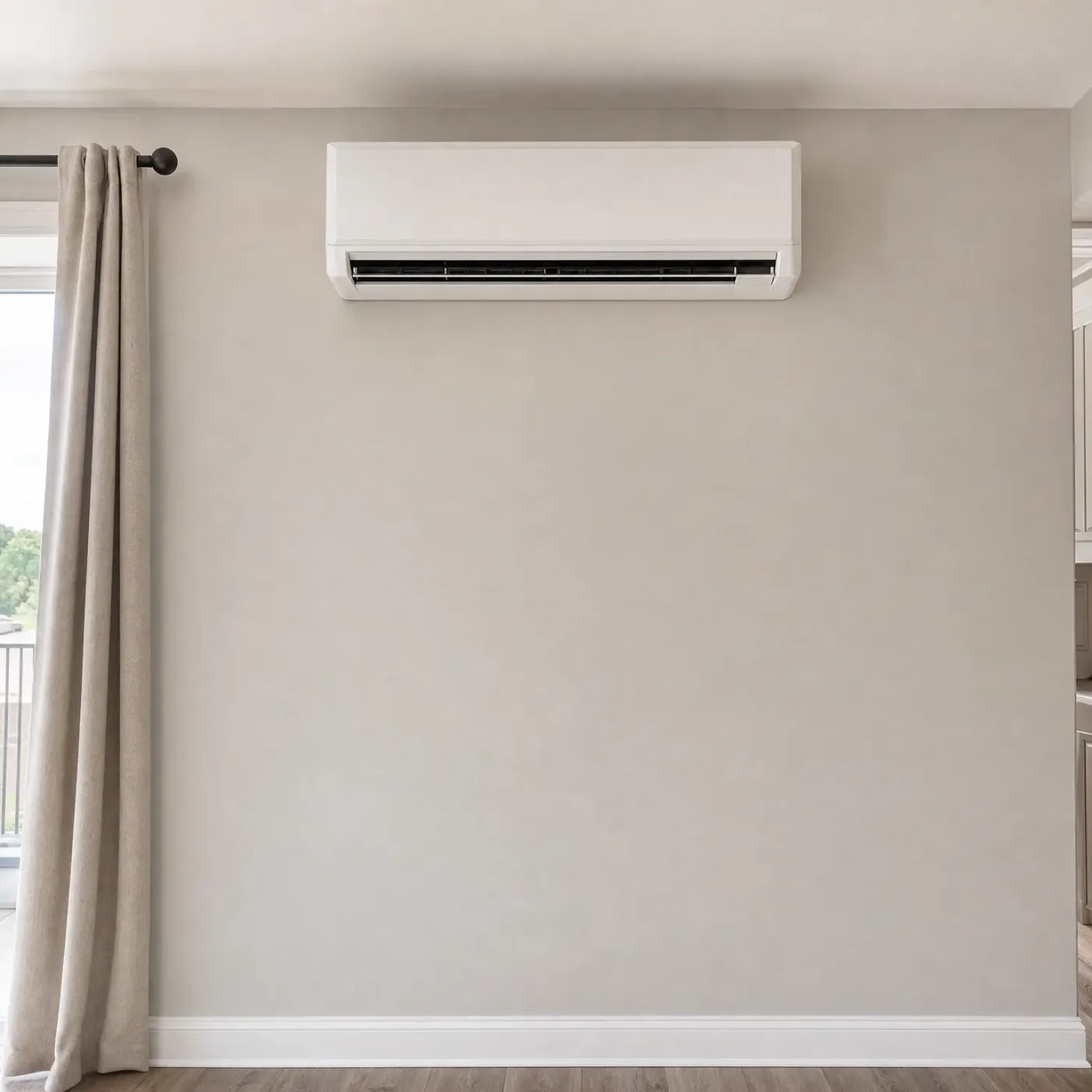
Closed up clean, mounted high in the corner, nothing to notice. The grille along the bottom is where the air comes out, and when the system's working, what comes out matches what the thermostat says. Nobody in the room is looking at it.
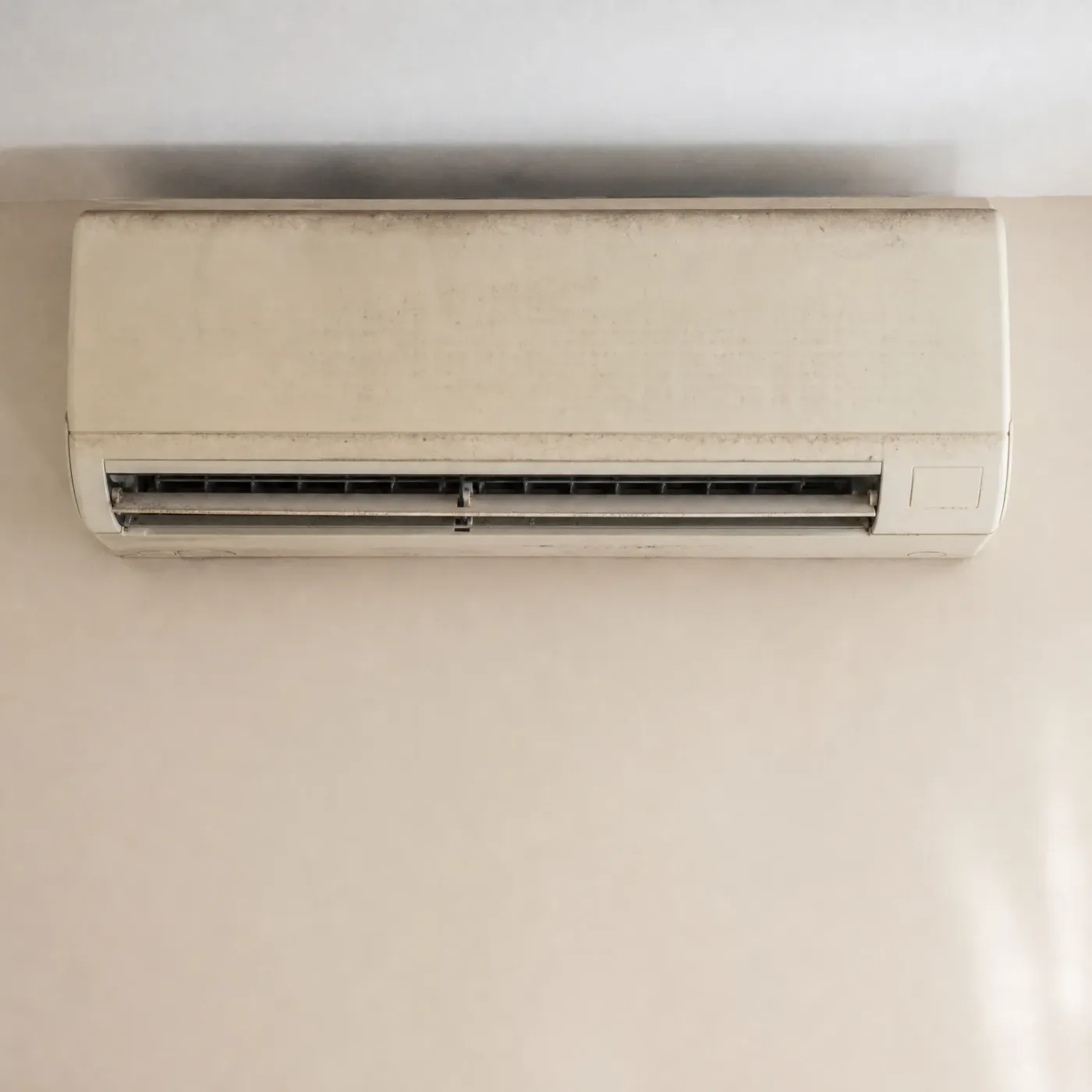
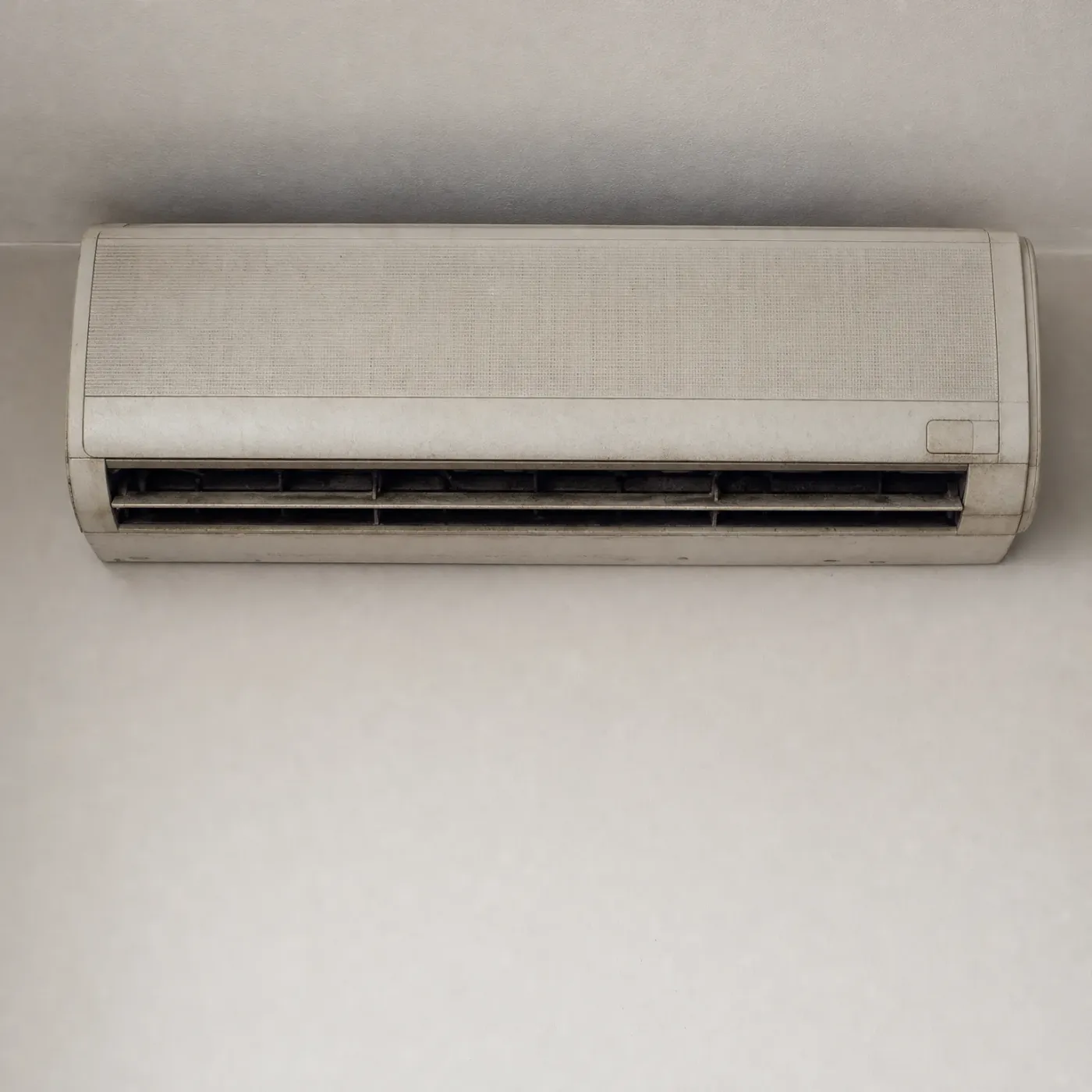
The casing's gone dull and dusty, discolored in a way new units never are. That kind of wear points to a system that's been running wrong for a while, cycling constantly because the valve never seats and the room never gets warm.
You're paying 15.40 cents per kilowatt-hour to run that mini split, and a stuck reversing valve doesn't lower the bill. The outdoor unit still runs, the compressor still draws power, you just get cold air for it instead of heat.
EIA-861 2025 statewide residential average
A mini split that blows cold air on a heat setting almost always comes down to the reversing valve, the part that switches which way refrigerant flows between heating and cooling. When it doesn't seat all the way, the indoor coil keeps acting like it's in cooling mode no matter what the thermostat says. The outdoor unit doesn't know the difference. It runs, the compressor draws power, and none of that effort turns into warm air at the vents. That's why the problem doesn't improve with time or weather. It shows up the same way every time the system calls for heat, because the valve itself hasn't moved. Some households adjust around it, running space heaters in the rooms they use most or piling on blankets at night, and that keeps people warm for the moment but leaves the valve exactly as stuck as it was. A stain down the wall under the indoor unit is often the first visible sign that this has been going on longer than it seems, condensation finding a path along the stud line while the system keeps cycling wrong. None of this responds to a new thermostat setting or a clean filter, because the issue isn't airflow or a sensor reading. It's mechanical, a valve inside the unit that needs to be freed up, reseated, or replaced. Until that happens, the system will keep pulling power and keep pushing cold air, and the bill won't reflect what's actually happening in the room.


A local pro for your mini split repair
Send the request today and let a mini split pro reach out to you.