When it's working right
A mini split that's heating properly runs quiet, with steady warm air coming out low along the grille. No rattling, no ice on the outdoor unit, no smell when it kicks on. If yours still does this, the fix now is likely small.

Cold has set in and the mini split is blowing cold or barely warm air instead of heat. You've checked the remote settings, maybe switched it off and on, and it still won't warm the room. With El Paso winters getting genuinely cold at night, a mini split that won't heat is more than an inconvenience, and you want to know what's actually wrong before you decide what to do about it.
A mini split heats by pulling warmth from the outside air, even cold air, and moving it inside. When nighttime temperatures drop here, frost can build up on the outdoor unit's coil faster than its defrost cycle clears it. If that coil stays iced over, the system can't absorb enough heat to warm your home, no matter what the thermostat is set to. A low refrigerant charge causes the same result, since the unit needs a full charge to move heat efficiently in cold weather. Either problem keeps the indoor unit from putting out warm air, and the outdoor unit is usually where the cause sits, not the one inside your room.
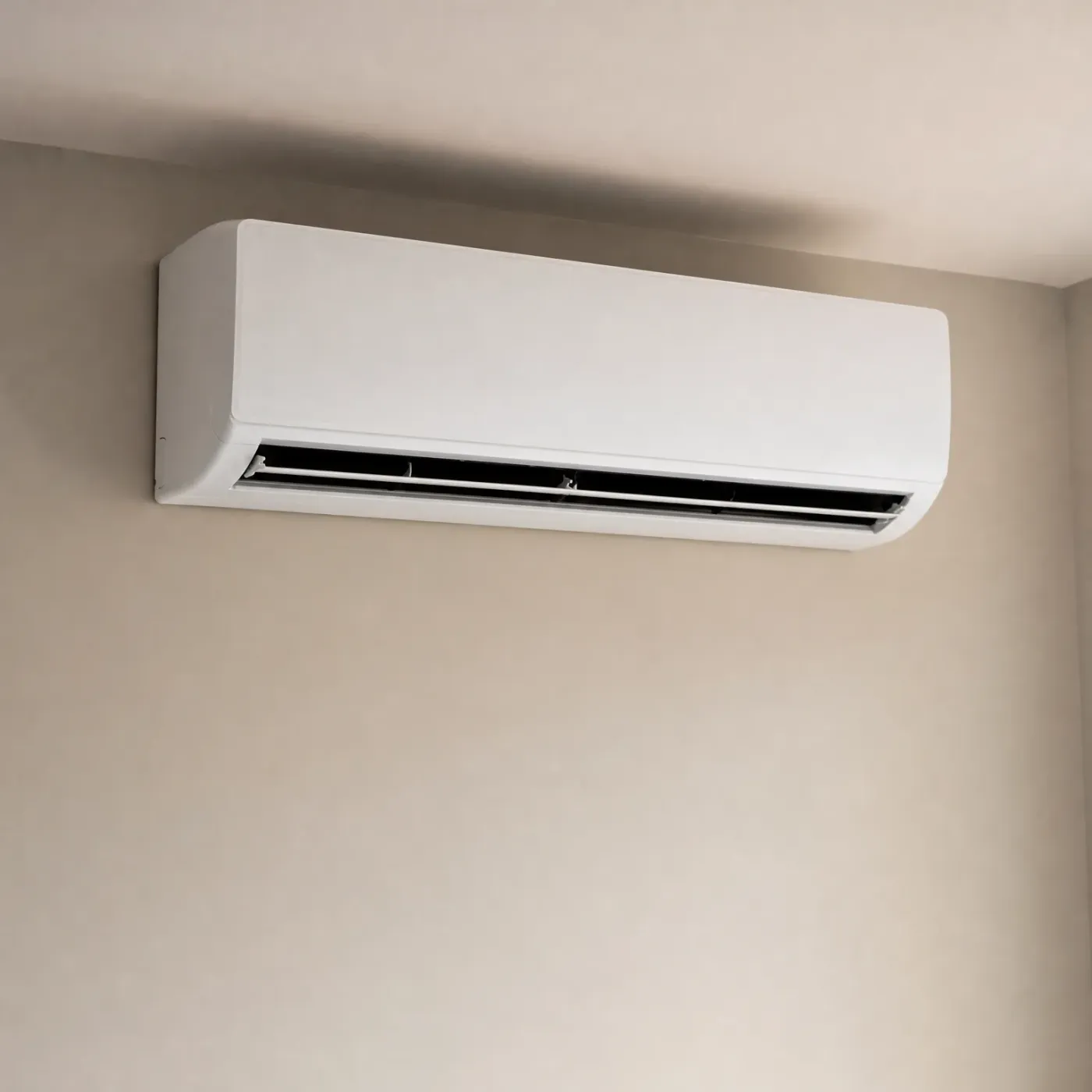
A mini split that's heating properly runs quiet, with steady warm air coming out low along the grille. No rattling, no ice on the outdoor unit, no smell when it kicks on. If yours still does this, the fix now is likely small.
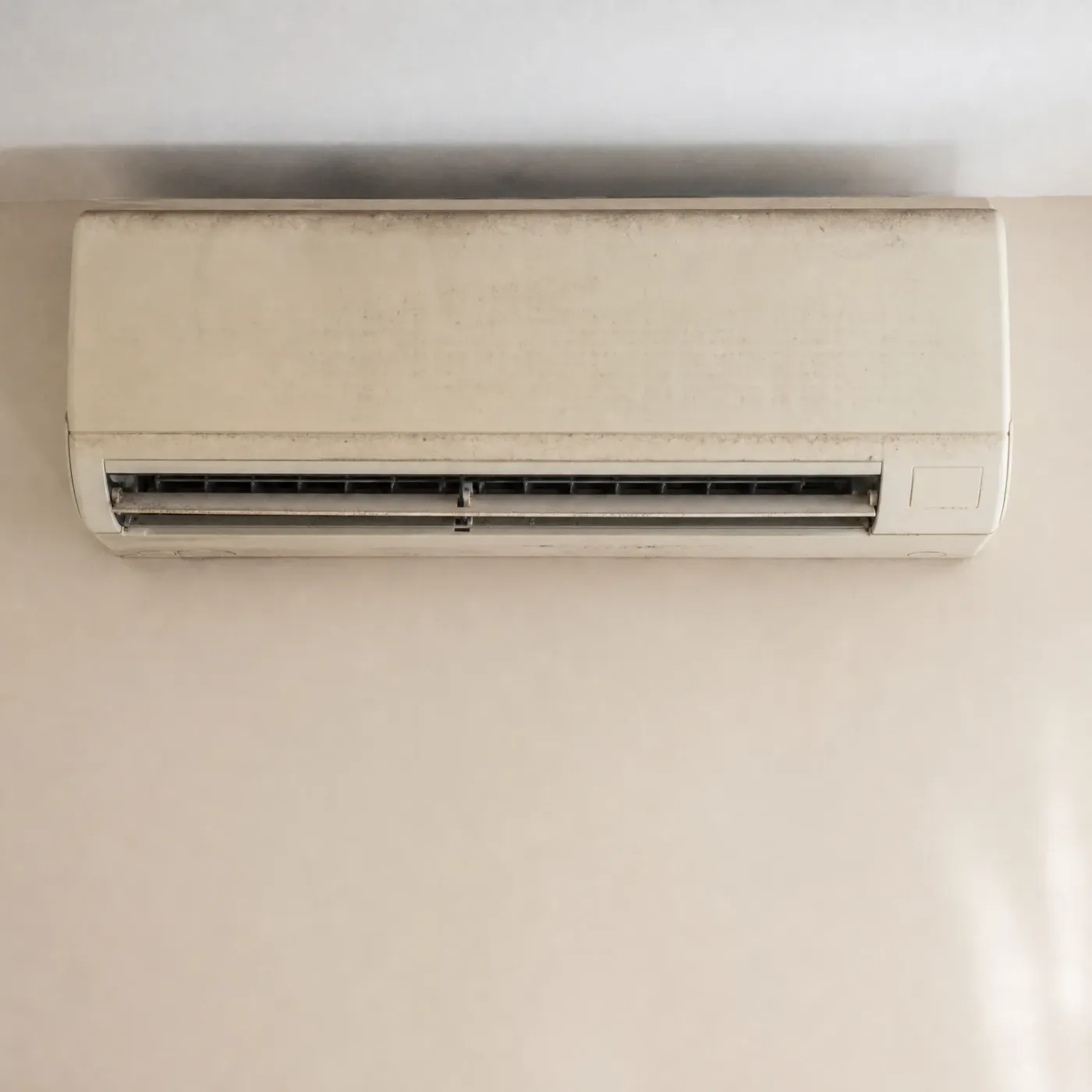
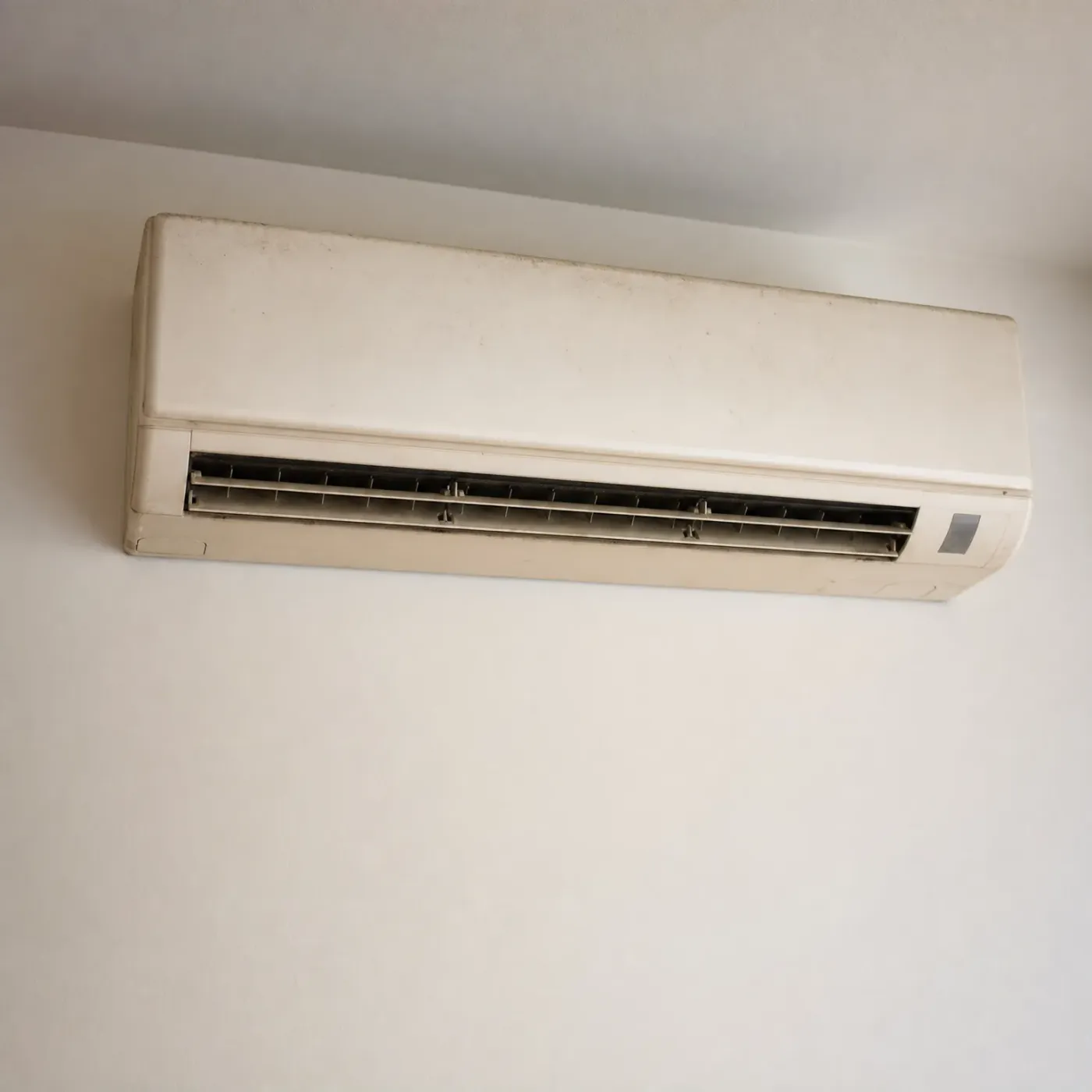
Caked dust and yellowed plastic on the indoor unit mean it's been running hard for years, maybe without a filter cleaning in a long while. A unit that looks like this and won't heat may have a failing part behind that casing, not just a dirty filter.
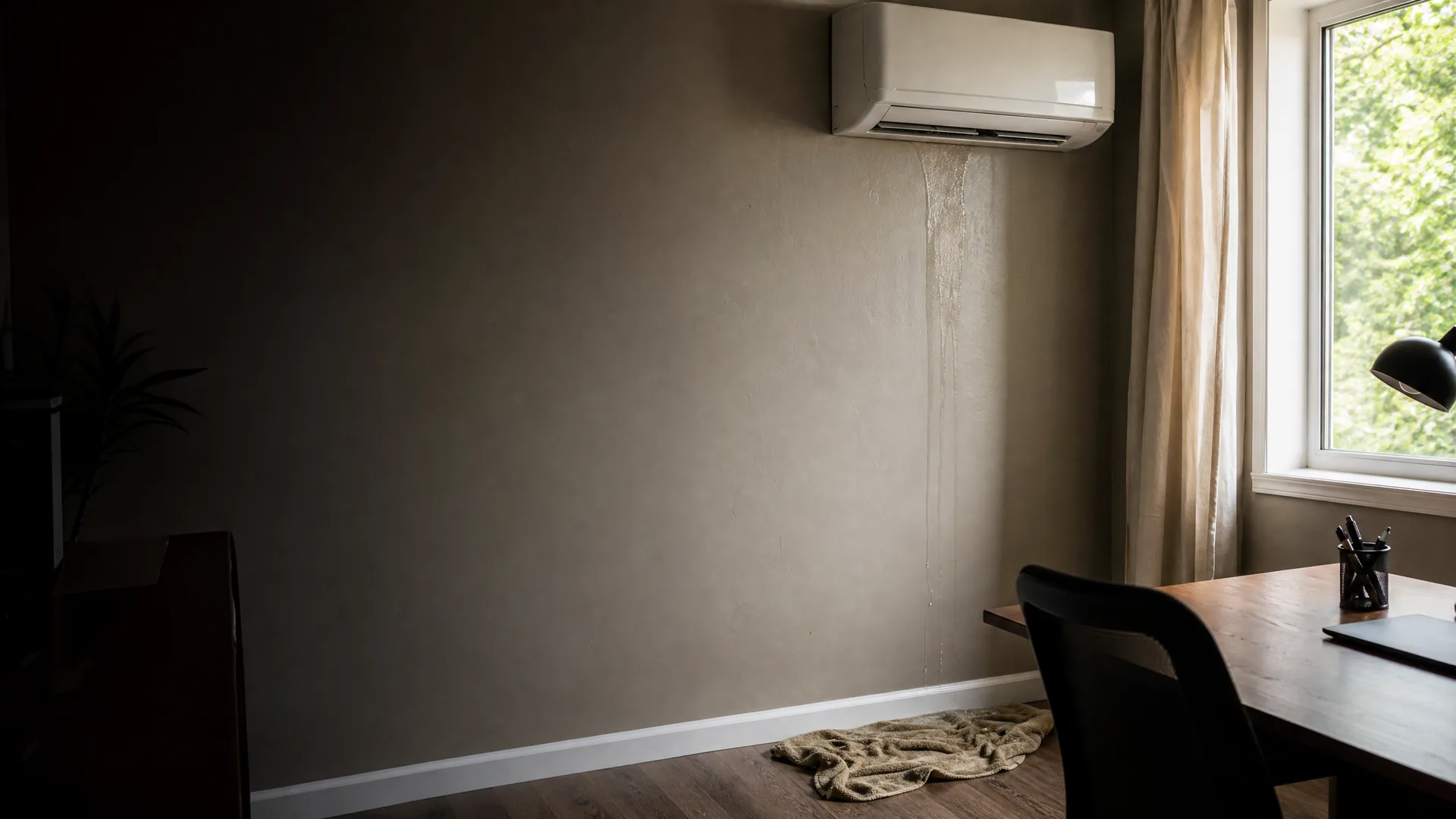
This is a summer afternoon, and the home office is warm with the sun coming through the window. You notice it on the wall first, a dark wet streak running down from the mini split indoor unit, soaking into the paint. By the time you pull the desk away, water has already pooled on the floor and you've grabbed a towel to keep it from reaching the baseboard outlet. The unit still hums along, blowing air, like nothing is wrong. You stand there with the towel under your foot, trying to figure out how long this has been dripping before you walked in and noticed it.
A mini split that won't heat in an El Paso winter isn't something to leave alone until you have a free afternoon. Nights here get cold enough that a unit blowing room-temperature air isn't keeping up, and whatever's wrong with it, a stuck reversing valve, a refrigerant leak, a bad sensor, isn't something you can see from the couch with the remote in your hand. Most people in this spot start calling around, get put on hold, describe the same problem three or four times to three or four different companies, then sit with quotes that don't even match because nobody looked at the same thing. That's the part that eats your evening, not the repair itself. Hand in what you're dealing with once and a contractor who works on mini splits in El Paso takes it from there. You keep your night. The unit still needs a real look, but you don't have to be the one making call after call to get it.
A mini split doesn't make heat the way a furnace does. It moves heat from the air outside into the house, using refrigerant to carry it, and a part called the reversing valve decides which direction that refrigerant flows. Flip the valve one way and the system cools. Flip it the other way and the same outdoor unit pulls in heat from the cold outside air and sends it inside. When that valve sticks, the unit keeps running but it's stuck doing one job, usually the summer one, no matter what the thermostat says. Cold nights bring a second problem. Once the outside temperature drops near freezing, frost builds up on the outdoor coil the same way it would on a freezer left open. The system is built to notice this and run a short defrost cycle to melt it off before it blocks airflow. That depends on a sensor reading the coil's temperature correctly and a control board acting on it. If either one is off, the unit can sit in defrost mode too long or skip it, and heating never resumes. A coil caked with dirt or debris has the same effect as frost, since the unit can't draw outside heat through a blocked coil. And if the refrigerant charge has dropped, even a little, heating mode shows it faster than cooling does, because pulling warmth out of cold winter air already asks more of the system than pulling heat out of summer air.
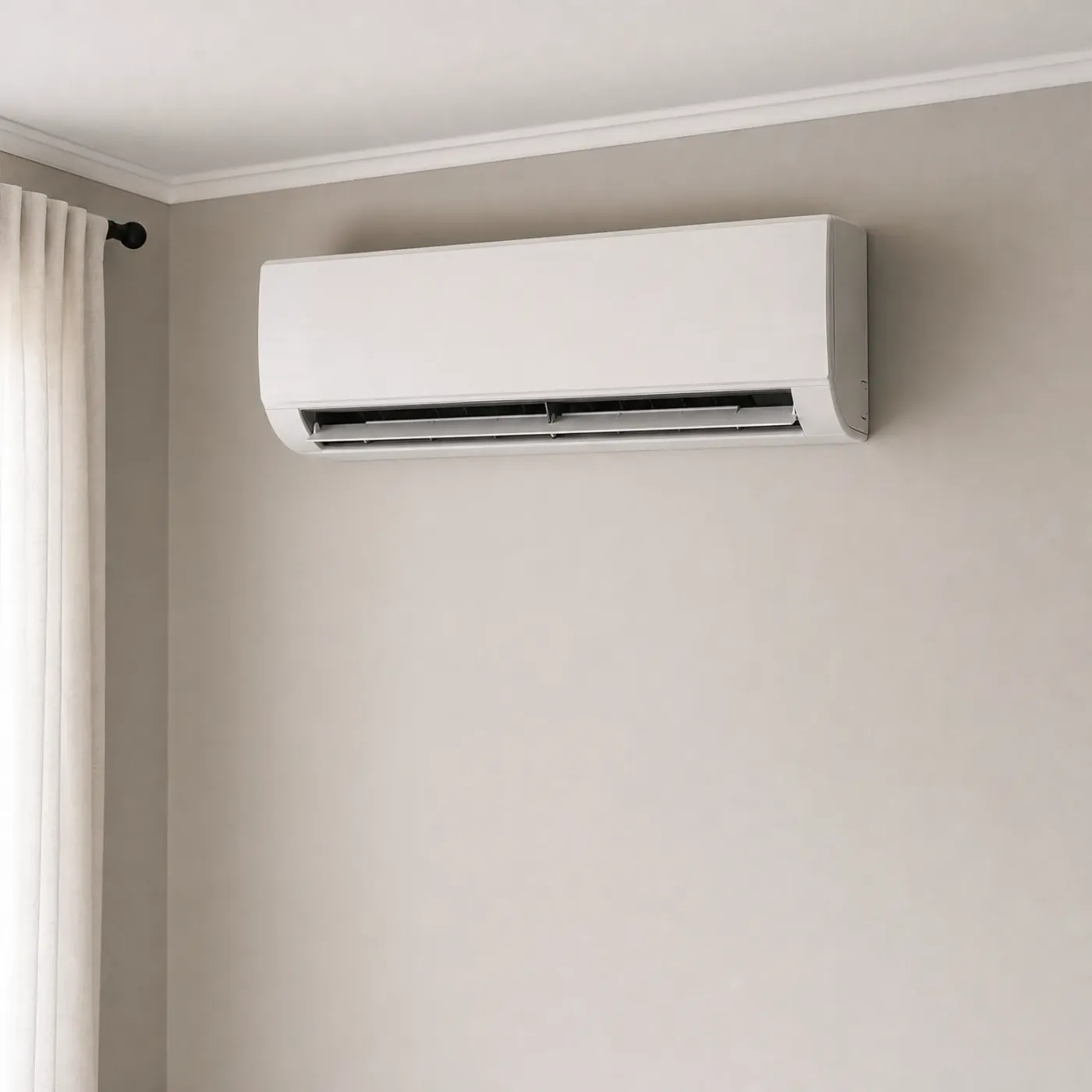




Cooling runs May through September
Heat has to run about five months here, November through March, so a stuck reversing valve leaves you cold for a real stretch.
Heat runs November through March
Cooling takes the other five months, May through September, so the same reversing valve has been switching back and forth twice a year already.
Power here costs 14.10 cents per kilowatt-hour
Electricity here runs 14.10 cents per kilowatt-hour, and a unit stuck running heat strips or backup power instead of the heat pump costs more to leave broken.
NOAA nClimDiv 1991-2020 · EIA-861 2025
A mini split that won't switch over to heat in El Paso usually comes down to the reversing valve, a refrigerant problem, or a control board that isn't sending the right signal, and none of those are things to diagnose by guessing with the remote. The unit needs a technician who can check refrigerant pressures and test the valve directly. What that leaves you with is five months of winter ahead and a choice about how you spend the time between now and a warm room. You could start calling repair companies, explain the symptoms to each one, wait on quotes, and sort through who actually works on your brand. Or you could skip that part. The problem itself, whatever it turns out to be, still needs a licensed hand to fix it. But finding that hand doesn't have to be the part that costs you an evening too.





Explain the mini split problem once instead of to every shop in El Paso County.
No charge to send it. You decide if you hire them.