
Running clean
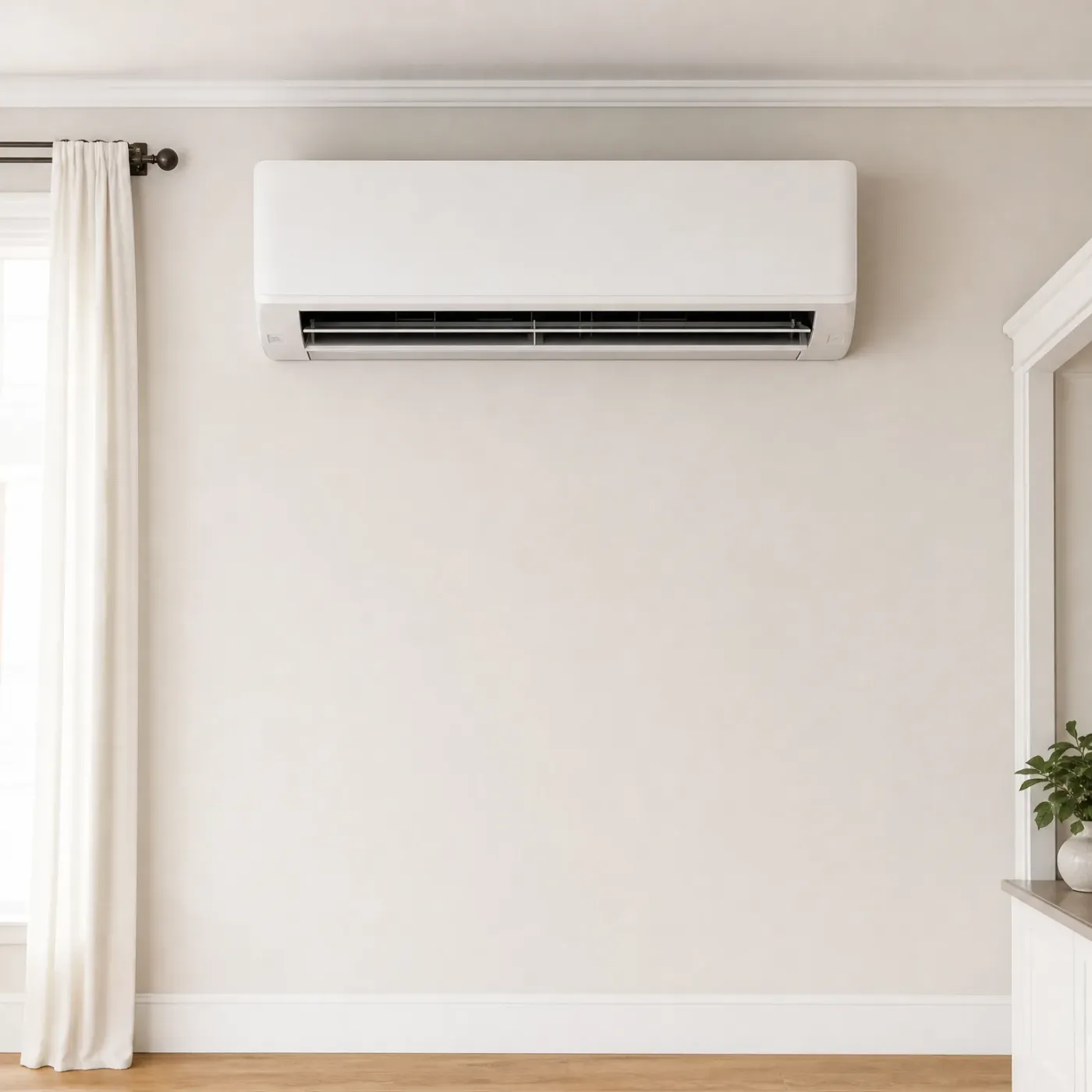
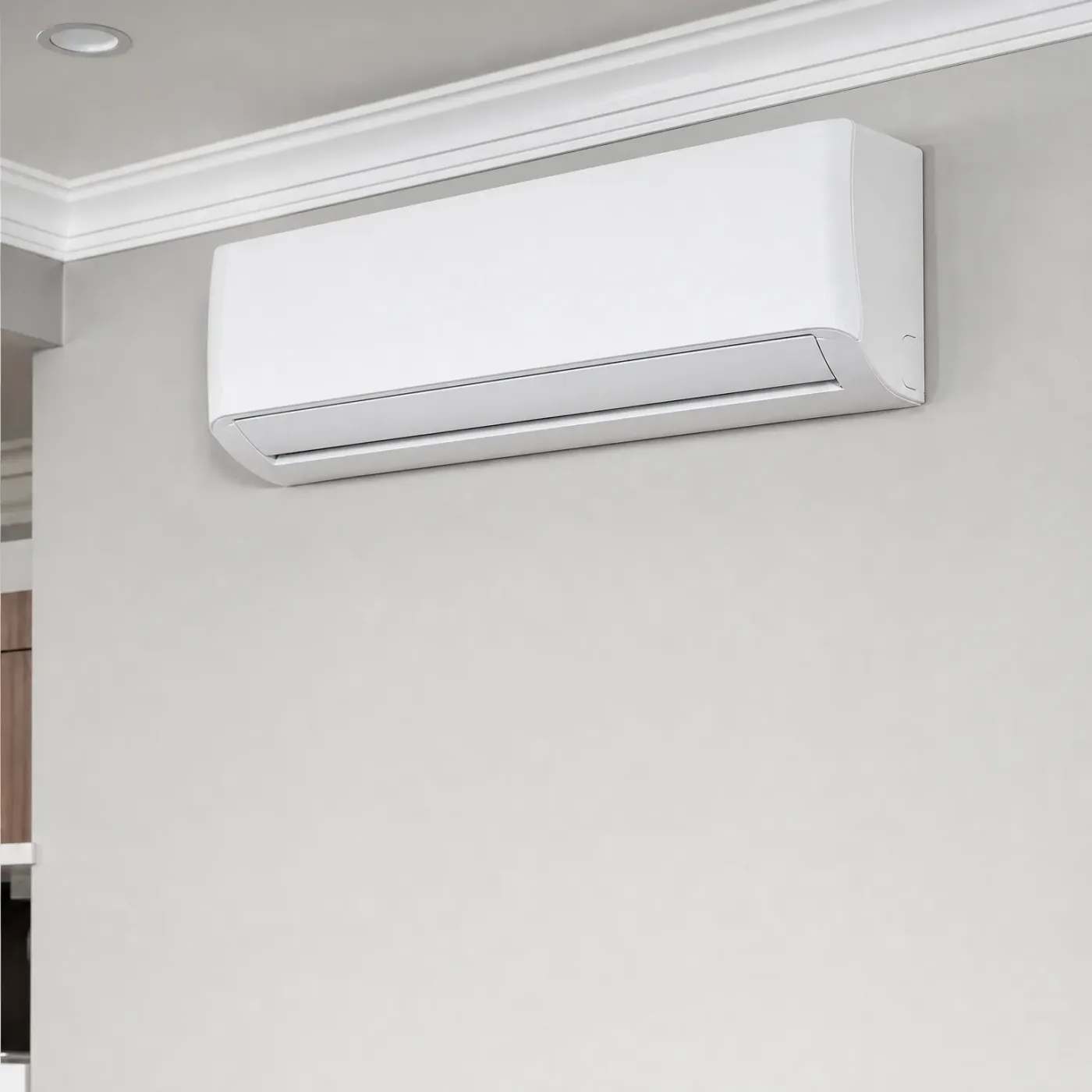
This is what a mini split sounds like when it's fine. Air moves, the fan turns, and the panel stays quiet against the wall. Dust hasn't built up anywhere near the vents, and nothing rattles when the compressor kicks on outside.
A mini split that's buzzing, clicking, or rattling is usually telling you something specific. A clicking sound when it starts or stops is often just the relay switching or the casing expanding, and that's normal. A buzzing sound points to loose parts, a failing fan motor, or a compressor under strain, especially after your unit has run hard all summer here. Rattling usually means something inside the indoor or outdoor unit has worked loose, like a fan blade, a panel, or debris caught in the outdoor coil. A hissing noise can mean refrigerant is leaking, which also means the unit is losing its ability to cool. Given how long and muggy summers run in Round Rock, a mini split working through months of near-constant use wears on its moving parts faster than one that only runs part of the year. The sound itself tells you where to look, but what it means for your system, and whether it needs a part replaced or just a cleaning, is worth having someone check before it turns into a bigger repair.

You're at your desk on a July afternoon, the mini split humming over your shoulder the way it has all summer, when you notice the sound under it has changed. Not the unit itself. A faint drip, then a streak down the wall below the indoor head, dark against the paint. You grab a towel off the hall closet shelf and press it to the baseboard. Outside it's still in the nineties with that Round Rock humidity that doesn't let up till October, and the unit keeps running, keeps pulling moisture out of air that thick. Somewhere behind the casing, water that should be draining outside is finding its way down the wall instead.
The indoor head and the outdoor unit both run on a fan spinning at a fixed speed every time the system calls for cooling. A bolt that's backed out a quarter turn lets the panel or the fan blade move slightly with each rotation. That small movement wears the mounting point a little more each cycle, so the sound you hear in July is rarely as loud as it was in May. Running the unit muggy months on end is exactly what turns a minor rattle into a real one.
The outdoor unit sits outside year round, through Round Rock summers that push it to run long hours and through the mild winters here where it may run far less. Leaves, grass clippings, and grit get pulled toward the fan and the coil, especially after someone's mowed nearby. A grinding or squealing sound often traces back to a fan motor bearing that's been working harder than it should, pulling in air that isn't as clean as what the indoor head breathes.
You're probably hearing it most in the room where the indoor head is mounted, since that's where you spend time with it running. A rattle that comes and goes with the fan speed, a buzz that shows up only when the compressor kicks on outside, a squeal that starts when you turn the system on in the morning. You might also notice it's louder at night when the house is quiet, or that it's gotten worse over the past week or two rather than staying the same. Left alone, a loose part can wear against something else it's not supposed to touch, and a failing motor or compressor part tends to get worse until it stops running altogether, usually on the hottest afternoon of the week.




Only one pro gets your request, so you hear from one company.
Sending the form costs nothing.
A noise that stays the same from day to day is one you can live with until a contractor can look at it. A steady low hum from the outdoor unit, the same clicking at startup every time, that's the system running the way it runs.
A noise that's changed, gotten louder, or started happening at new times is one to get looked at soon. A rattle that used to be faint and now isn't, a squeal that's new this week, that's a part working its way toward failing.
If the sound hasn't changed and nothing is leaking or smelling off, you can usually wait a few days to get someone out, especially if you've got window units or another room to sit in while you sort it out. A clicking relay or a steady hum isn't going to turn into a bigger repair just because you waited a week. What it won't do is get better on its own. A loose bolt stays loose, a worn bearing keeps wearing, and the noise you're hearing now is as good as it gets until a contractor has opened the unit up. Waiting costs you comfort in that one room, not much else, as long as the noise itself isn't changing.
Most homeowners in Round Rock don't wait once a mini split starts sounding different, because the unit runs for months at a stretch here and a small problem left alone tends to get louder, not quieter. A fan blade that's rubbing against its housing will keep rubbing every time the system cycles on, which in summer here is often. Calling sooner means a contractor is looking at a loose part or a dying motor, not one that's already failed and taken something else with it. For a system you depend on through a long Texas summer, most people decide the noise is worth having someone look at now rather than later.
Your mini split runs April through October here, close to seven months straight. That's a lot of hours for a loose bolt or a worn fan bearing to keep working at, and a noise that starts small in spring usually isn't the same by August.
NOAA nClimDiv 1991-2020
This is what a mini split sounds like when it's fine. Air moves, the fan turns, and the panel stays quiet against the wall. Dust hasn't built up anywhere near the vents, and nothing rattles when the compressor kicks on outside.
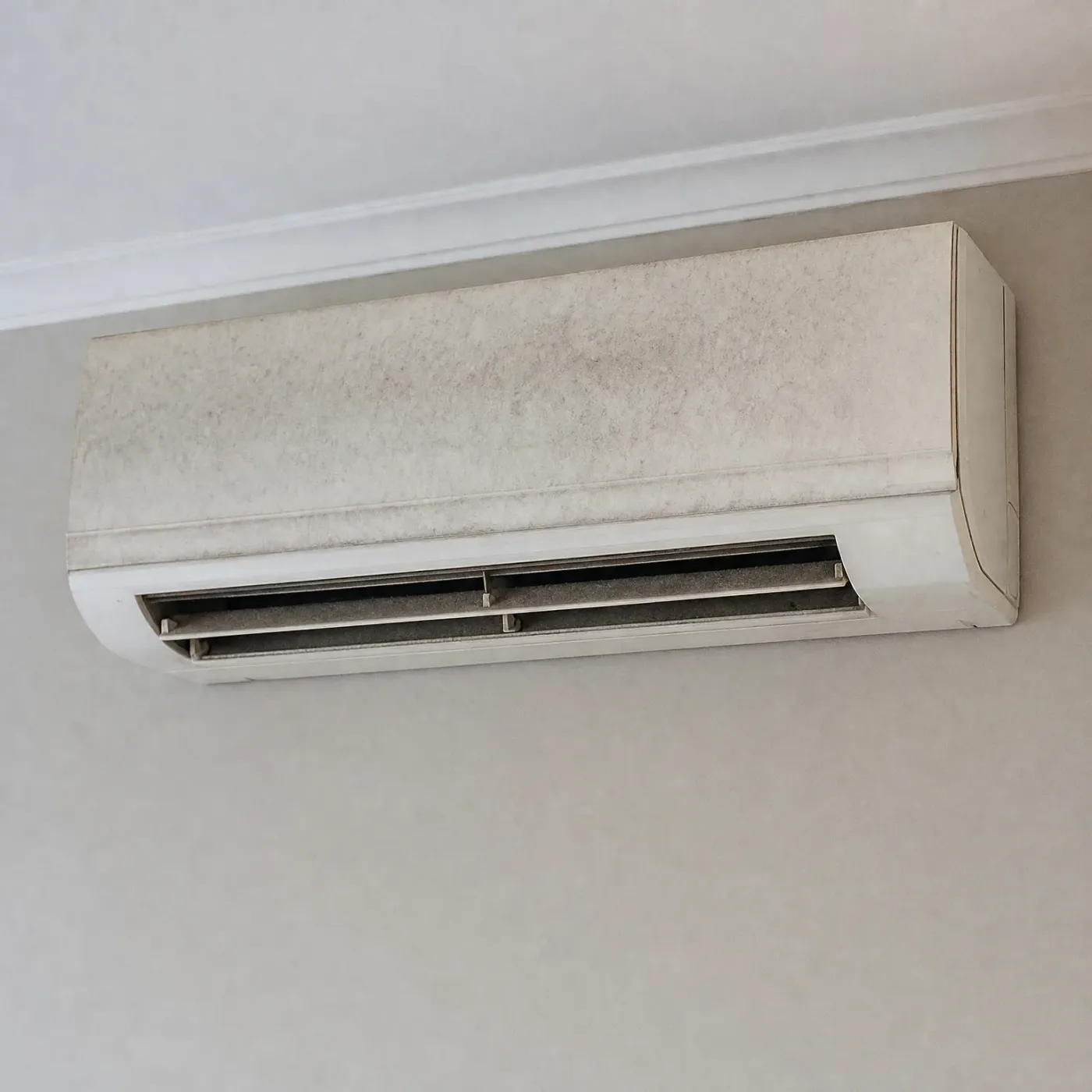
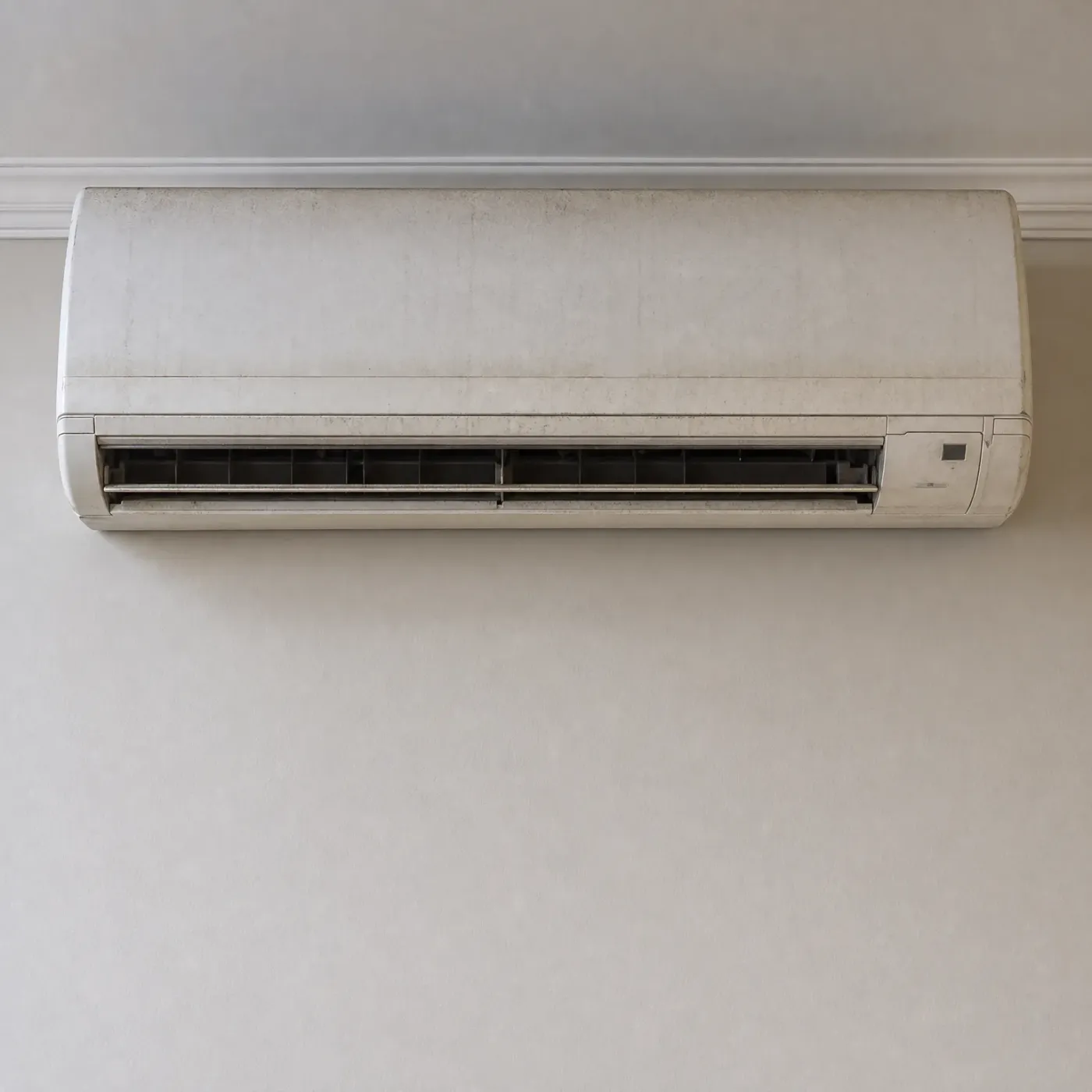
A top panel and vents this dirty make the fan work harder to push the same air through, and that extra load is where new rattles and strain come from. Grime this thick usually means the inside hasn't been opened up or cleaned in a long time.
You turn off the mini split, or it cycles off on its own, and a few seconds later you hear two or three clicks from the indoor head. It's not loud, but it's regular enough that you've started listening for it, and you want to know if it means a part is wearing out or if this is just what the unit does every time it shuts down.
The indoor head is plastic and metal fitted tightly around a coil that was just carrying cold refrigerant. When the compressor stops, that coil warms back up to room temperature over a few minutes, and the casing around it contracts and settles as it warms. The clicks are those parts easing back into place. You'll usually hear it most on hot days, since the coil runs colder and the temperature swing when it shuts off is bigger. A valve inside also closes at shutoff, which can add one sharper click to the set. If the clicking stays short, happens every time, and stops within a minute or two, it's the shutdown sequence working the way it's built to.


Cooling runs April through October
Cooling runs April through October. That's seven months of the fan and compressor running most days, which is more time for a loose part to work itself looser.
Heat runs November through March
Heat runs November through March. A mini split that heats too covers nearly the whole year combined with cooling, so a noise rarely gets a real break.
Power here costs 13.97 cents per kilowatt-hour
Power here costs 13.97 cents per kilowatt-hour. A unit straining against a bad bearing or a dirty coil runs harder to do the same job, and that shows up on the bill.
NOAA nClimDiv 1991-2020 · EIA-861 2025
A mini split that sounds different than it used to is telling you something, and the sound itself usually points to the cause. A loose bolt rattles. A worn bearing grinds. A failing motor squeals under load. Ice on the coil shows up as a hiss or a drip rather than a noise at all. None of that gets better left alone, and with the system running April through October here, a small rattle in May has months to turn into a bigger repair by August.
You don't need to figure out which one it is before you ask for help. What you need is someone who already knows, because they've heard it before on another system in another house nearby this same season. A contractor working mini splits across Williamson County all summer has likely already fixed whatever's making your unit sound the way it does. That's the kind of match this page sets up. One request goes to one licensed local contractor, not a handful of companies racing to call you back first.
Once that request is in, the work of finding someone is done. You're not tracking down a name or waiting on hold. You sent the details, and from here it's the contractor's job to look at the unit, tell you what's going on, and get it quiet again. If the sound has changed, gotten louder, or come with a smell or a leak, that's reason enough to send it now rather than keep listening to it.
A licensed pro who works in Williamson County gets your request.
You're not committing to anything by asking.