Two numbers, not one
Mini splits signal faults as a count of blinks, then a pause, then the same count again. Reading just one cycle can miss a digit and point you to the wrong problem.
A blinking light on your mini split is the system talking to you in code. Each pattern of flashes, a count of blinks followed by a pause and repeat, corresponds to a specific fault the unit has caught on its own, and the meaning depends on the brand, so the same two blinks can mean a clogged filter on one system and a refrigerant problem on another. Some units show it on the indoor head, some on an outdoor board, and a few need the remote pointed at the unit to pull an error code on its display. In Brownsville, with the unit running hard most months of the year to keep up with the heat and humidity, a common cause is a dirty filter or a frozen coil from restricted airflow, but it can also mean a sensor fault or a communication error between the indoor and outdoor units. The light is telling you something specific. What it means for your system takes matching the blink pattern to your brand.
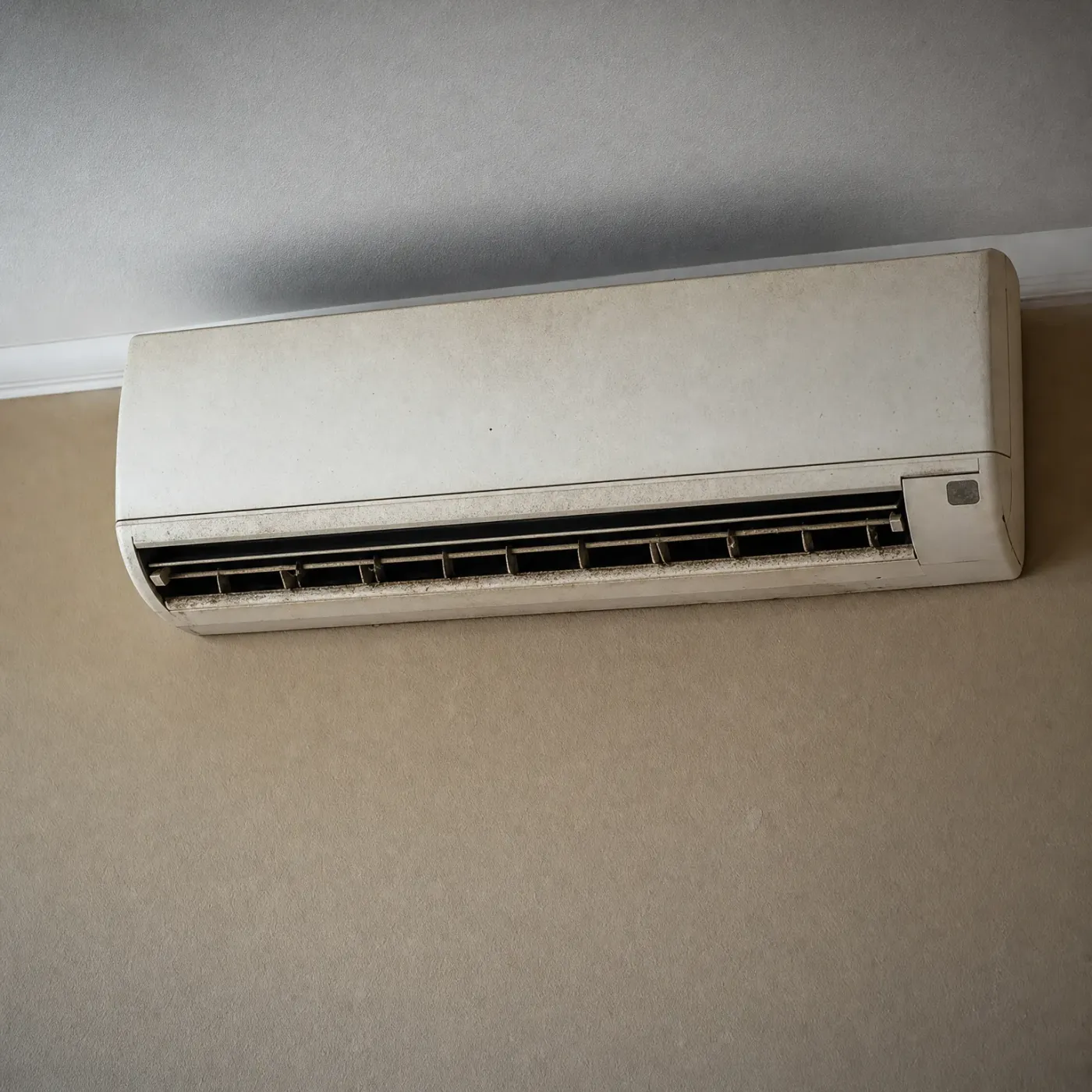
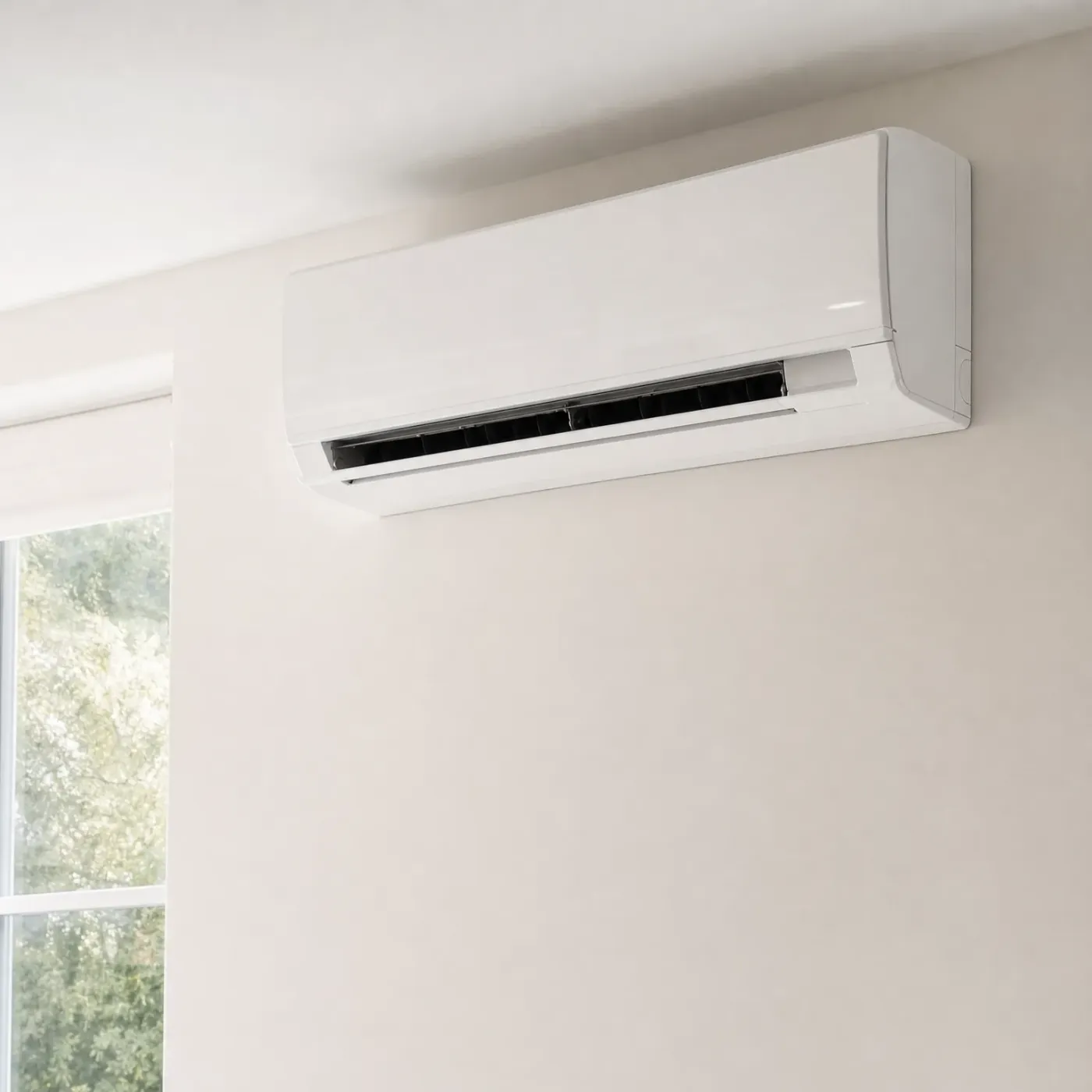
Mini splits signal faults as a count of blinks, then a pause, then the same count again. Reading just one cycle can miss a digit and point you to the wrong problem.
The same blink count means a different fault on a different brand. A tech who services mini splits across Cameron County year-round knows which maker uses which pattern.
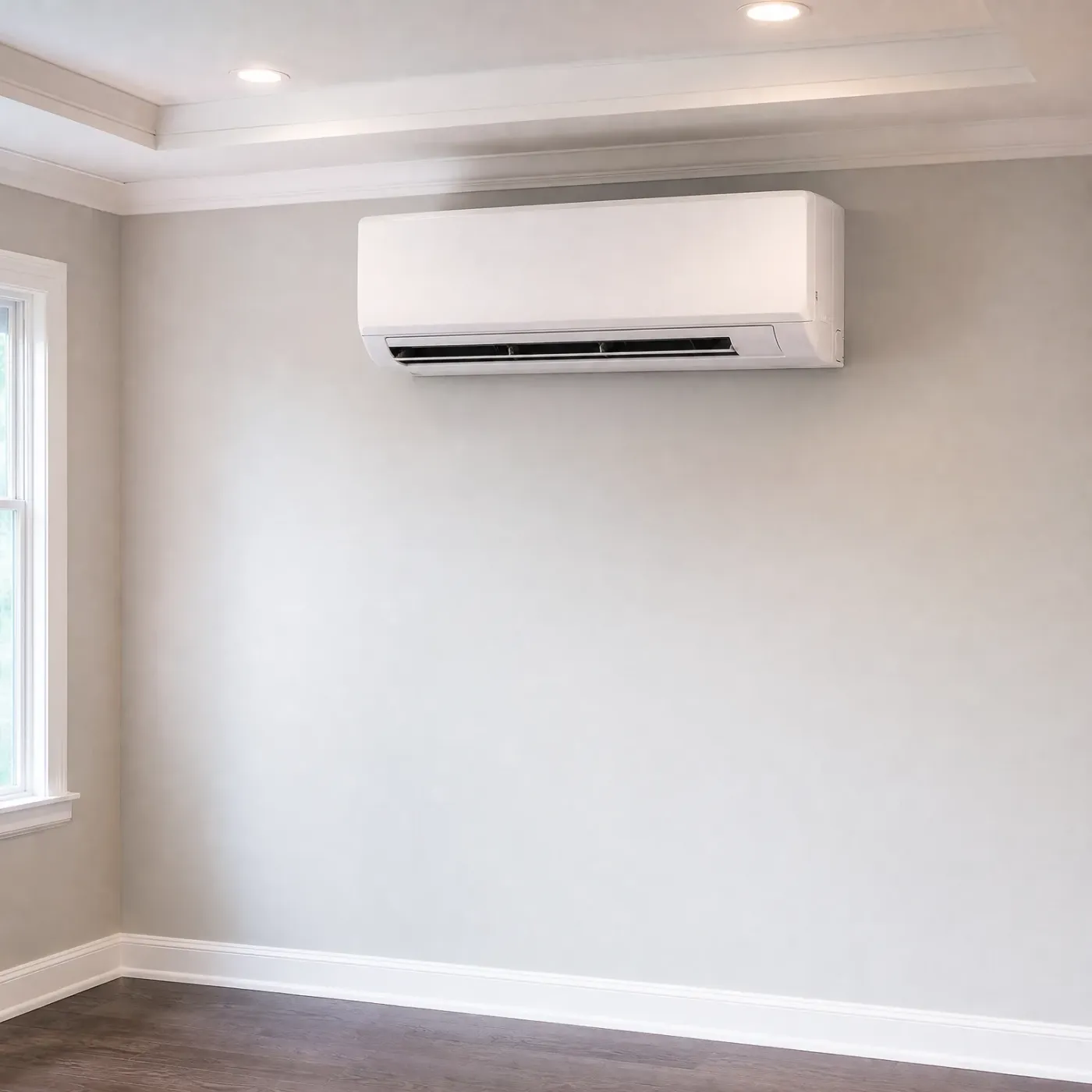
A mini split that's keeping up shows no blink at all. The wall unit sits clean, the air coming off it feels cold, and in a Brownsville summer it should be running most of the day without complaint.
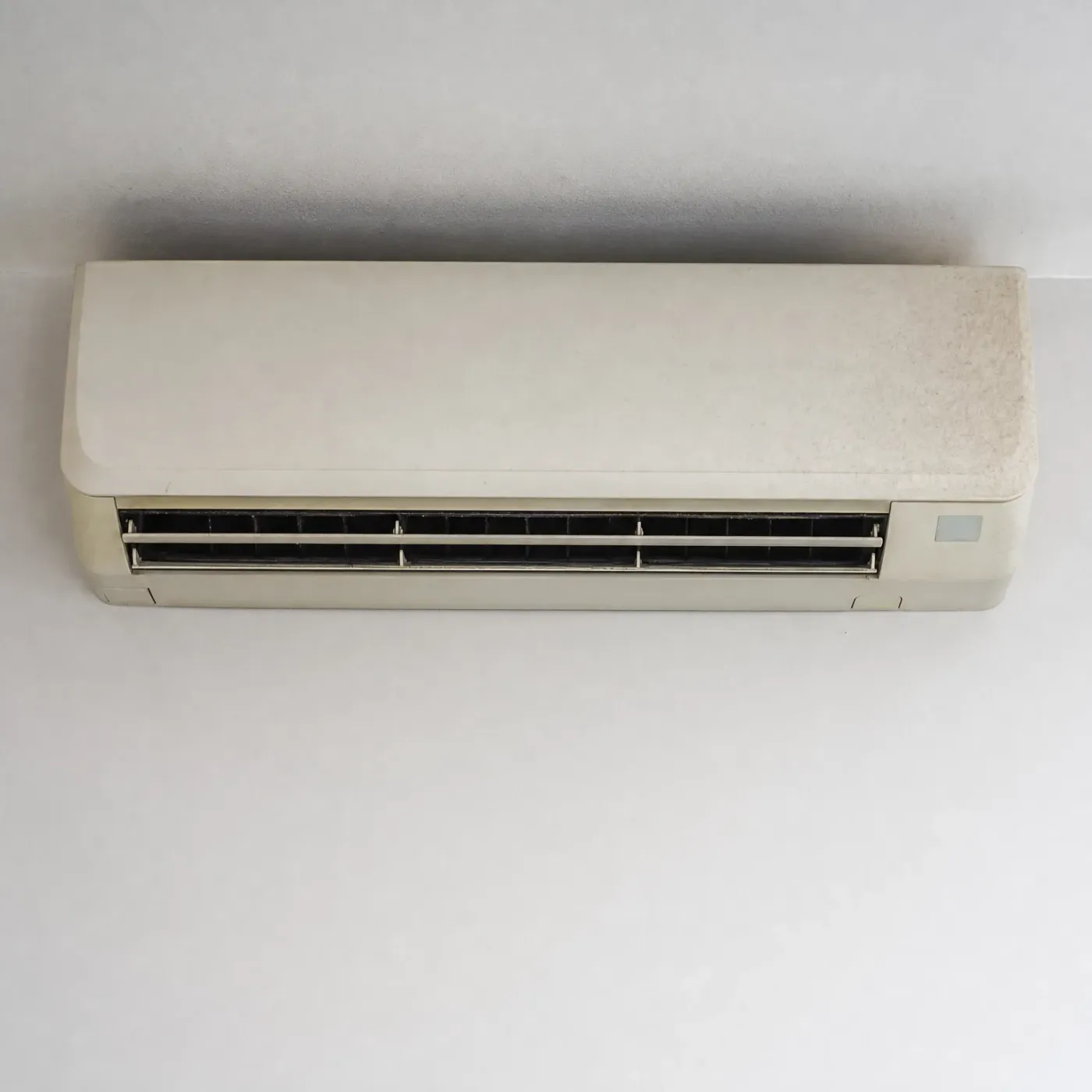
Dust built up on the housing and dark residue around the vents usually means the coil or filter behind them is just as dirty. A blinking light often shows up around the same time, once restricted airflow trips a sensor.
Why does my mini split light blink a different number of times each time?
A mini split stores a fault code until something clears it, and if a second problem shows up before the first one is fixed, the unit can cycle through both in sequence. You might count three blinks, then a pause, then five, then the pause again, before it repeats from the start. That looks random but it isn't. It's two different counts, each pointing to its own fault. Watch a full cycle through at least twice before you write anything down, and note every distinct count you see, not just the first one. A contractor working on your brand will want all of them, since the second fault is often what actually caused the first.




A blinking light doesn't tell you how long the unit sat there faulting before you noticed, and in a Brownsville summer that gap matters. A system that's thrown a code and kept running on backup settings can still be short-cycling or pulling more power than it should while it waits for someone to read the count right and match it to your brand. Guessing at the pattern, or clearing it and hoping it doesn't come back, usually just delays the same call. A contractor who works on mini splits in Cameron County every summer has likely seen your brand's code before and knows which faults are common on the units installed around here. Getting matched with one local contractor means the person who shows up is already thinking about your specific unit, not running through every brand's chart from scratch. The sooner that happens, the sooner the blinking stops and you know what it actually found.
A mini split running on a fault code is rarely working the way it should. Some codes let the unit keep limping along on backup settings, cycling on and off faster than it's built for, pulling more power to push out less cold air. In a Brownsville summer that shows up on your electric bill before it shows up as a breakdown. Other codes shut the unit down outright, and you find out when the room stops cooling and the house starts holding the heat. Either way, the longer the code sits unread, the longer the underlying problem has to get worse.
Some of what triggers a blink count is minor, a clogged filter or a float switch tripped by water that needs somewhere to drain. Left alone, minor problems don't usually stay minor. A refrigerant leak that trips a low-charge code keeps leaking while the unit blinks. A drain blockage that trips a float switch can back up and put water where it shouldn't be. A compressor fault ignored long enough can turn a repair into a replacement. The code is the system telling you something specific is wrong now, while it's still one problem instead of several.
Cooling runs February through November
Cooling runs February through November here, so a blinking light on the wall unit cuts into the ten months a year your system can't really sit idle.
Heat runs December through January
Heat only covers December and January here, a short stretch, but a code that goes unread then can still leave you cold on the two months you need it most.
Power here costs 14.13 cents per kilowatt-hour
At 14.13 cents per kilowatt-hour, a mini split short-cycling on a fault code runs up power use longer than it would if the code got read and fixed right away.
NOAA nClimDiv 1991-2020 · EIA-861 2025
You can count the blinks, dig up the brand chart online, and guess at what the code means before anyone looks at the unit. Some charts are wrong for your model year. Some faults share a blink count with a totally different problem on the same brand. If you reset the breaker to clear it, you lose the one clue a tech would have used to find the fault fast, and you're back to watching the wall unit blink again in a day or two.
Someone who services mini splits in Cameron County every summer has already seen most of what that blink count points to on your brand. They read the code without guessing, check what's behind it, and know which faults are a quick fix and which mean a part is actually failing. One contractor looking at your unit beats a chart you found yourself, especially with a system that has to run most days from February through November.
With cooling running February through November here, a mini split sitting on a fault code isn't resting during some slow stretch of the year. It's blinking through a month you still need cold air, with months more ahead before it lets up.
NOAA nClimDiv 1991-2020
The light on your wall unit is counting out a fault, not failing at random. That count means one thing on one brand and something else on another, and the only way to know for sure is to read it twice and check it against the right chart. Get the count wrong and you're chasing a problem the unit doesn't have, while the real one keeps going.
Someone who works on mini splits in Brownsville all cooling season has seen this blink pattern before, probably on the same brand, maybe the same model. That's not a small thing when the chart itself can be wrong for your unit's year. A local contractor who does this work regularly knows which faults actually show up on the systems running in this area, and that's the difference between a quick, accurate read and a guess.
You'll hear from one contractor, not a handful. That matters when you're already dealing with a unit that's not running right. You give the details once, and the person who calls you back is the one who'll be looking at your system, not the first of several trying to win the job.
Cooling runs February through November here. A mini split stuck on a fault code now is losing time out of a stretch of the year it can't afford to sit idle. Cleared and running steady, light off, it's back to doing the job the heat asks of it for the months still ahead.
Only one pro gets your request, so you hear from one company.