
Mini split leaking water in Sugar Land, TX

A Fort Bend County pro who repairs mini splits gets your request.

Match me with a pro

Water leaking from your mini split usually means the condensate drain line is clogged or the drain pan has cracked or rusted through. As the unit pulls moisture out of the air, that water is supposed to run out through a small drain line to the outside. Algae, dust, and debris build up inside that line over time and block it, so the water backs up and spills out of the unit instead, often onto the wall or floor beneath the indoor head. With Fort Bend County summers running long and muggy, a mini split can pull a lot of moisture out of the air day after day, which gives that drain line more water to carry and more chances to clog. A dirty air filter can cause the same problem by freezing the coil, which then drips as it thaws. Either way, the leak will keep coming back until the drain line or pan is actually cleared or repaired.

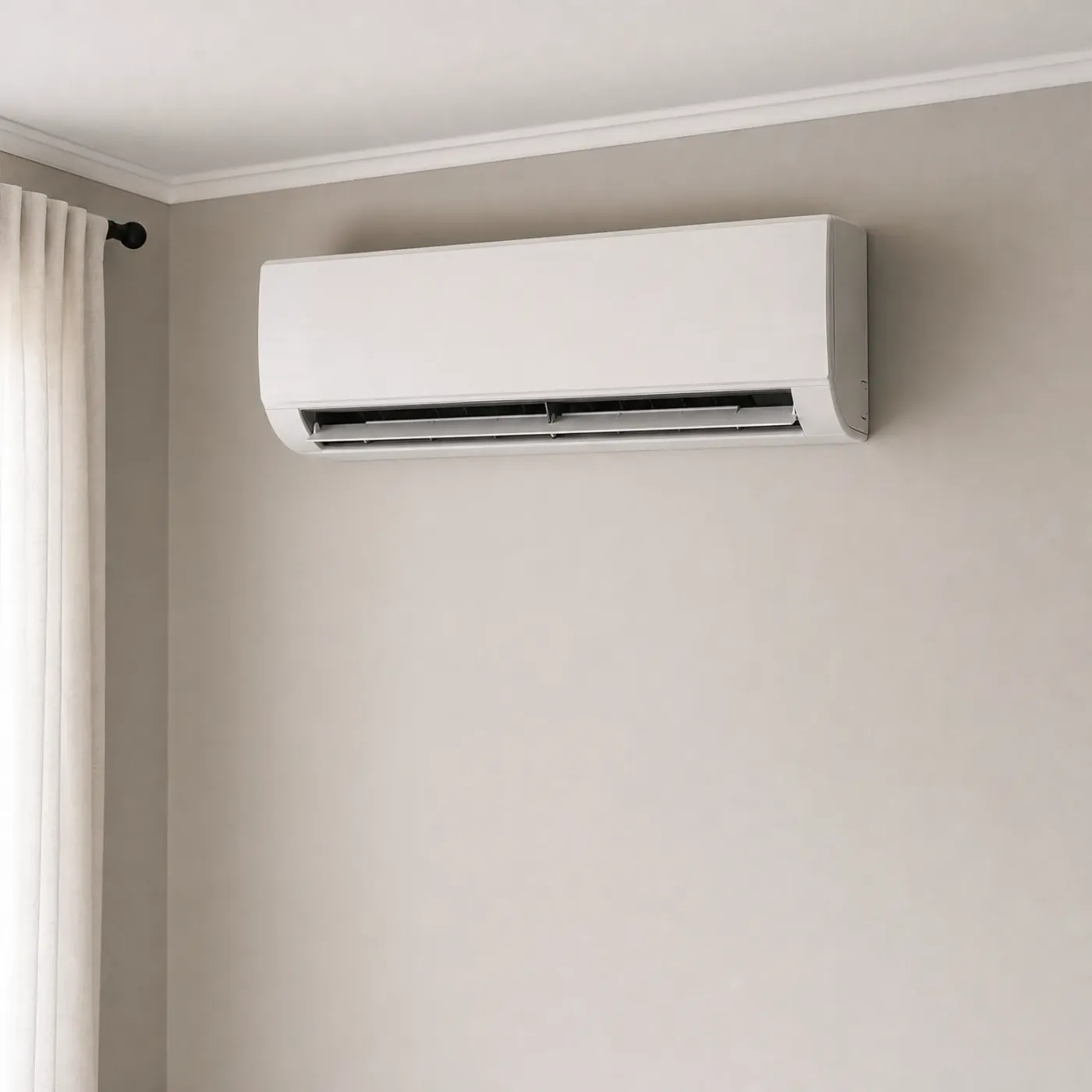
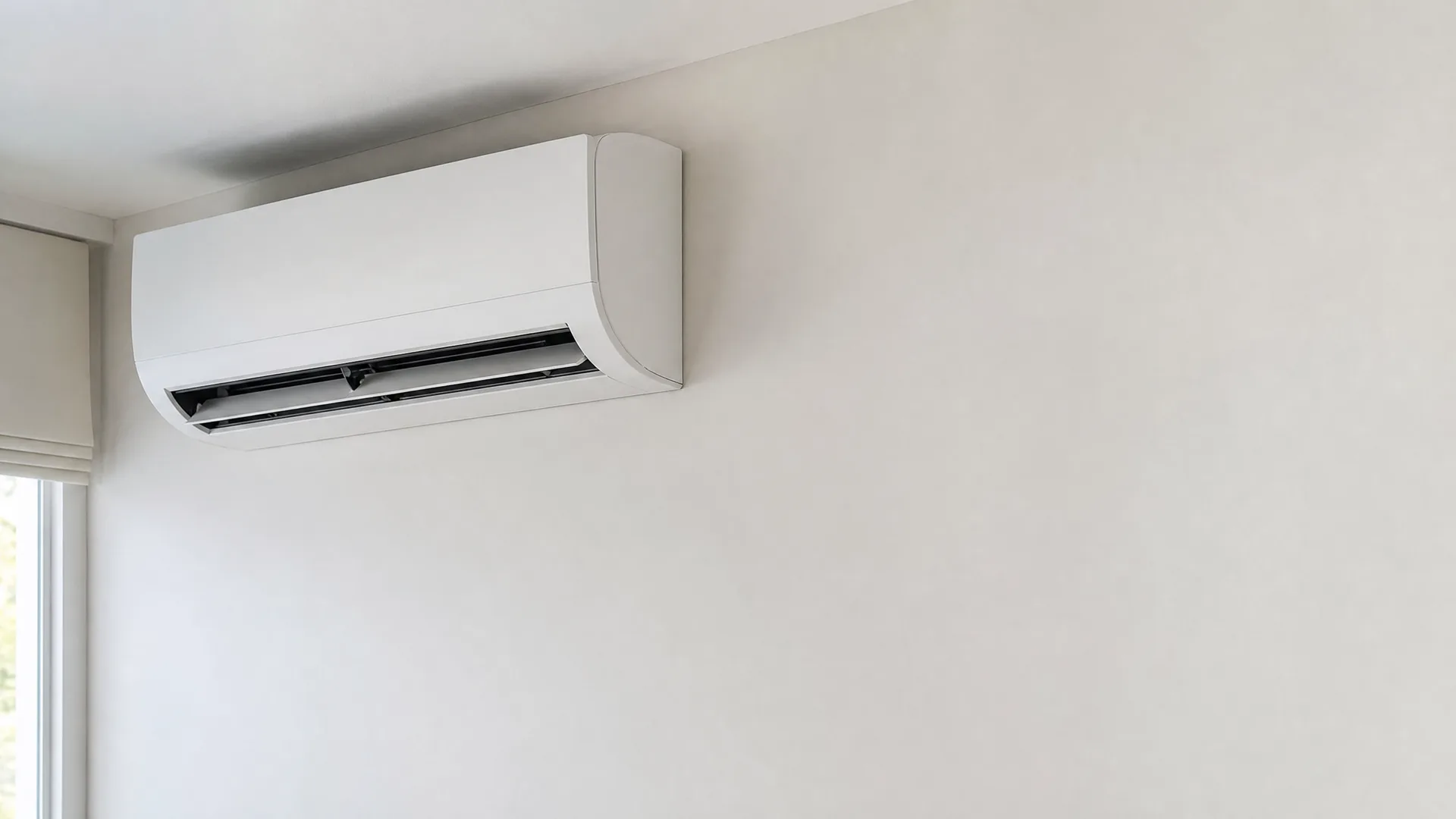
A white wall-mounted mini-split air conditioner installed high on a beige interior wall near the ceiling molding, with a light curtain and curtain rod at the left edge.

Running dry

A mini split that's draining properly won't show a single drop around the unit or the wall below it. The drain line stays clear enough that condensate leaves the house instead of pooling. No stains, no musty smell, no drip when it cycles on.
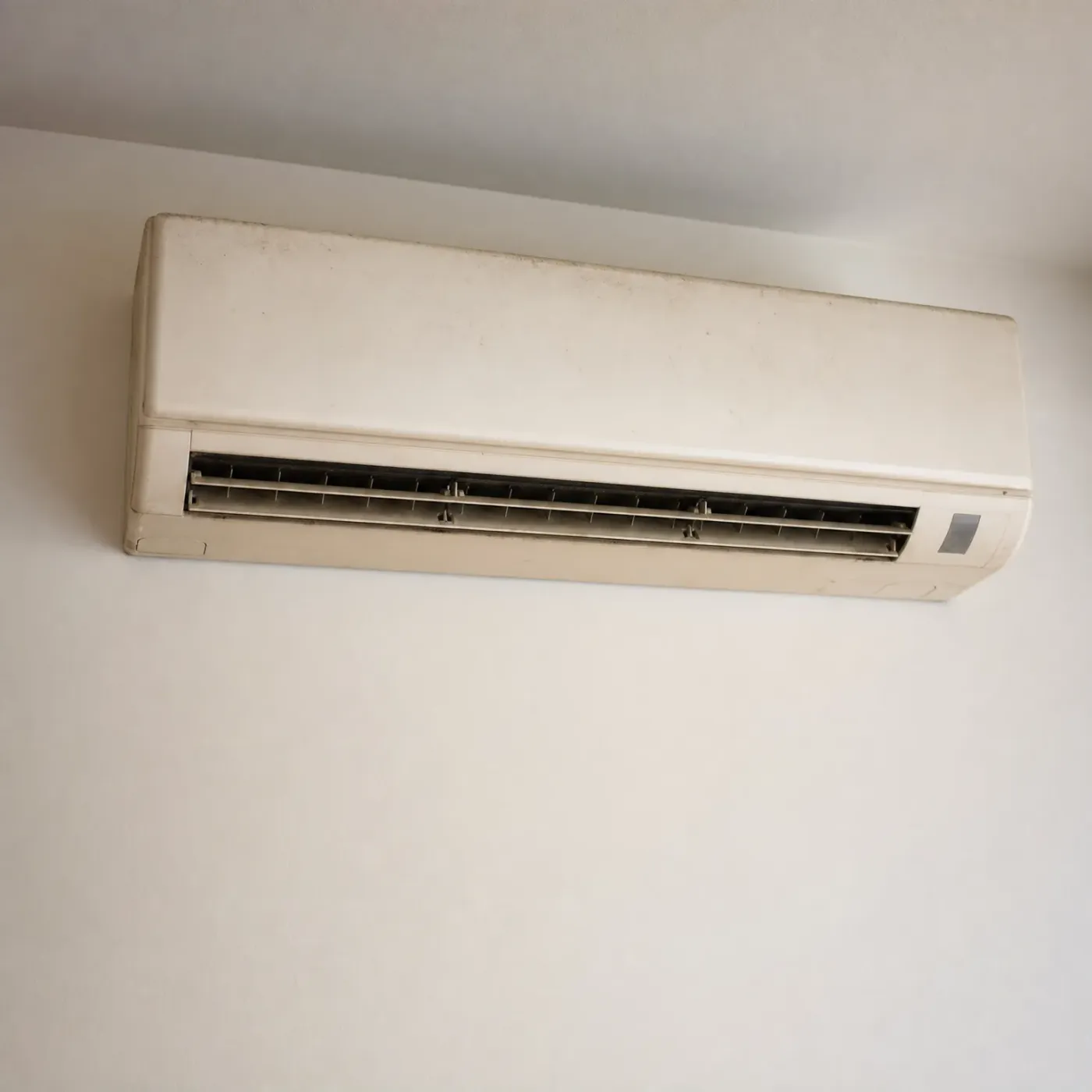
A wall-mounted mini-split air conditioner indoor unit with a discolored cream plastic casing and dusty outlet vanes, installed high on a plain light-colored interior wall near the ceiling.

Trouble on the casing

Yellowing on the casing like this points to more than age. Water or high humidity sitting against the plastic over time can discolor it, and dust clinging to a damp surface builds up faster than it would on a dry one. If yours looks like this, water has likely been getting where it shouldn't.

Why is water dripping from my mini split

You probably noticed a dark stain spreading across the ceiling or wall near the indoor unit, or a drip that keeps time with the mini split running. There might be a damp patch on the floor below it, or a musty smell in that room that wasn't there before. Sometimes it's the unit itself, water beading along the bottom edge or dripping off the case. If this keeps going, that moisture can soften drywall, warp a wood floor, or turn into mold behind the wall. The sooner the drain line or pan gets looked at, the less it costs you in the room around it, not just the unit.

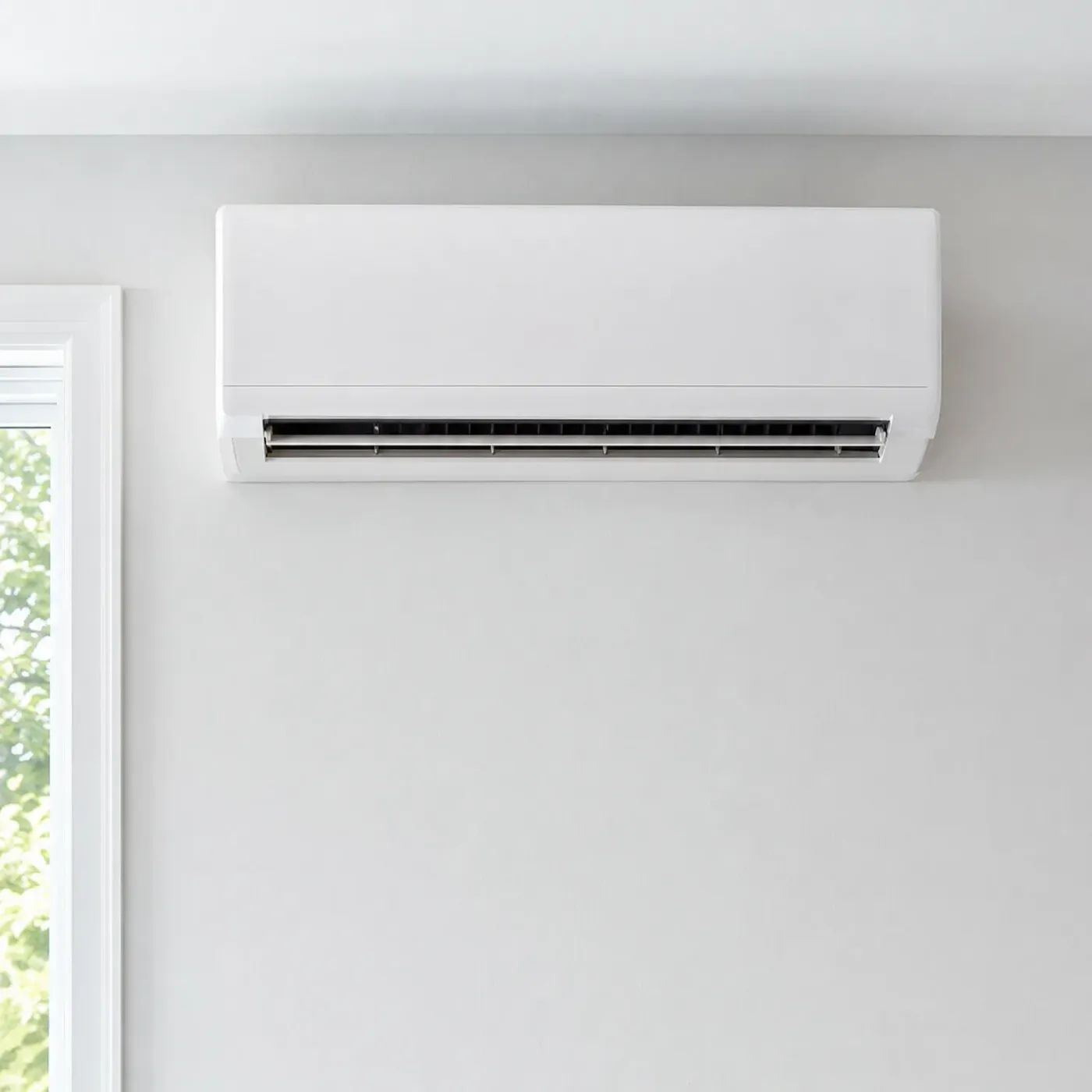
A white wall-mounted mini-split air conditioner unit installed near the ceiling on a plain light-colored interior wall, with a window edge at the far left.

Why the drain line clogs here

That long muggy stretch from April through October means the mini split runs most days, pulling moisture out of the air for hours at a time. All that condensate passes through a narrow drain line, and algae builds up inside it the same way it builds up in anything that stays wet and dark. The more the unit runs, the more water moves through that line, and the faster a thin coat of algae turns into a full clog.

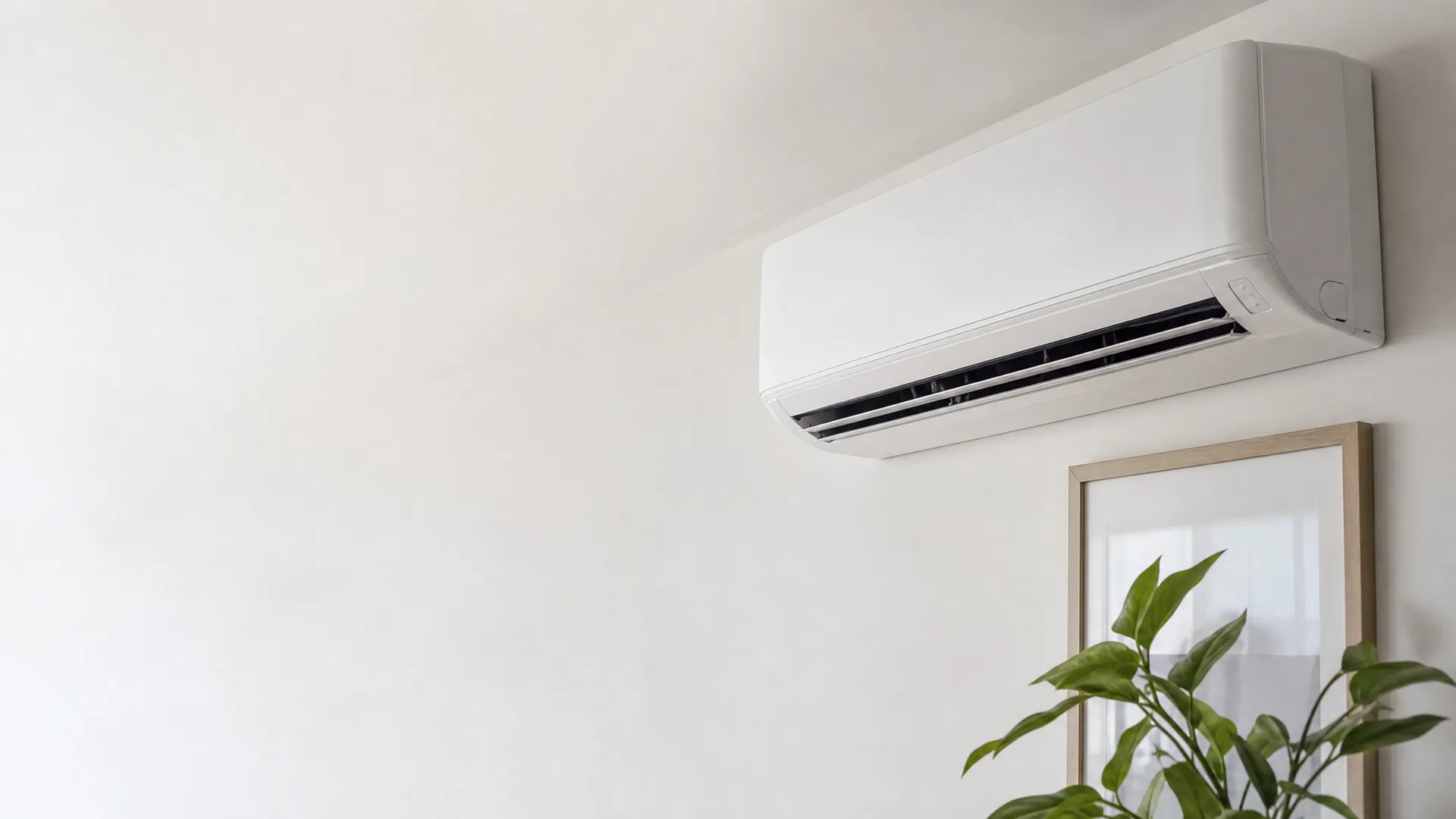
A white wall-mounted mini-split air conditioner near the ceiling of a white interior wall, with a framed picture and a green leafy houseplant in the lower right corner.

What a cracked pan does

The drain pan sits under the indoor coil and catches every drop before it reaches the line. Plastic pans can crack with age, and metal ones can rust through at the seam. Once that happens, water finds the gap instead of the drain opening, and it drips straight down into the wall cavity or ceiling below. A pan doesn't need a big crack to leak. A hairline split is enough to send water somewhere it shouldn't go.

Why does my mini split drip so much here?

  • Cooling runs April through October

    Cooling runs April through October, so the drain line carries condensate for most of the year without a real break to dry out.

  • Heat runs November through February

    Heat runs November through February, so the mini split sits mostly idle those months while algae keeps building in a damp line.

  • Power here costs 16.77 cents per kilowatt-hour

    Power here costs 16.77 cents per kilowatt-hour, so a clogged drain forcing the unit to run harder shows up fast on the bill.

NOAA nClimDiv 1991-2020 · EIA-861 2025

Let it keep dripping

Water finds the nearest path down, into the wall or the ceiling below the indoor unit. By the time you see a stain, the drywall and insulation behind it have likely been wet for a while, and mold can start in that stretch of time.

A smiling bearded man in a dark blue henley shirt sits leaning back on a light grey sofa in a living room, with a bowl of popcorn on a wooden coffee table and a large window behind him.
A bearded man in a dark quarter-zip sweater sits smiling on a brown sofa in a dimly lit living room, with a bowl of popcorn and a mug on a table in the foreground and a potted plant near a window behind him.
A smiling man with graying dark hair and a beard, wearing an olive sweater, sits on a sofa in a living room beside a bowl of popcorn on a wooden table.
A smiling man in a dark green henley shirt sits on a gray sofa in a living room with a lit table lamp, wooden shelving unit, and a bowl of popcorn in the foreground.
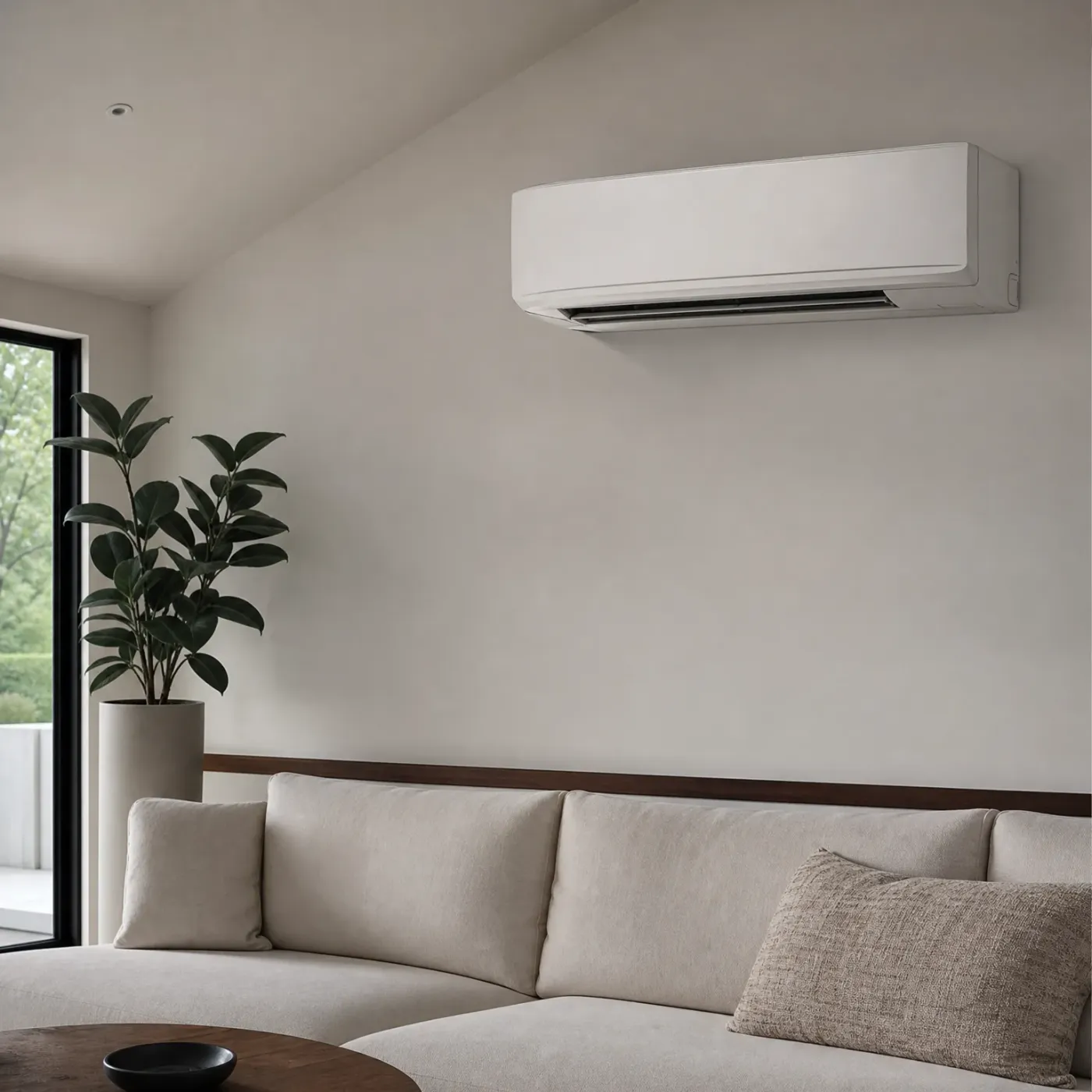
A white wall-mounted mini-split air conditioner near the sloped ceiling of a living room with a light sectional sofa, cushions, a potted plant, and a window showing greenery.

The right pro for this job

Send the request today and stop worrying about who to call.

Get matched with someone who does this kind of work in Fort Bend County.

Hand off my repair

Asking costs nothing, and the choice to hire stays yours.

Clear the Line or Replace the Pan

Clean the drain line

  • A contractor can flush the line with a wet vacuum or a small snake, clearing the algae clog without opening the drain pan.
  • This works when the pan itself is still sound and the water is backing up because the line is blocked, not because the pan is cracked.
  • It's a faster fix, since there's no part to source or replace, just clearing what's already there.
  • If algae has built up further down the line past where the unit reaches, a contractor may need to access it from outside where the line empties.
  • It doesn't address a pan that's already rusted or cracked, so if that's the real problem the leak comes back.

Replace the drain pan

  • A cracked or rusted pan has to be replaced, since no amount of flushing stops water from leaking through a hole in the pan itself.
  • This usually means opening up the indoor unit to get at the pan, which takes more time than running a line.
  • It's the right call once you've noticed rust streaks on the pan or the leak keeps showing up even after the line's been cleared.
  • A new pan solves the leak at its source, so you're not back here again in a few months with the same stain spreading.
  • Older units are more likely to need this, since the pan has had more years of standing condensate to wear through.
A white wall-mounted mini-split air conditioner unit installed high on a light gray interior wall near the ceiling, with a white-framed window and green foliage visible at the left edge.

Draining the way it should

No stains on the wall, no drip when it cycles on. The casing stays clean and the filter sits behind a closed panel where it belongs. Condensate leaves through the drain line and out of the house, and you'd never know the unit was pulling water out of the air all day.
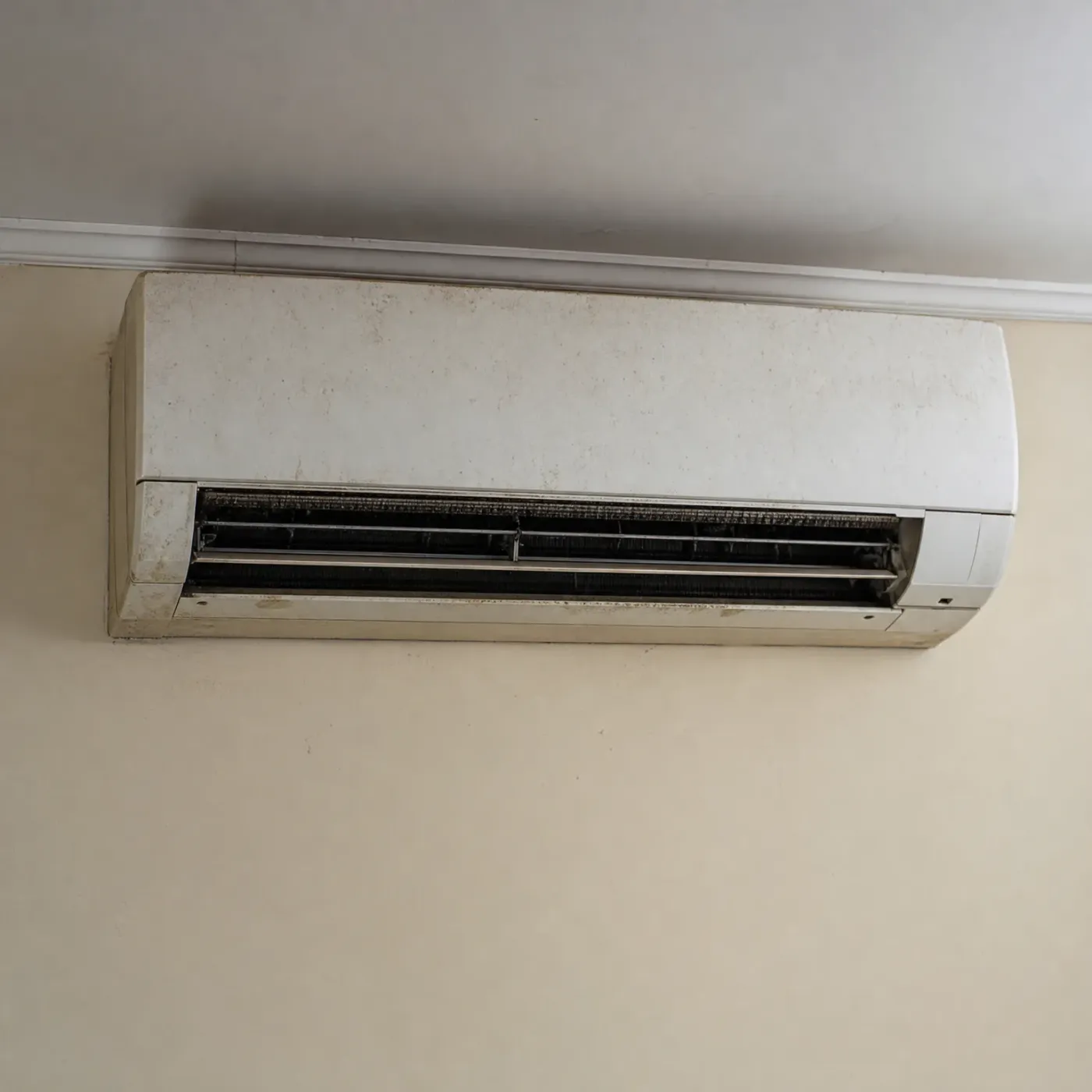
A dusty white wall-mounted mini-split air conditioner installed high on a beige interior wall below a molded ceiling trim.

Clogged and overdue

Dust and grime cover the casing, and the panel hangs open with the filter exposed. A dirty filter like this sheds more into the drain line and pan, and that buildup is often what starts the clog that sends water down your wall instead of outside.

A woman stands in the open black front door of a white-sided house with a dark shingled roof while a man in a navy jacket approaches along the walkway, with lantern wall lights, a potted shrub, and flowering garden beds nearby.

A dripping mini split has one of a few causes, and all of them are fixable

Water on the wall or ceiling under your indoor unit comes down to the drain line, the drain pan, or the condensate pump if the unit has one. A clogged line gets flushed clear. A cracked pan gets replaced. A failed pump gets swapped out. None of this means the mini split itself is done for.

What matters now is figuring out which of those three it is before more drywall gets wet. A contractor who works on mini splits in Fort Bend County can look at the unit, trace where the water is actually coming from, and tell you straight whether it's a quick flush or a part that needs replacing. Send the form and the job of finding that person is off your plate. Someone who handles this work will reach out to go over what you're seeing and get it sorted.

A speckled beige ceramic vase holding thin dried branches sits on a round wooden table near a window with sheer curtains, with a dark upholstered chair and draped blanket blurred in the background.
A woman in a dark gray sweater reclines on a couch with her eyes closed and a knit blanket over her lap, an open book resting face-down in front of her, with a lit table lamp and shelving blurred in the background.
A bearded man in a dark navy sweater over a collared shirt smiles and looks off to the side while seated at a dinner table with a glass of red wine, a lit candle, and a plate of food in the foreground of a dimly lit room.

Mini Split Repair

Matched to your mini split job

Send the request and finding a pro stops being your problem.

A smartphone with a blank green screen stands upright against a plain light gray background.
Step 1 of 3: Equipment