
Ignore the drip
The water keeps coming while the clog sits in the line. The stain on your ceiling or wall spreads, and the drywall underneath stays wet until it softens.

Water dripping from your mini split almost always means the condensate drain line is clogged or the drain pan is cracked. The indoor unit pulls moisture out of the air nonstop through a long Dallas summer, and that water has to leave through a small drain line. Algae and dust build up inside that line over time and block it, so the water backs up and spills out of the unit instead. A dirty air filter can cause the same thing, because restricted airflow lets the coil get too cold and ice over, and when it melts it dumps more water than the pan can handle. Either way the leak itself usually isn't serious, but letting it run can stain your ceiling or wall and soak insulation around the unit. It is a fixable problem, and one worth catching before the water damage gets expensive.

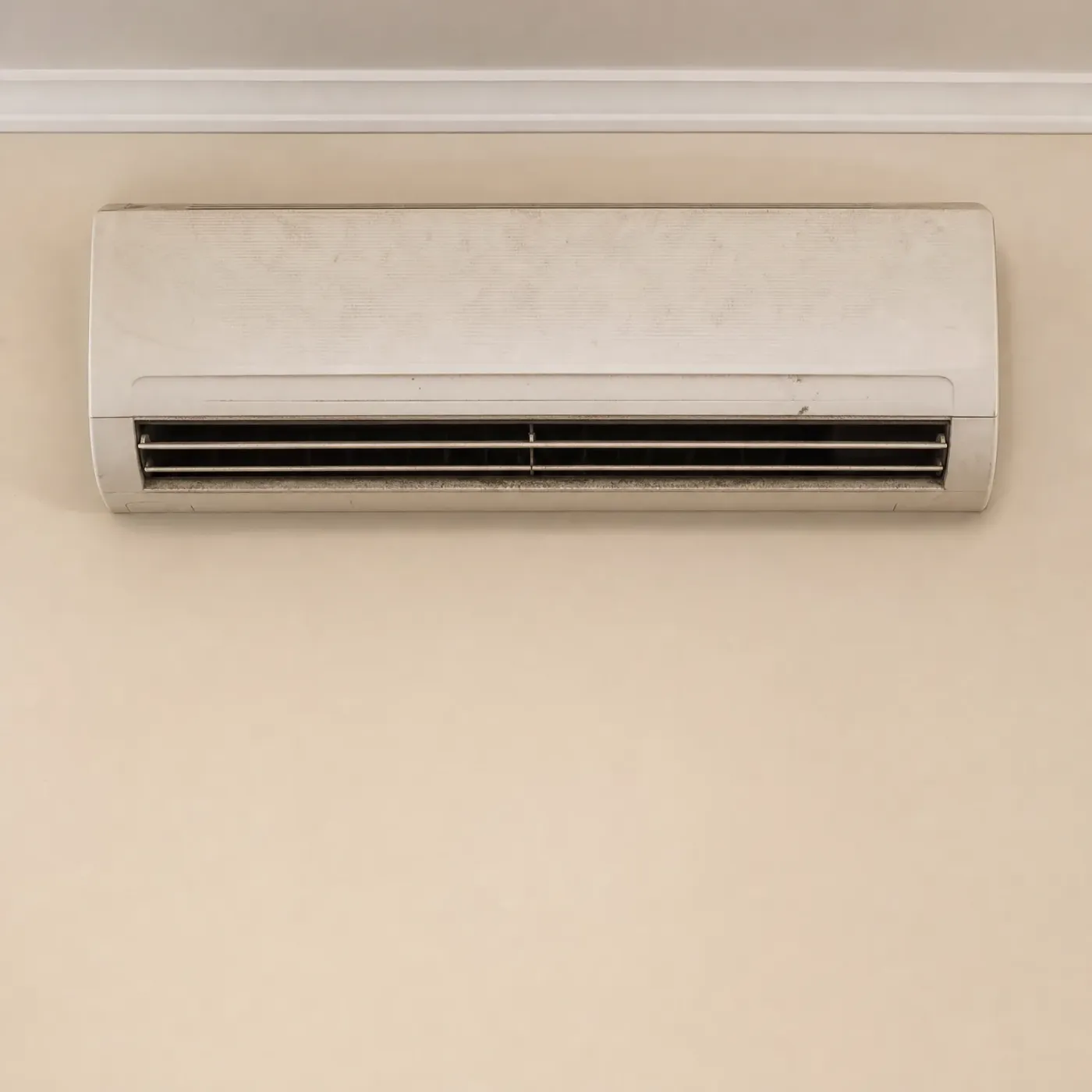
The coil inside your indoor unit is cold enough to pull water straight out of the air, and in a Dallas summer that's a steady drip, not an occasional one. That water lands in a shallow pan, then runs out through a thin line that usually passes through the wall near the line set. Over months of that steady moisture, algae and dust build up inside the line and narrow it until water can't get through. Some units have a float switch sitting in the pan, and once water backs up past it, the unit shuts off cooling entirely rather than just leaking. That's why a mini split that stops cooling, not just one that's dripping, can still point back to the drain. A pan that's cracked or warped will drip on its own even with a clear line. And if the line was installed with any sag in it instead of a constant slope, water pools there and the clog comes back faster than it should.
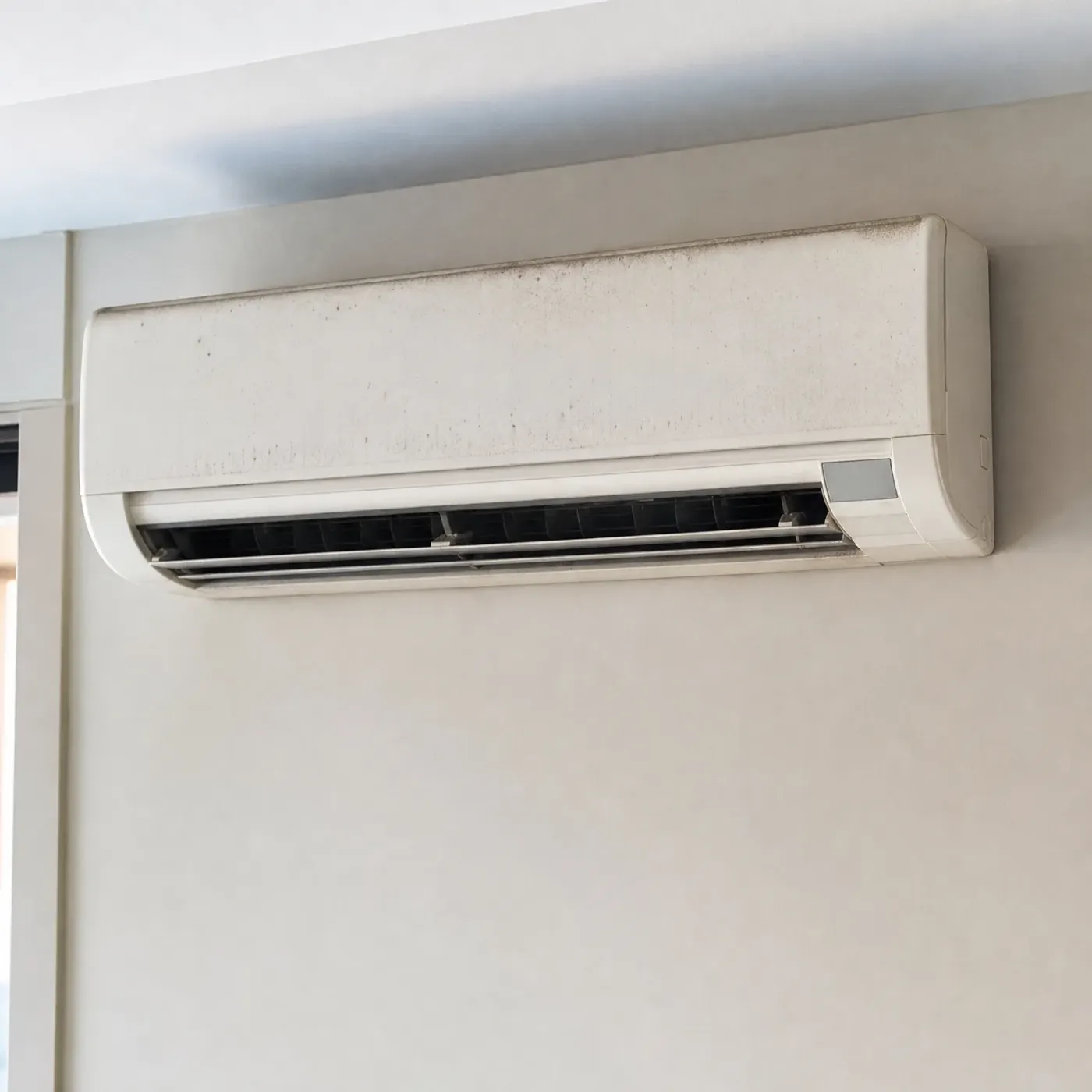
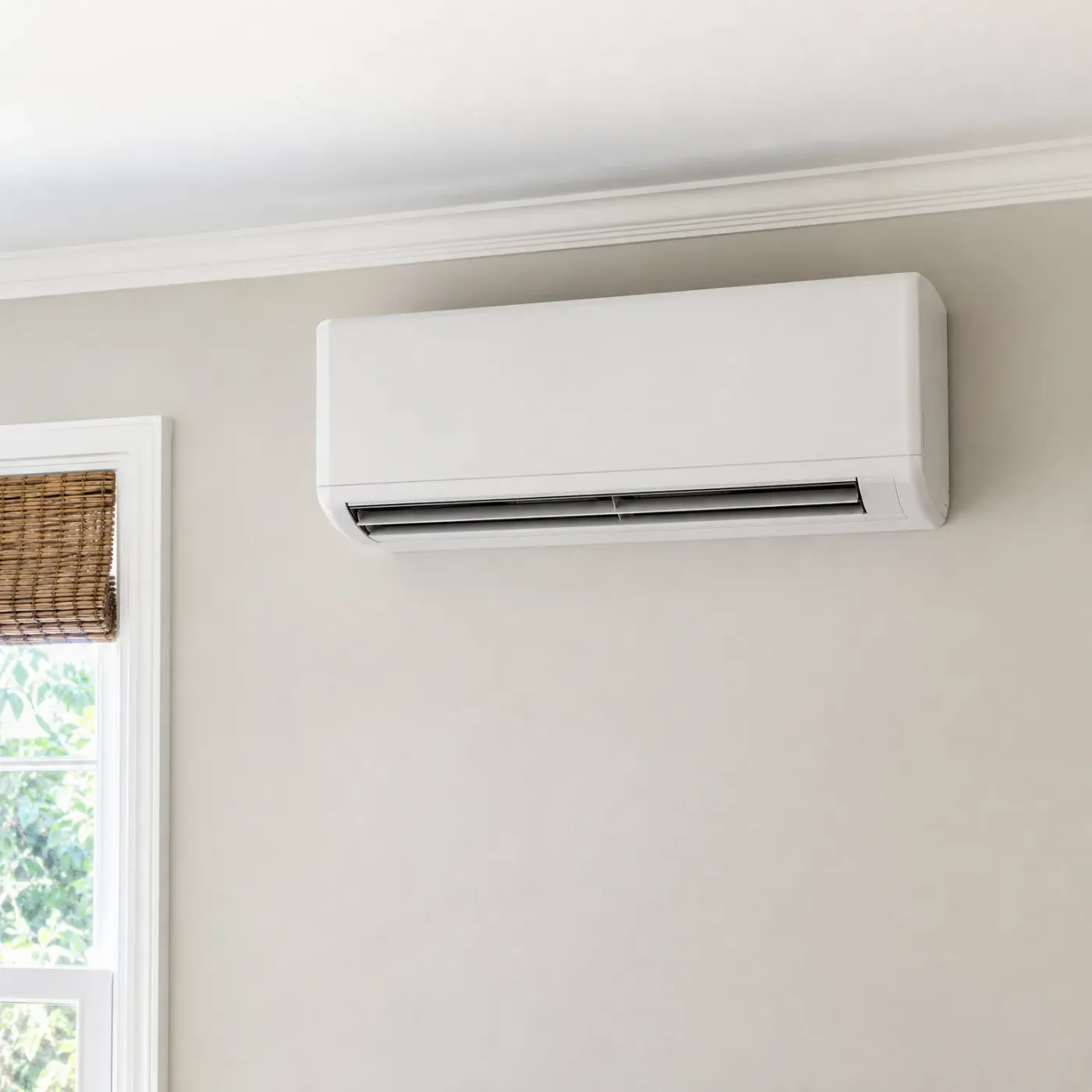
That drain line runs with a slight pitch so water flows out by gravity, not pressure. A low spot or a kink anywhere along it is enough to let water pool and back up into the unit.
Dallas summers keep that coil wet for months at a stretch, so algae and dust have a long stretch of time to build up inside the line. A clog that would take a season to form somewhere milder happens faster here.
Cooling runs May through October
Cooling runs May through October. That's six months of the coil staying wet, six months for algae and dust to build up in the drain line.
Heat runs November through March
Heat runs November through March. The coil dries out those months, which is when a cracked pan or loose line is easiest to catch before summer starts.
Power here costs 16.63 cents per kilowatt-hour
Power here costs 16.63 cents per kilowatt-hour. A mini split working against a clogged drain or low charge pulls more of it than one running clean.
NOAA nClimDiv 1991-2020 · EIA-861 2025
Most leaks start small enough to ignore, and that's the problem. The indoor unit is usually mounted high on a wall, so the first sign is a stain on the ceiling or wall below it, not a puddle you'd catch right away. By the time you see the stain, water has likely been dripping for a while. Drywall softens, trim swells, and if the unit sits above flooring, that floor can warp or stain too. None of that fixes itself once the drywall's wet.
A musty smell near the unit is worth paying attention to on its own, even without a visible stain. It usually means algae or dust has already built up inside the drain line, which is the same buildup that's causing the backup in the first place. The unit itself can keep running and cooling the room the whole time, so there's nothing about how the system performs that tells you it's leaking. The leak and the cooling are two separate things happening at once.
Inside the unit, standing water in the drain pan does its own damage. It can rust a metal pan over time, and some units have a float switch sitting in that pan meant to shut the system off before it overflows. Water sitting against that switch can short it out, which means the safety feature meant to stop a leak can be the next thing to fail. And once a line clogs and gets cleared, it's prone to clogging again as soon as humidity builds back up.
Six months of that coil running wet gives algae and dust plenty of time to build up inside the drain line before winter ever dries it out. That's most of the year for a clog to start, so a drip you catch in July is worth dealing with before next May.
NOAA nClimDiv 1991-2020
Warm indoor air passes over the cold evaporator coil and loses its moisture
Condensation collects and drips steadily off the coil into the drain pan below
The pan channels water toward the drain line fitting at one corner
Gravity pulls water through the sloped drain line toward the outside wall


Fill out one short form instead of calling around.
Get the mini split repair search off your mind today.
No charge to send it. You decide if you hire them.
You probably saw it first as a stain spreading on the ceiling or wall under the indoor unit, or a drip landing on the floor or windowsill below it. Sometimes it shows up as a damp patch on the carpet that won't explain itself. You might hear a faint dripping inside the unit when it's running, or catch a musty smell near it even when nothing looks wet yet. If the unit has an auto shutoff for a full drain pan, it may just stop cooling altogether. Left running, that water keeps finding the same path down through your ceiling or wall, and the drywall and trim underneath start to soften and warp the longer it sits.

A National Weather Service summer dew point averaging 68°F in Dallas County means the air stays heavy and wet through June, July and August, not just hot. Your mini split's coil has to pull a lot more moisture out of that air to keep up, so it runs wetter and longer than it would somewhere dry. More water moving through the drain pan and line means more chances for it to find a clog or a low spot. If you've noticed the drip getting worse as the summer goes on rather than staying steady, this is why.
NASA POWER T2MDEW




The water keeps coming while the clog sits in the line. The stain on your ceiling or wall spreads, and the drywall underneath stays wet until it softens.
A contractor clears the line or fixes the pan, the dripping stops, and you're done tracking down who can even take the job.

That's the answer. A clogged drain line is the usual cause, and a cracked pan is the other one. Either way the water needs somewhere to go, and right now it's going onto your wall, your ceiling, or your floor instead of outside where it belongs.
You don't have to figure out which one it is, or spend an afternoon calling around Dallas for someone who works on mini splits and can get to your house this week. You don't have to explain the stain on your ceiling three different times to three different companies while you compare what they quote you. Send the form once and that search is off your plate. A contractor takes it from there, looks at the line and the pan, and tells you what it'll take to stop the drip for good.






Skip searching for a mini split pro and answer a few questions instead.
You only hire the pro if you want to.