

Running the way it should
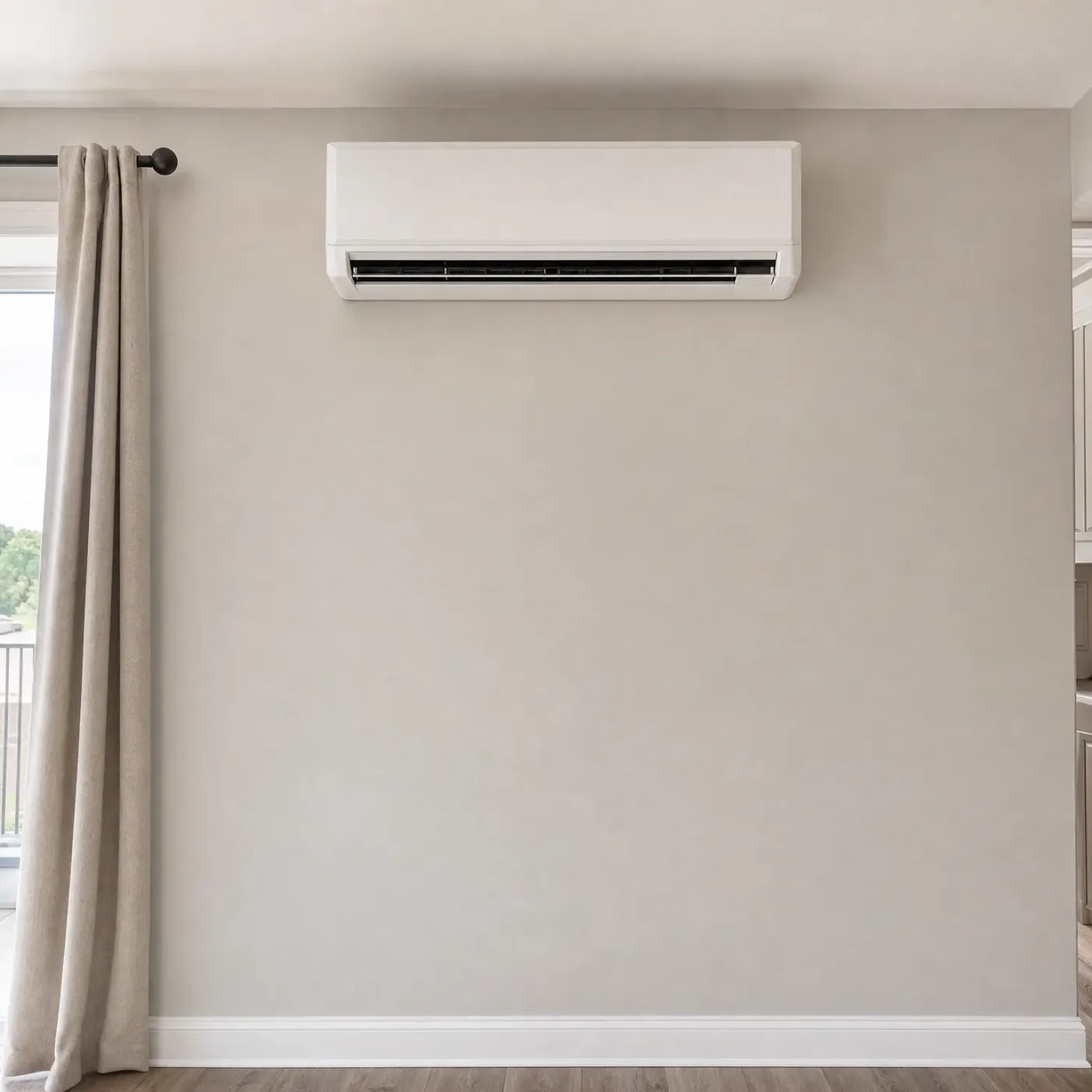
Air moves out of the unit steady and cold, with no ice anywhere on the coil or the line outside. The wall stays dry underneath it. This is what tells you airflow and refrigerant charge are both where they need to be.
One form replaces the calls you'd make to find a mini split pro.
Skip the callsIce on the indoor coil or the line running outside usually means airflow is blocked or the system is low on refrigerant. A dirty filter, a dirty coil, or a blower not moving enough air all starve the coil of the warm air it needs, and once the coil gets too cold, moisture in the air freezes right onto it. Low refrigerant does the same thing by dropping the pressure in the coil below freezing. Turn the unit off and let it thaw before anyone runs it again, since ice on the coil can keep it from cooling at all and running it iced over can damage the compressor. Once it's thawed, a technician needs to find out which of those it is, because clearing the ice doesn't fix what caused it, and it will freeze again.
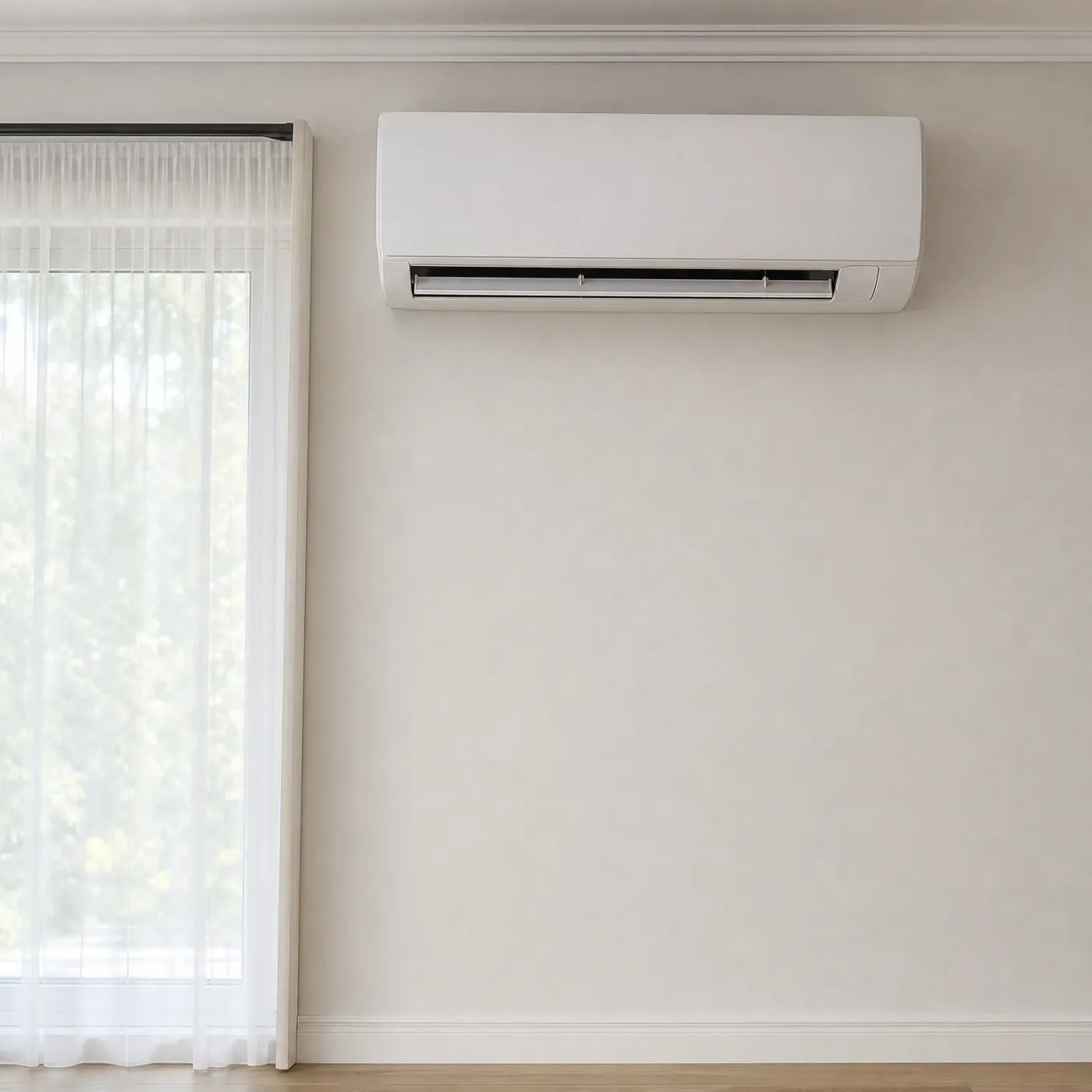
Air moves out of the unit steady and cold, with no ice anywhere on the coil or the line outside. The wall stays dry underneath it. This is what tells you airflow and refrigerant charge are both where they need to be.
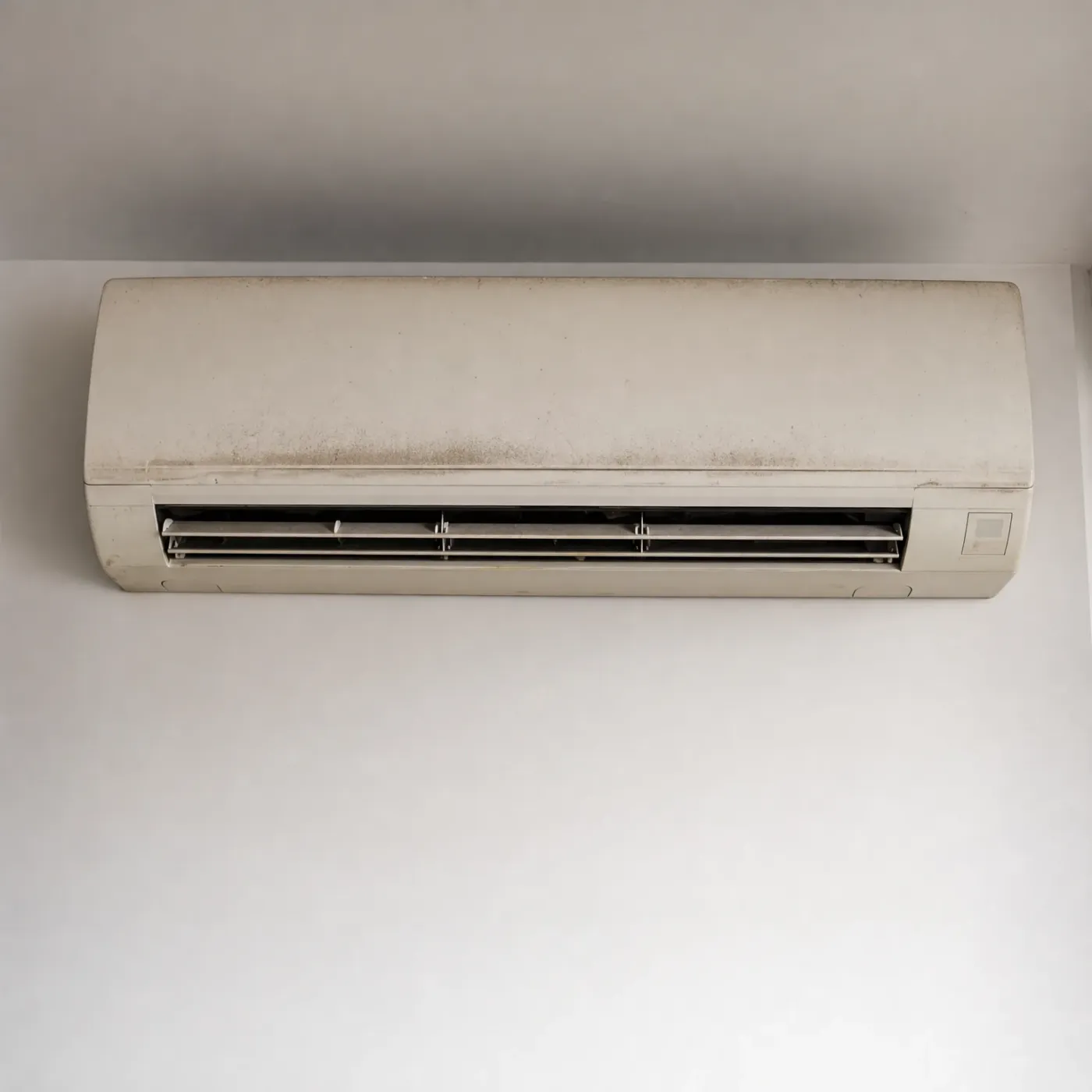
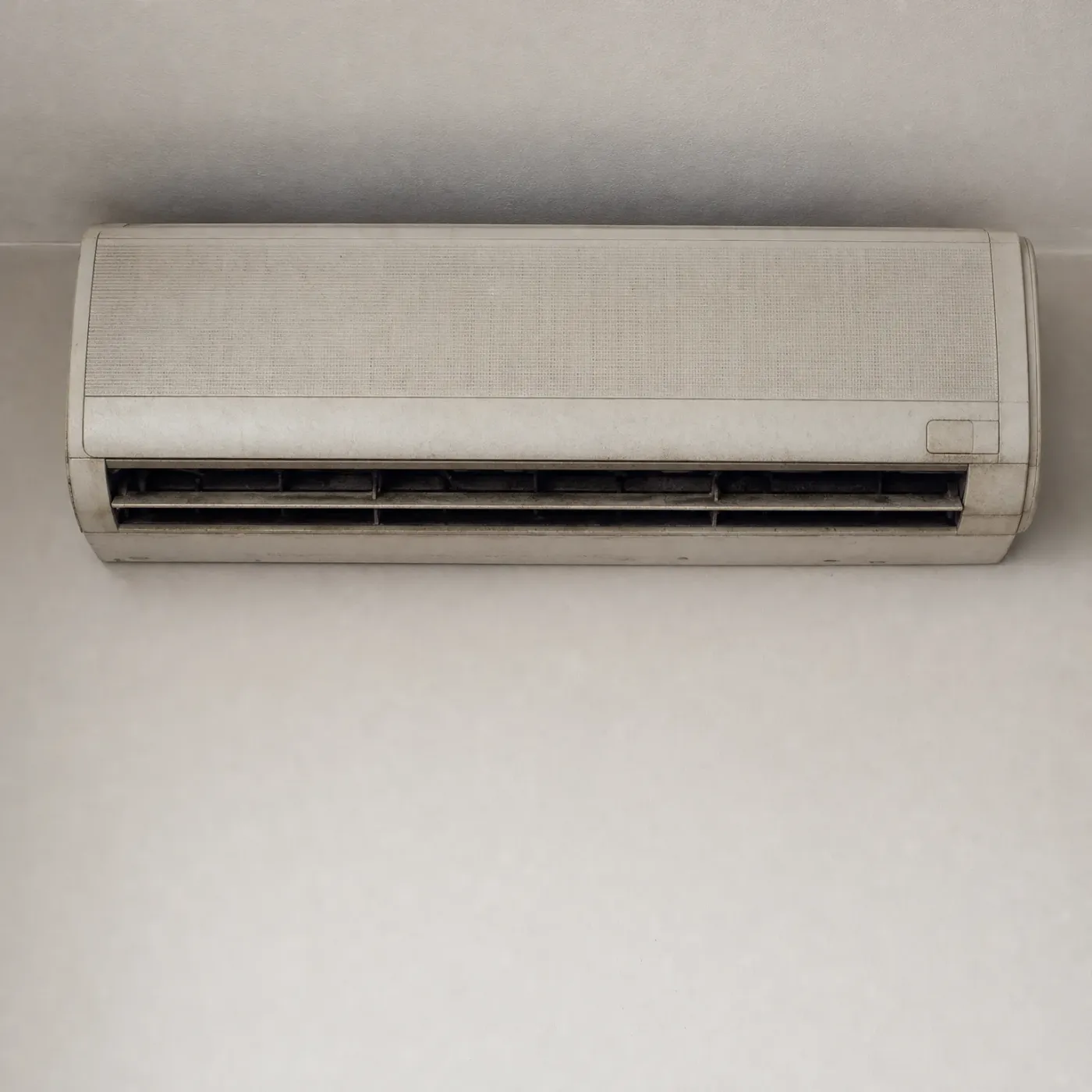
Grime like this across the top and vents blocks the air the unit needs to pull in. Starve it long enough and the coil behind that grime drops below freezing, which is how a mini split in Dallas ices up even in August.
You turn it on and the air coming out is weak, or barely cool, even though you can see or feel ice on the indoor unit. The wall below it may be wet, or you've found a puddle on the floor as the ice melts between cycles. Sometimes there's a thin coat of frost across the coil fins, other times a solid chunk built up around the lines. The outdoor unit might be running the whole time without the house ever cooling down. Left alone, a frozen coil makes the compressor work against ice instead of refrigerant, and that kind of strain is what turns a repair into a replacement.
A mini split's indoor coil runs cold enough to pull moisture out of the air, which is why you see condensation drain away when it's working right. If airflow across that coil drops, whether from a clogged filter or a blower that isn't pulling enough air through it, the coil surface gets colder than it should. Moisture in the air freezes on contact instead of draining off, and the ice builds from there.

Refrigerant has to stay at the right pressure to absorb heat at the rate the system was built for. When the charge is low, from a leak at a fitting or a joint, the pressure drops and the coil runs colder than normal across its whole surface. That cold spot grows ice the same way low airflow does, and it keeps growing until something stops the cycle. A contractor checks pressures to tell which one is happening in your unit.
Cooling runs May through October
Cooling runs May through October. Six months of near-constant demand on that indoor coil is six months where a dirty filter or weak airflow can turn into ice.
Heat runs November through March
Heat runs November through March. A mini split that freezes up now still has to get you through five months of mild but real cold, so it needs fixing, not just thawing out.
Power here costs 16.63 cents per kilowatt-hour
Power here costs 16.63 cents per kilowatt-hour. A unit icing over and still running is pulling power without cooling or heating your home, and you're paying for it either way.
NOAA nClimDiv 1991-2020 · EIA-861 2025
Turn it off and let it thaw before anyone touches a wrench. Shutting it down stops the coil from icing further and lets the ice melt on its own over a few hours, which is the safe way to see what you're actually dealing with underneath.
Clearing the ice doesn't fix why it formed. A tech who works on mini splits in Dallas every summer can find whether it's the filter, the blower, or a refrigerant leak, and fix that part so it doesn't freeze again next week.




A licensed pro who repairs mini splits in Dallas County gets your request.
Sending the form costs nothing.
Switch the system off and open the filter panel. If the filter is gray with dust or you can see it's been a while since it was washed, that's a fair place to start. Rinse it, let it dry, and leave the unit off until every bit of ice is gone, which can take a few hours. This only helps if the filter turns out to be the problem. If the coil ices back up again once you turn it on, airflow wasn't the whole story and something past the filter needs a closer look.
A contractor who services mini splits in Dallas sees this same complaint through the long cooling season here and knows the checks that pin down whether it's a blower, a coil, or a refrigerant charge that's low. That's a gauge set and training a filter rinse won't replace. One local, licensed contractor takes the call, looks at your unit, and tells you what's actually wrong instead of you guessing room by room while the ice keeps coming back.

A mini split moves between cooling and heat through the reversing valve, and when that valve hangs between the two positions, the system can start a freeze that won't stop on its own. Low refrigerant does something similar from a different angle. With less refrigerant in the coil, the pressure drops, and a coil running at low pressure gets cold enough to frost even when it isn't that hot outside. In heat mode, the outdoor unit is supposed to thaw itself periodically, and that's handled by a defrost sensor and board. When that sensor fails, the frost outside just keeps building instead of clearing. Inside, a blower wheel that has slowed down can't move enough air across the coil, and ice tends to start at the center of the coil and spread out from there. If you're seeing ice low on the line set near the wall, check the flare fitting. A loose or poorly insulated one lets refrigerant escape right at that joint. Whatever starts it, the ice itself cuts airflow further, which is why the problem compounds the longer the unit keeps running.

It's late afternoon in July and your office has been running warm for an hour, so you finally get up to check the mini split. The air coming off it is barely moving. Then you see it, a dark streak down the wall below the indoor unit, and a towel already soaked where it's been catching the drip. Outside it's still in the mid-90s, the kind of heat Dallas gets used to by July, and the unit behind you is doing less work than the sound it's making would suggest. You pull the towel aside, wring it out, and lay it back down, watching the wall to see if the line keeps spreading.
Six straight months of the coil running is six months where a clogged filter or weak airflow has time to turn into ice instead of just a minor annoyance. A mini split in Dallas doesn't get much of a break to recover from a problem before the next hot stretch asks more of it.
NOAA nClimDiv 1991-2020
Switching the unit off and cleaning or rinsing the filter catches a real share of freeze-ups, since a clogged filter is one of the most common causes. Beyond that, there's a limit to what's safe to handle without tools made for refrigerant or without opening the unit past the filter panel. A low charge means a leak somewhere in the line, and finding it means gauges and a recovery process, not guesswork. A blower that isn't moving enough air can mean a motor that's failing or a wheel caked with dust you can't reach by hand. Pushing past the filter stage is where a homeowner can do real damage, to the coil, the line set, or themselves if refrigerant is involved.
A mini split in Dallas runs cold May through October and still does real work in the mild winters here, so there isn't much downtime for a problem to sit unnoticed before it shows up again. A tech who works on these systems through that whole stretch has likely already seen this unit, or ones like it, freeze for the same handful of reasons: a filter nobody rinsed, a slow leak, a reversing valve stuck between modes. Getting matched means skipping the round of calls to different companies, the explaining of the same wet wall and weak airflow more than once, and the back and forth of comparing quotes. One contractor, licensed and local, takes the call and already knows what to check first.



A frozen mini split comes down to one of two things. Either air isn't moving across the coil the way it should, or the system has lost refrigerant somewhere along the line. Clearing the ice yourself tells you whether a dirty filter was the whole problem. If it freezes again once the unit's been running a while, the cause is something a filter rinse won't touch, like a weak blower, a low charge, or a reversing valve that isn't switching clean.
That's the point where you need someone who can check the charge, find the leak if there is one, and look at the blower and the valve instead of guessing. Finding that person yourself in Dallas means searching around, calling a few companies, explaining what the unit's been doing to each one, then sitting on quotes trying to tell them apart. Request help through this page and a licensed local contractor who works on mini splits all summer, the ones who already know what tends to fail on this equipment here, takes it from there. One contractor, not a handful of callbacks.

No phone calls to make