How often to clean a mini split in League City, TX

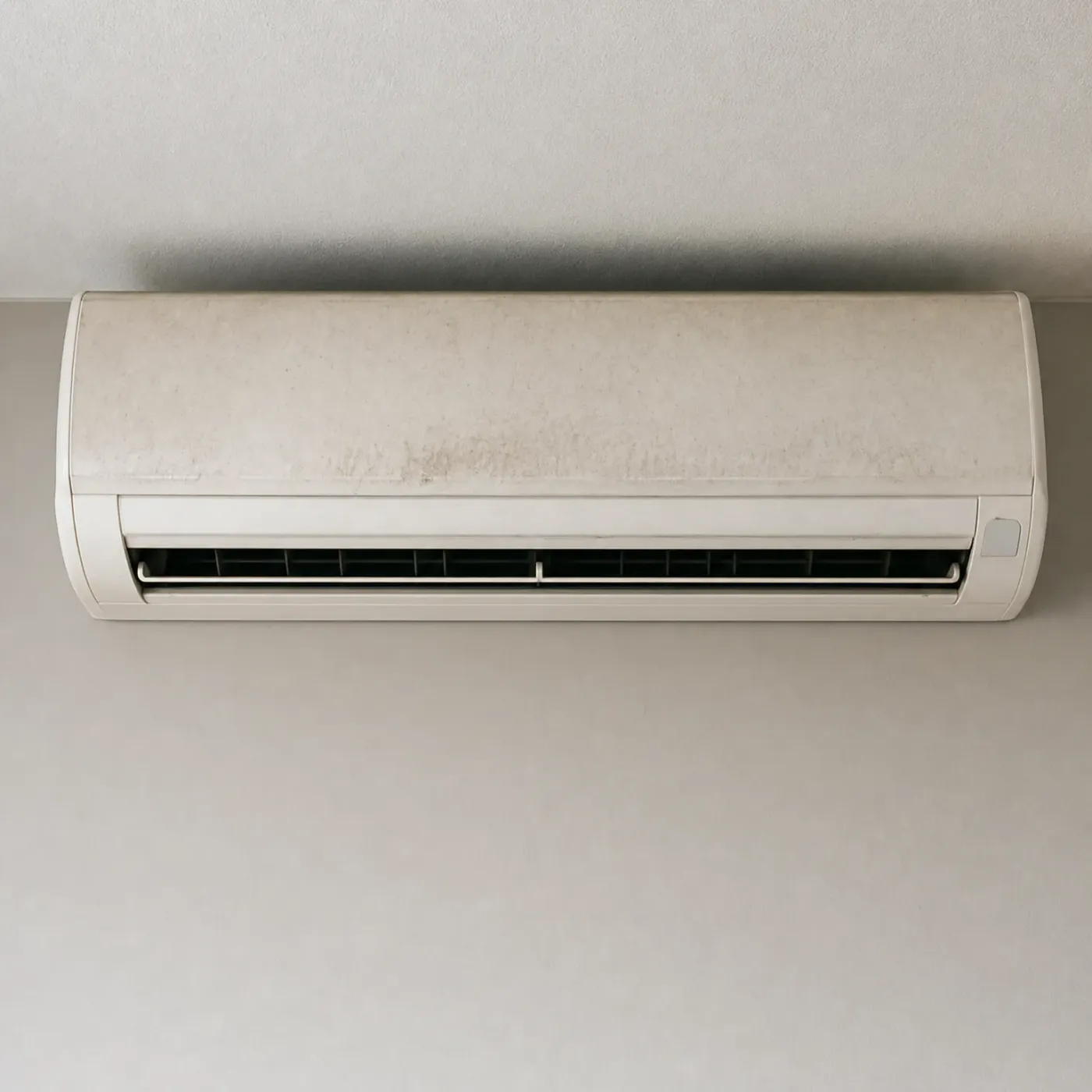
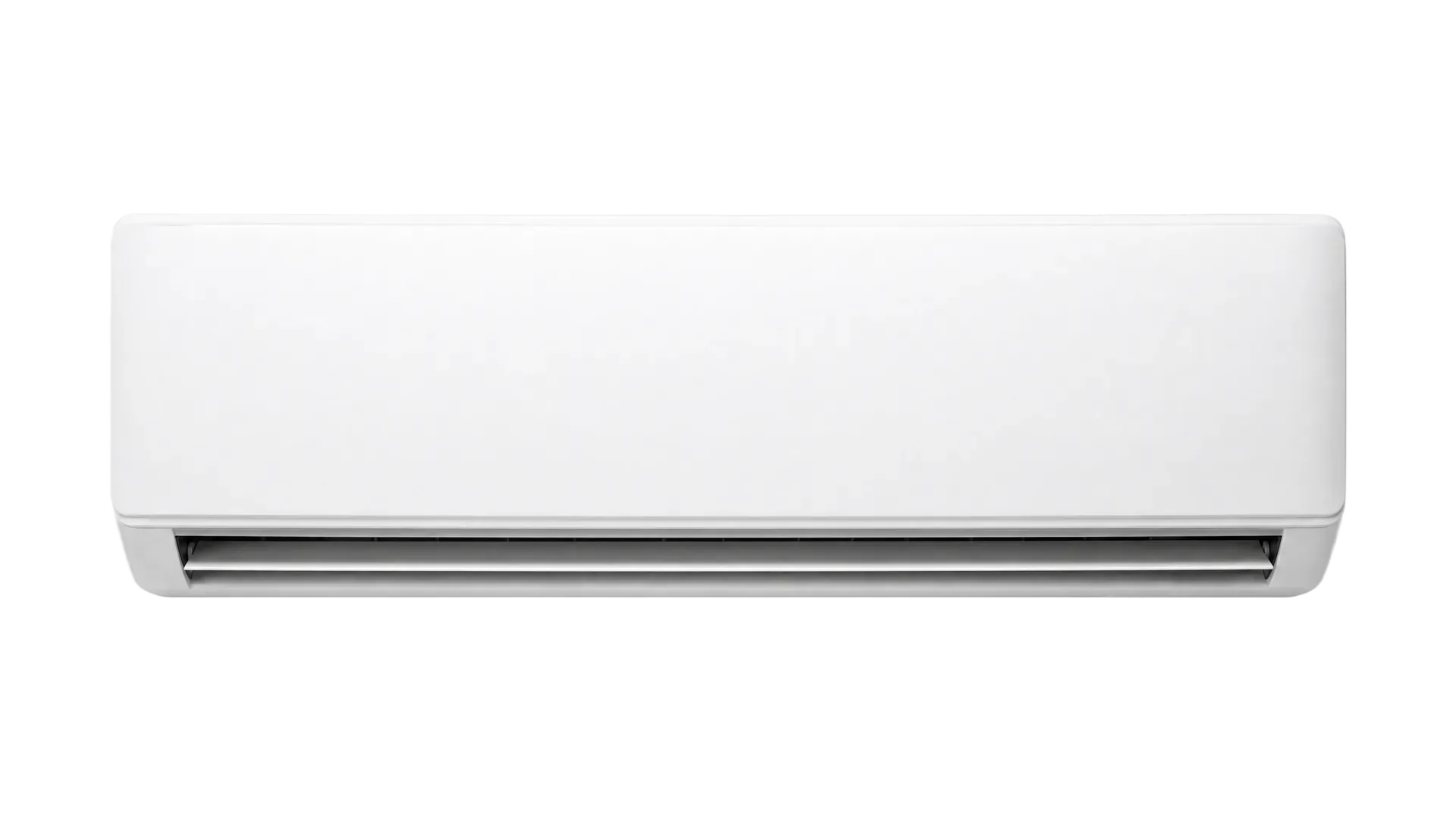
A white wall-mounted mini-split air conditioner indoor unit with a horizontal louvered air outlet, shown against a plain light gray background.
Answer a few questions

A mini split in League City needs its filters cleaned about once a month and a full professional cleaning once or twice a year. The filters catch dust and humidity off the coil, and summers here run long and muggy, so the coil stays wet and the filters load up faster than they would somewhere drier. A dirty filter blocks airflow across the coil, and the system has to run longer to cool the same room, which costs more on a power bill that's already high here. Left too long, dirt on the coil and in the drain line leads to water leaking out of the unit or ice forming on the coil, and either one stops the system from cooling at all. The indoor blower wheel and the outdoor coil both need a real cleaning a professional can do with the unit open. Once a year, before summer, is enough for most homes. Twice a year is better if the unit runs most months.

Cooling runs April through October

Seven months of cooling means your mini split's coil stays wet most of the year, with only a short stretch in winter to dry out and catch up. That short break is why the filters and coil need attention before April comes back around.

NOAA nClimDiv 1991-2020

Cleaning the filters yourself

The filters slide out without tools, and rinsing them under the tap once a month is something you can keep up with between visits. You'll see the dust and film come off, and you'll know right away if the airflow feels stronger once they're back in. What you can't see is the coil behind them, or the drain line that carries condensation out of the unit. Those stay out of reach without opening the housing, so filter cleaning handles half the job and leaves the other half building up until someone looks at it directly.
Having the coil professionally cleaned

A contractor opens the unit and gets to the coil itself, where humidity off a League City summer settles into a film that filters never touch. They'll flush the drain line too, since a clogged one backs up and drips inside the house instead of outside. Someone who services mini splits all season in this area knows which models clog their drains first and which coils mildew fastest in the humidity. That's worth having once or twice a year, timed so it's done before the long cooling stretch starts up again each spring.

A dusty white wall-mounted mini-split air conditioner indoor unit installed high on a beige interior wall below a white ceiling and trim.
Before you get your mini split maintenance
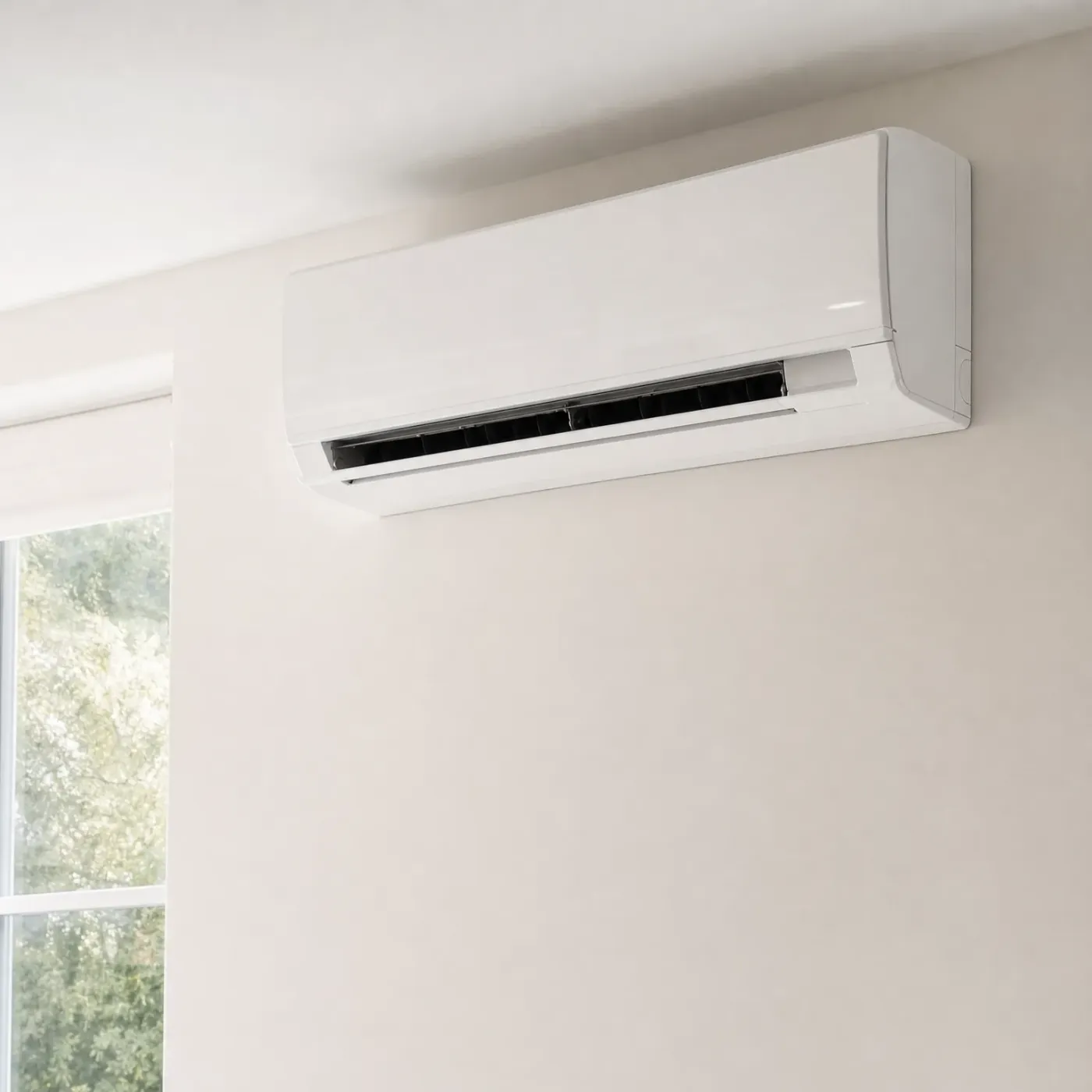
A white wall-mounted mini-split air conditioner installed near the ceiling on a light-colored interior wall, with a window and green foliage visible at the left edge.
After you get your mini split maintenance

Behind the filter, the indoor coil sits at an angle so condensation runs off its fins and into the drain pan below. When dust settles on those fins, the water doesn't drain the way it should, and that's how you end up with a musty smell or a clogged line. The blower wheel sits right behind the coil, and dust collects in the curve of its blades the same way it does in a fan. An unbalanced blower has to work harder to move the same amount of air through your home. A technician handles the coil and the drain line together, since a clogged line is usually what sends water dripping out of the unit indoors. Outside, the second coil sits exposed to pollen and grass clippings all summer, and clearing it off lets the system shed heat the way it's built to. The cleaner used on that coil matters too. Soft water or a foaming cleaner made for coils lifts the grime without bending the fins, which is why this part gets left to someone who does it with the right tools.

Inside the Unit, Step by Step

  • The indoor coil sits behind the filter at an angle, so water condenses on its fins and should drip straight into the drain pan.
  • A film of dust on the coil fins traps that moisture instead of letting it drain, which is how a slow drip turns into a musty smell or a clog.
  • The blower wheel behind the coil collects dust in its own curved blades, and that buildup throws it out of balance and makes it work harder to push the same air.
  • A technician flushes the drain line with the coil cleaning, since a clogged line is what causes water to back up and drip from the unit indoors.
  • The outdoor unit has its own coil exposed to pollen and cut grass, and a cleaning there lets the system shed heat the way it was designed to.
  • Soft water or a foaming coil cleaner lifts grime off the fins without bending them, which is why this part of the job is left to someone with the right tools.
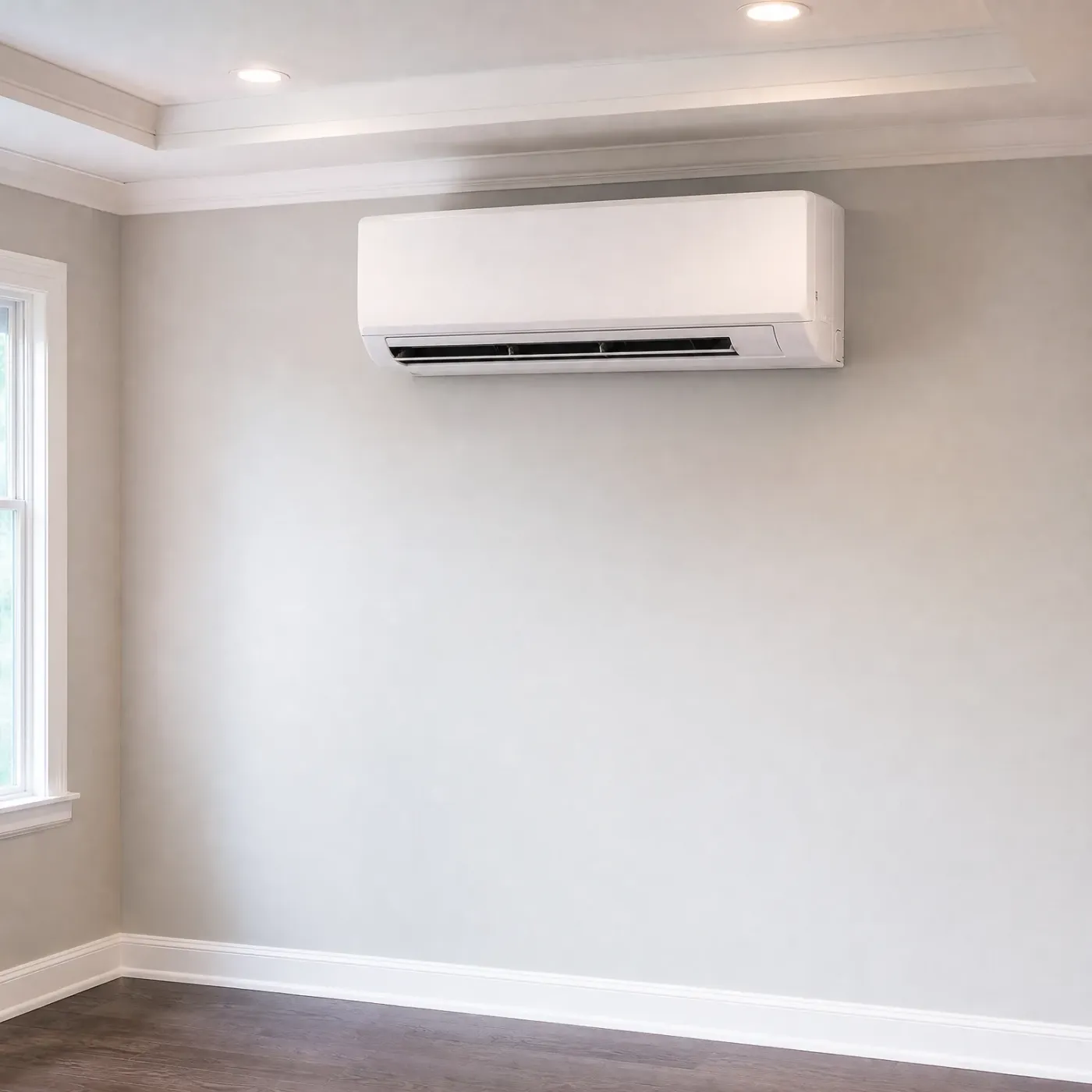
A white wall-mounted mini-split air conditioner on a light gray wall in an empty room with dark wood flooring, white baseboards, a tray ceiling with recessed lights, and a window at the left.
A clean mini split like this one pulls humidity out of the air without the musty smell showing up by August.
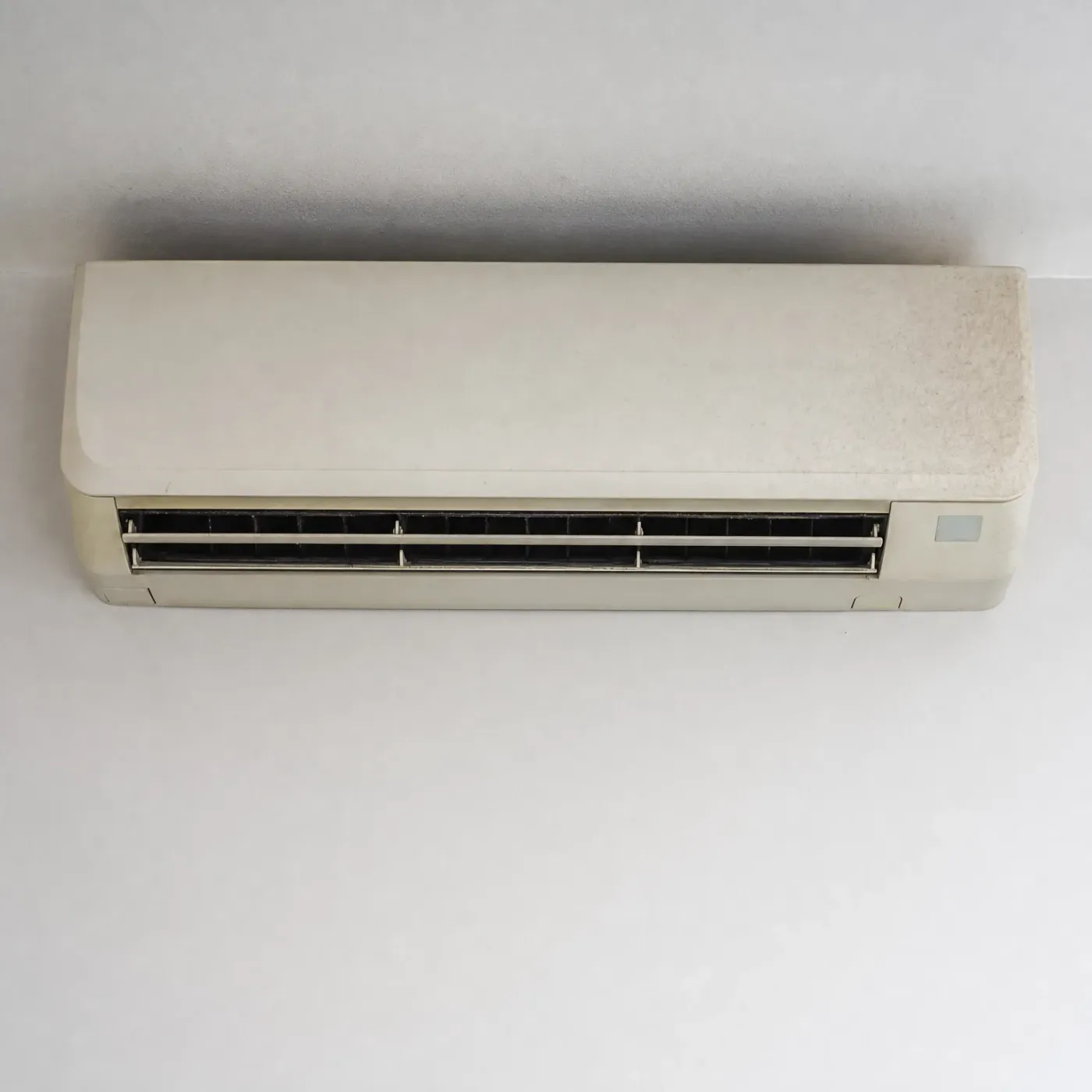
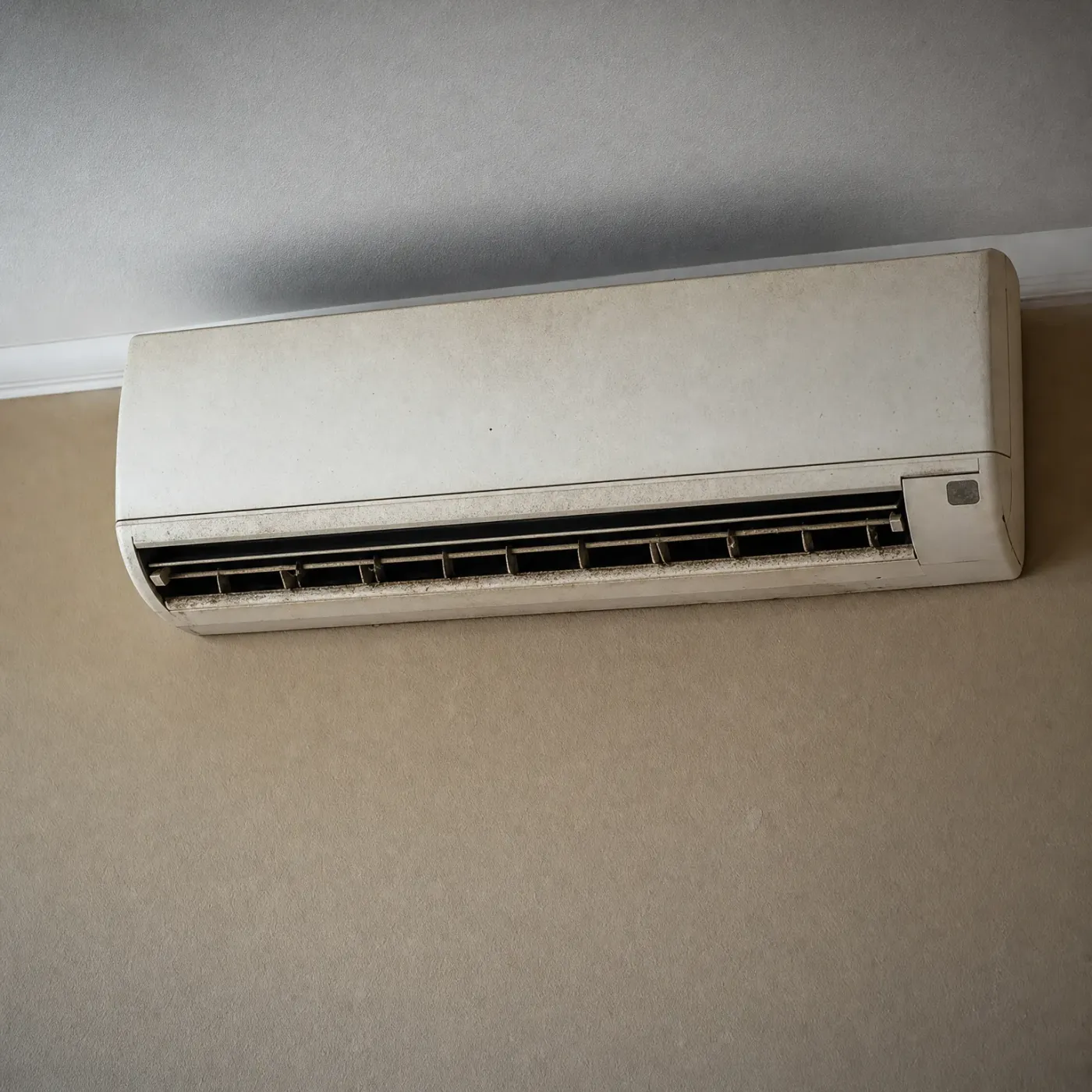
A wall-mounted mini-split air conditioner indoor unit with a yellowed plastic casing and dark horizontal vent louvers, installed on a plain light-gray wall.
Dust on the vents and dark residue like this mean the coil is already behind on drainage and the air will show it.
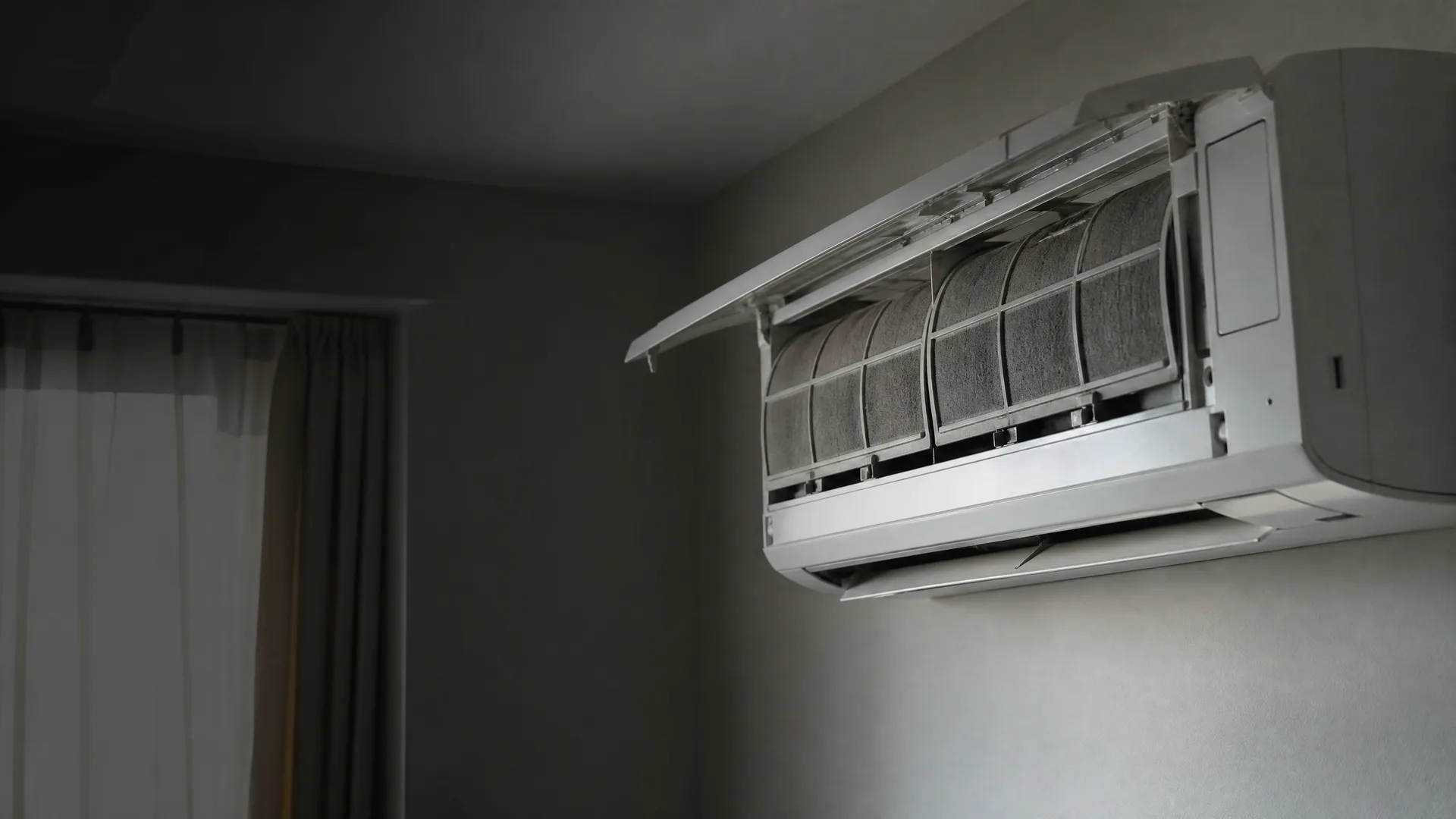
A wall-mounted split air conditioner with its front panel open, exposing dust-covered filters, in a dimly lit room with a curtained window at left.

It's a Saturday morning in late spring, and you finally get around to the bedroom unit that's been running quiet since March. You pop the front cover up and slide out the filter screen, and it's grayer than you expected, a soft felt of dust packed into the mesh. Light from the window catches it. You run a finger across it and it leaves a clean line. The room still feels fine, the air still comes out cool, but you can see what's been building behind that cover while you weren't looking. You carry it to the sink, already thinking about how long it's actually been since the last time.

Why does the bedroom unit smell musty when it kicks on?

You turn the unit on and the first minute of air carries a damp, sour smell before it clears. You might notice the airflow feels weaker than it used to, or that one side of the room cools slower than the other. Sometimes there's a faint drip or tick sound from inside the wall unit as it cycles. These are signs the filter and coil are behind on cleaning, holding onto moisture instead of draining it. Left alone through another summer, that trapped moisture is what grows mold inside the unit, and it's also what makes the system run longer to cool the same room, since dirty coils and clogged filters lower how much heat the unit can move.

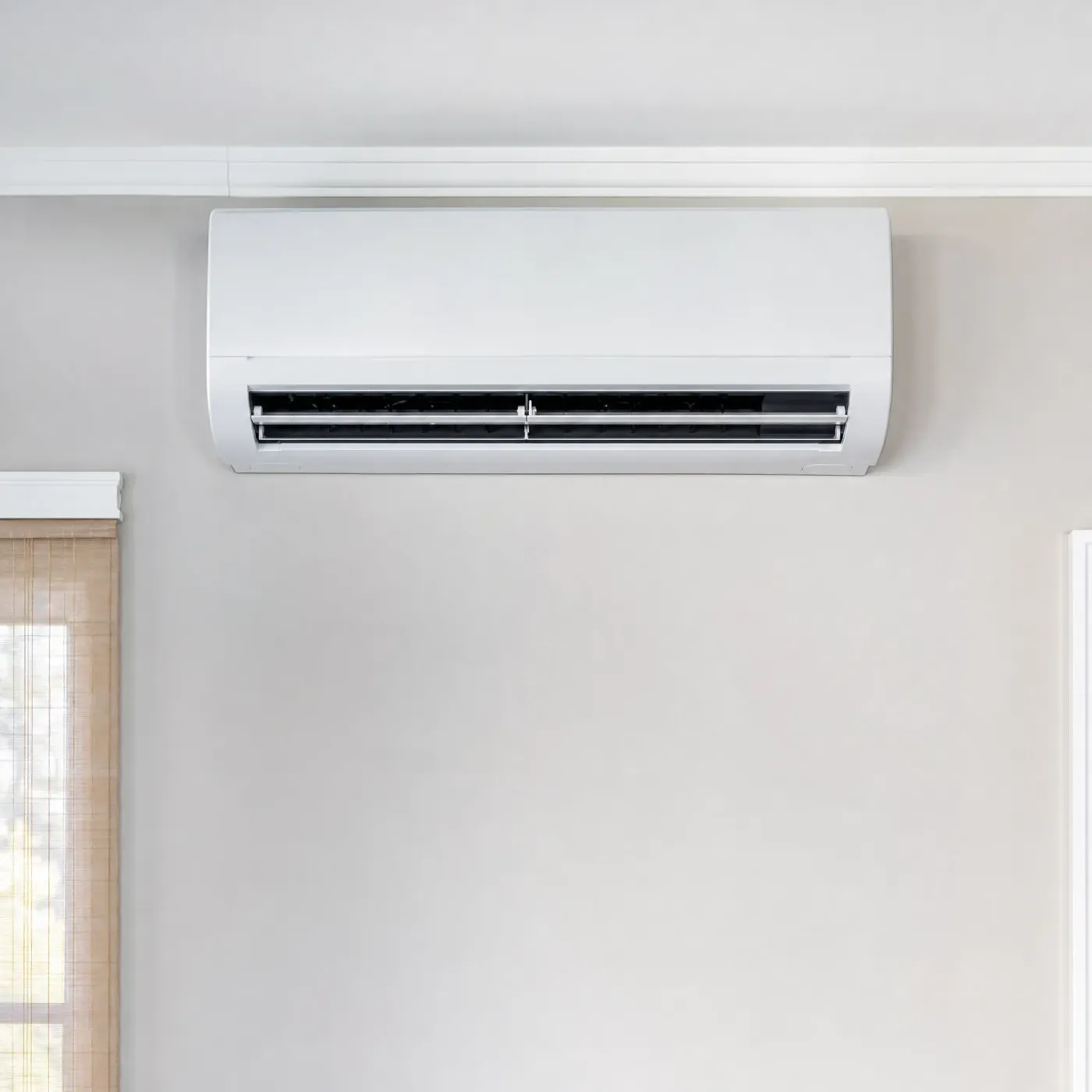
A white wall-mounted mini-split air conditioner unit installed high on a light gray interior wall below crown molding, with a bamboo-shaded window at the lower left.

Running clean

This is what a mini split looks like when the filter is doing its job. Air moves through the vane without resistance, the coil behind it stays dry between cycles, and the casing stays the white it was the day it went in.

A wall-mounted mini-split air conditioner indoor unit with a dusty, discolored cover, installed near the ceiling on a plain light-colored wall.

Running behind

Dust has built up on the casing and around the louvers, which means it's built up on the filter and coil too. The unit is still blowing air, but it's working past a layer that shouldn't be there, and the musty smell usually isn't far behind.

A smiling woman with dark shoulder-length hair in a cream V-neck sweater sits at a marble counter with a glass of red wine, with a kitchen and softly lit living room behind her.
A woman in a dark green sweater laughs while seated at a marble kitchen island with a glass of red wine, with open shelving, cabinets and a living room visible behind her.
A woman with long dark hair in a cream knit sweater laughs while looking off to the side, seated at a counter with a glass of red wine, in a dimly lit living room with a sofa, lamp, framed pictures and houseplant behind her.
A smiling woman with long dark hair in a beige sweater sits at a marble kitchen counter with a glass of red wine, with a dimly lit living room behind her.

Explain it one time

A licensed local pro takes the request for your mini split tune-up.

Sending the form costs nothing.

What a blocked drain line does

The indoor unit's drain line carries condensate out through the wall to the outside, usually right along with the refrigerant lines. Dust that passes the filter settles in that line the same way it settles on the coil, and the line is narrow enough that it doesn't take much to slow the flow. Once it backs up, the pan under the coil fills faster than it can drain, and water finds the nearest low point, which is often the wall below the indoor unit. A cleaning clears the line along with the coil and filter, which is why a professional visit covers more ground than wiping down what you can reach yourself.

What the outdoor unit collects

The outdoor unit sits through the same seven wet months, pulling air across its coil to release the heat your indoor unit carries outside. That coil is exposed to whatever blows through the yard: grass clippings, pollen, cottonwood seed, the fine grit that comes off a driveway. None of it is stopped by a filter, because the outdoor unit doesn't have one. It builds up on the fins slowly enough that you won't see a sudden change, only a system that runs a little longer each month to do the same job. A professional cleaning reaches that coil from both sides, which a hose from the yard doesn't.

A smiling middle-aged man in a dark green sweater sits at a candlelit table with wine glasses and a plate of greens in a dimly lit interior.
A woman in a dark knit turtleneck sweater reclines on a couch under a cream knit blanket, looking down at an open book, with a lit table lamp and framed pictures behind her.

What a Full Cleaning Covers

  • The blower wheel behind the filter has curved blades that sling dust into a sticky ring if it isn't cleaned with the coil.
  • A tech checks refrigerant pressure at the service valve, since a dirty coil can look like a low charge if nobody checks both.
  • The outdoor condenser fins need a rinse too, since grass clippings and pollen block airflow the same way dust blocks the indoor coil.
  • Professional cleaning uses a coil cleaner rated for aluminum fins, not the all purpose sprays that leave residue behind.
  • A tech flushes the drain line with the coil cleaning, since the two foul on the same schedule and one visit covers both.
  • The wall mounted unit's housing comes apart for the cleaning, which is why this part isn't a job to do between visits.

Pulling the filter and wiping the coil face is only part of what a professional cleaning does. Behind the filter sits the blower wheel, a cylinder of curved blades that pushes air through the unit. Dust clings to those curves the same way it clings to the coil, and once it builds up, the wheel throws air unevenly and the room cools slower on one side. A tech takes the housing apart to reach it, since the wheel isn't visible or reachable with the cover closed. While the unit is open, a tech checks refrigerant pressure at the service valve. A coil caked with dust restricts airflow enough that the system reads like it's low on charge when the coil is really just dirty, and checking both is the only way to tell which one it is. Outside, the condenser fins get the same treatment, since grass clippings, pollen and cottonwood fluff sit in those fins and block airflow out just like dust blocks airflow in. The coil cleaner used on the fins is rated for aluminum, not the general purpose stuff from a hardware store, which can leave a film that attracts more dust than it removes. The drain line gets flushed in the same visit, since whatever fouls the coil fouls the line on the same stretch of weather. None of this is something to attempt between visits. The housing has to come apart, and that's a job for someone who's done it before.

How long does a mini split actually work for its living in League City

  • Cooling runs April through October

    Seven months of cooling means the filter and coil are under load most of the year, with only a short winter window to get ahead of it.

  • Heat runs December through February

    Three months of heat is brief, but the unit still pulls dust through the same filter, so skipping a cleaning before winter carries grime into spring.

  • Power here costs 17.91 cents per kilowatt-hour

    At 17.91 cents per kilowatt-hour, a coil losing its grip on humidity makes the unit run longer to do the same job, and you pay for every extra minute.

NOAA nClimDiv 1991-2020 · EIA-861 2025

  1. The filter screens come out and get rinsed clean of dust.

  2. The coil gets sprayed down to clear dust off the fins.

  3. The drain line gets flushed so condensate runs free again.

  4. The blower wheel gets wiped down to remove the sticky ring.

A closed laptop and a ceramic mug of dark coffee sit on a wooden table, with a blurred kitchen counter, potted plant, wooden utensils and cutting boards, and a large window in the background.

Once a month on the filters, once or twice a year for the rest

That's the answer. Rinse the filters monthly, and get the coil, drain line and blower wheel cleaned by someone who works on these units once or twice a year. Skip either side of that and the coil stays wet longer than it should, the drain line slows down, and you get the musty smell back before summer's even over.

Finding someone to do that part doesn't have to mean searching around, calling a few companies, and explaining the same thing to each one before you can even compare what they'd charge. One licensed contractor local to League City picks up the request, already knows what a mini split in this area usually needs by the time it's due, and handles the cleaning without you fielding calls from three different outfits. You keep up the filters. Someone who does this every season handles the rest.

A large weathered ceramic vase and a shallow wooden bowl sit on a rustic wooden table beside a window with linen curtains, with a blurred sofa with cushions and a hanging fabric panel in the background.
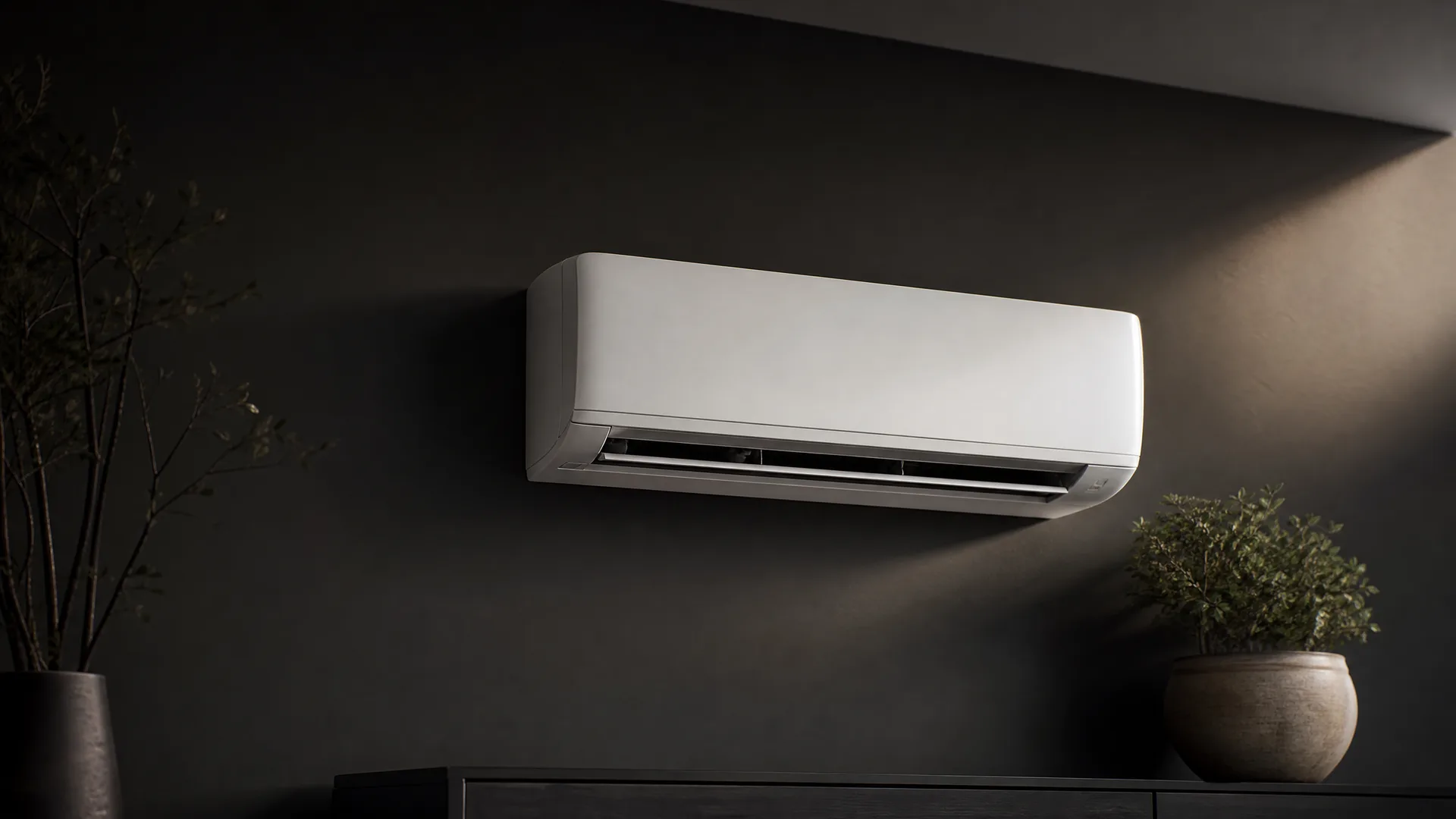
A white wall-mounted mini-split air conditioner on a dark gray interior wall, with potted plants on either side and a dark cabinet below.

Skip the calls to every shop

Step 1 of 3: Equipment