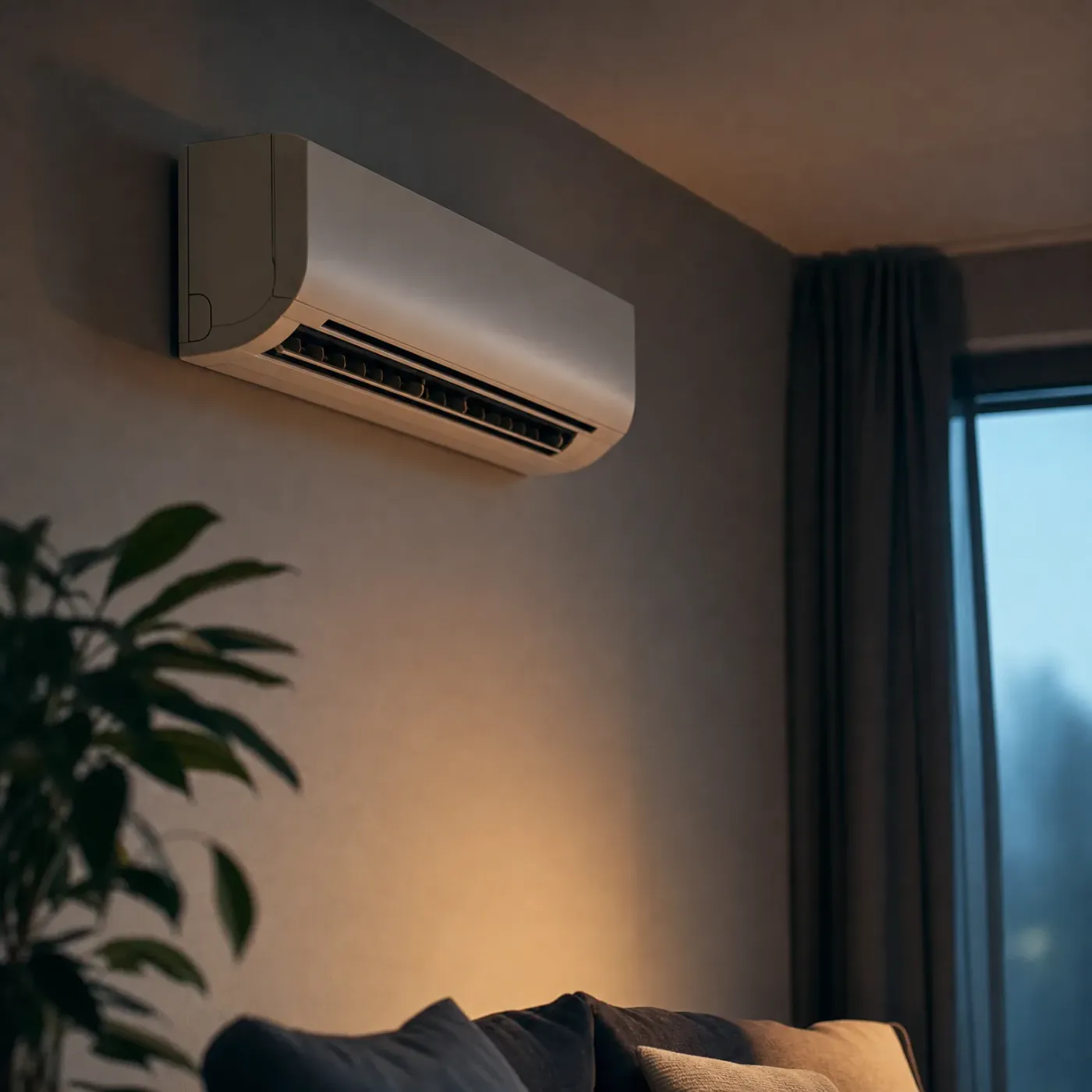
A white wall-mounted mini-split indoor unit near the ceiling of a dimly lit room, with a curtained window at right, a leafy potted plant at lower left, and a cushioned sofa at the bottom.

Finding a pro stops being your job

Can a mini split cool a whole house in Austin, TX

A single mini split can cool one room well, but a whole house in Austin is a different question. It depends on how many zones you have, how big the house is, and whether the layout lets air move where it needs to. Below, what to check before you count on one system to carry the whole place. If it won't, a local installer who works on these systems all summer can tell you what will, and sending the form means that search is off your plate.

Let a pro reach out

A single mini split, one indoor head tied to one outdoor unit, can cool a whole house only if it's sized and placed for that job, and most of the time it isn't. One head cools the room it's in and whatever space is open next to it. Close a door down the hall and that room goes without. Austin summers run long and humid, often into October, so a house that's only partly cooled shows it: the back bedrooms stay warm while the living room is fine. A multi-zone system, several indoor heads on one outdoor condenser, can reach the whole house, but that takes the right number of zones for the rooms you have and ductless or ducted heads placed where the air can actually get around. If your mini split is a single zone meant for one room, it was never sized to carry the house. Whether yours can depends on what's already installed and how the rooms connect.

A two-story house with cream horizontal siding, a dark gabled roof, and a white front door, fronted by a lawn, shrubs, and a concrete walkway leading to a sidewalk and street, with large leafy trees on both sides.

That dew point number on the card, 68°F, is the summer average for Travis County. Anything above 65 is what people mean when they say the air feels heavy, and 68 sits well past that line. A mini split takes on two jobs at once in weather like this: cooling the air and pulling the moisture out of it. One head doing both for a whole house, all summer, in air this wet, will fall behind in the rooms farthest from it. You'll notice it as a bedroom down the hall that never quite feels dry, even when the thermostat says it's cool.

NASA POWER T2MDEW

Is one room cold while the rest of the house isn't

You've probably noticed it already. The room with the indoor head feels fine, maybe even cold enough to need a blanket, while the bedrooms down the hall or the far side of the house stay warm and sticky. Doors you keep shut to hold in the cool air are a sign the single head can't push conditioned air past its own room. Upstairs often runs warmer than downstairs for the same reason. If the house relies on just one or two heads for the whole footprint, the outdoor unit may run long hours trying to catch up, and the rooms it can't reach stay muggy no matter how long it runs. That's wear on the system for comfort it isn't delivering to the rest of the house.

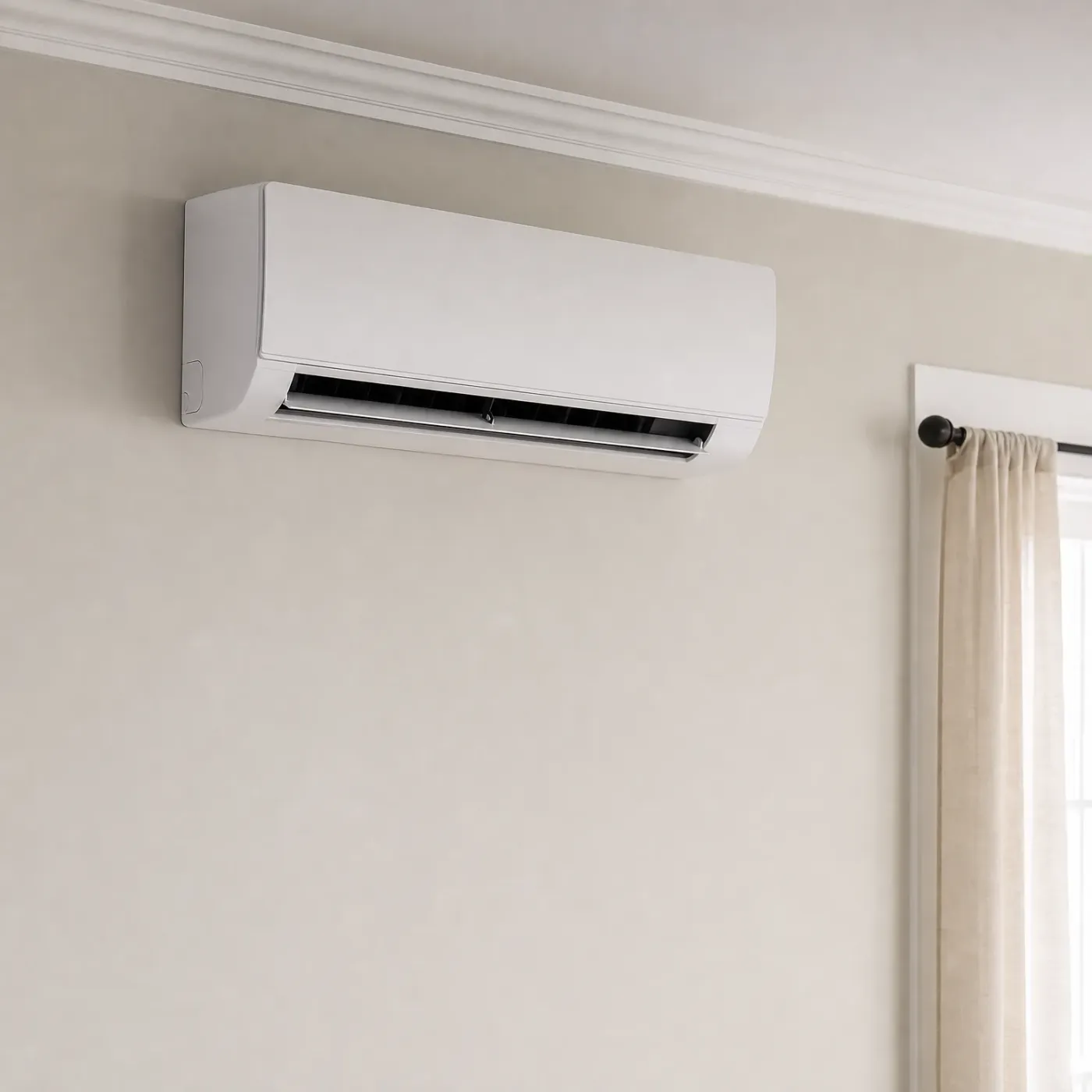
A white wall-mounted mini-split air conditioner installed high on a beige interior wall below crown molding, with a window and light curtain on a black rod at right.

One zone, covered

This is what a mini split looks like when it matches the space. The room stays even all day, no cold corner by the head and no warm spot by the window. That's one zone doing the one job it was sized for, with a clear path for air to move around the room.

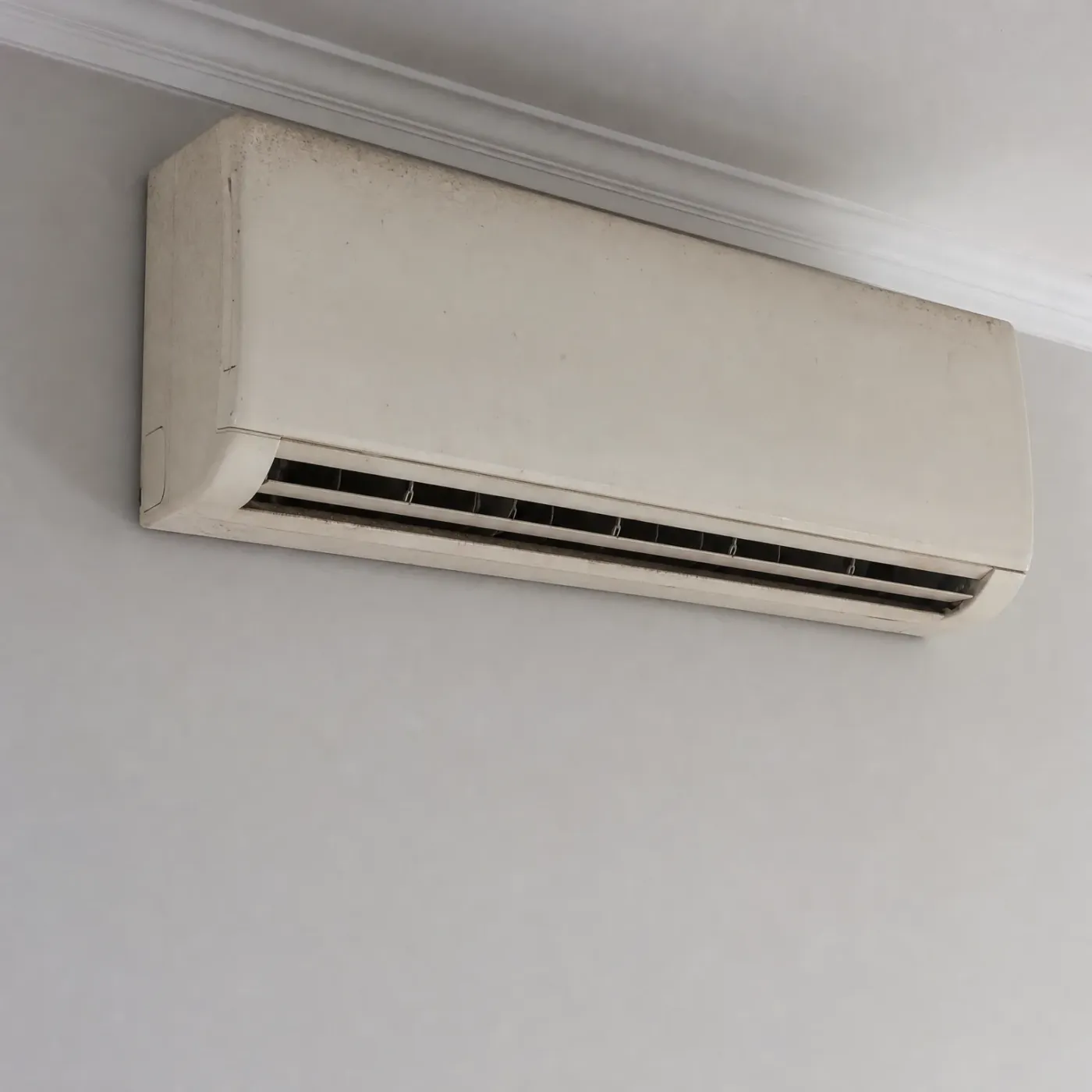
A wall-mounted mini-split air conditioner indoor unit with a dusty off-white casing and dark lower vent, installed high on a plain light-colored wall below a ceiling molding.

One zone, stretched thin

This is what happens when a single head gets asked to cover rooms it was never sized for. It runs long hours trying to push air past doorways and down hallways, and dust builds up on the casing faster because the unit rarely gets a break. The far rooms still don't cool.

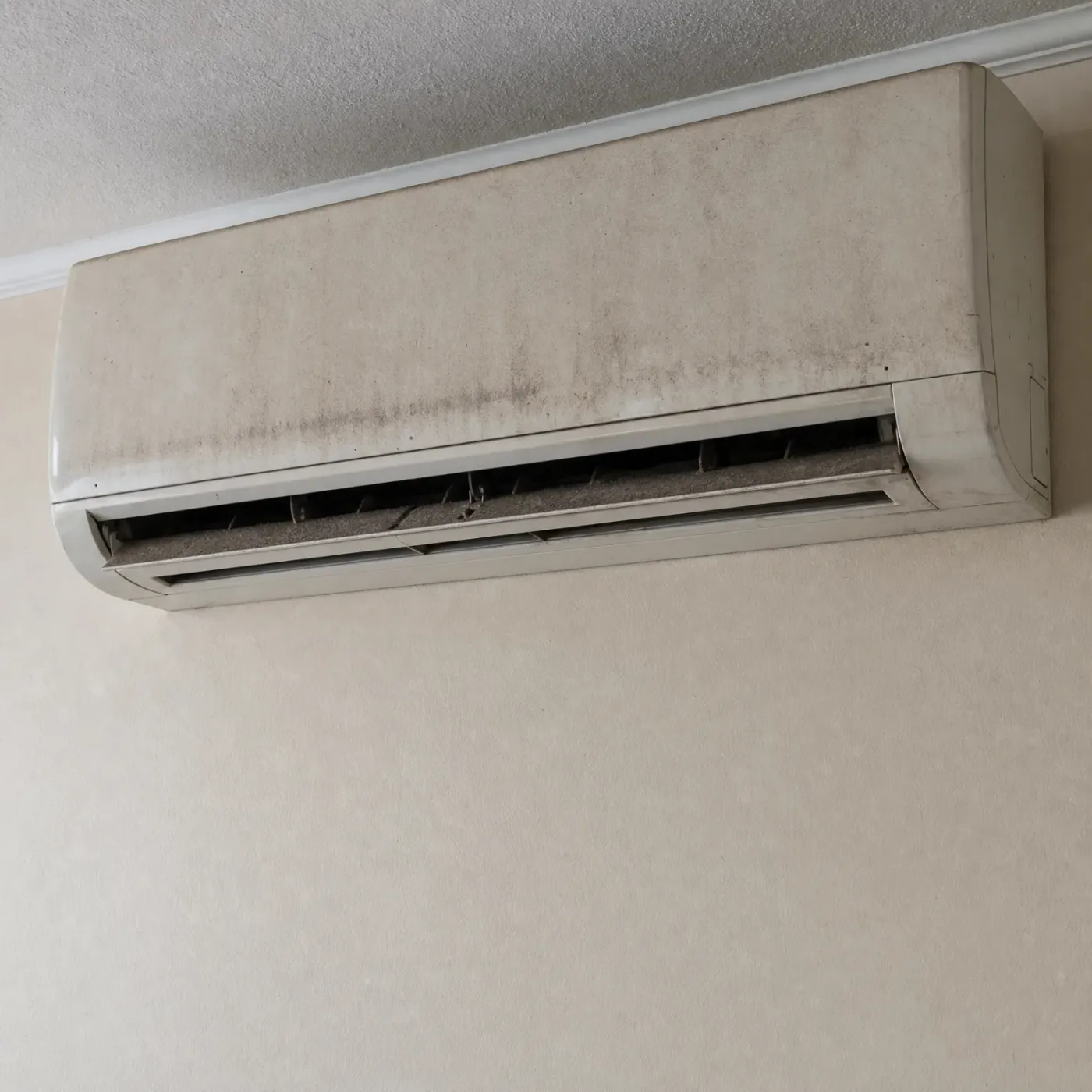
A dusty, stained wall-mounted mini-split air conditioner indoor unit near the ceiling on a plain beige wall, with visible lint buildup at its intake grille.
Before you get your mini split installation
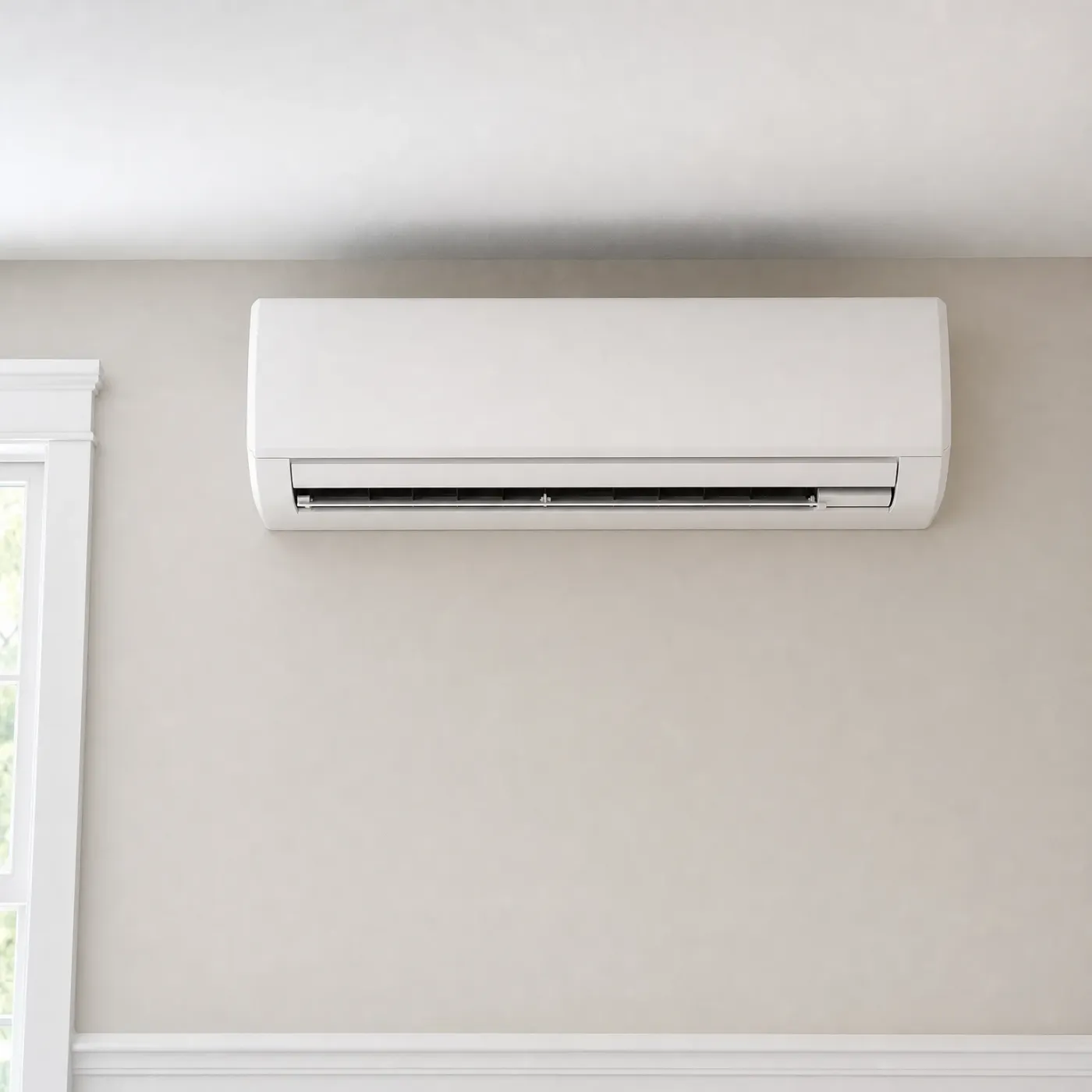
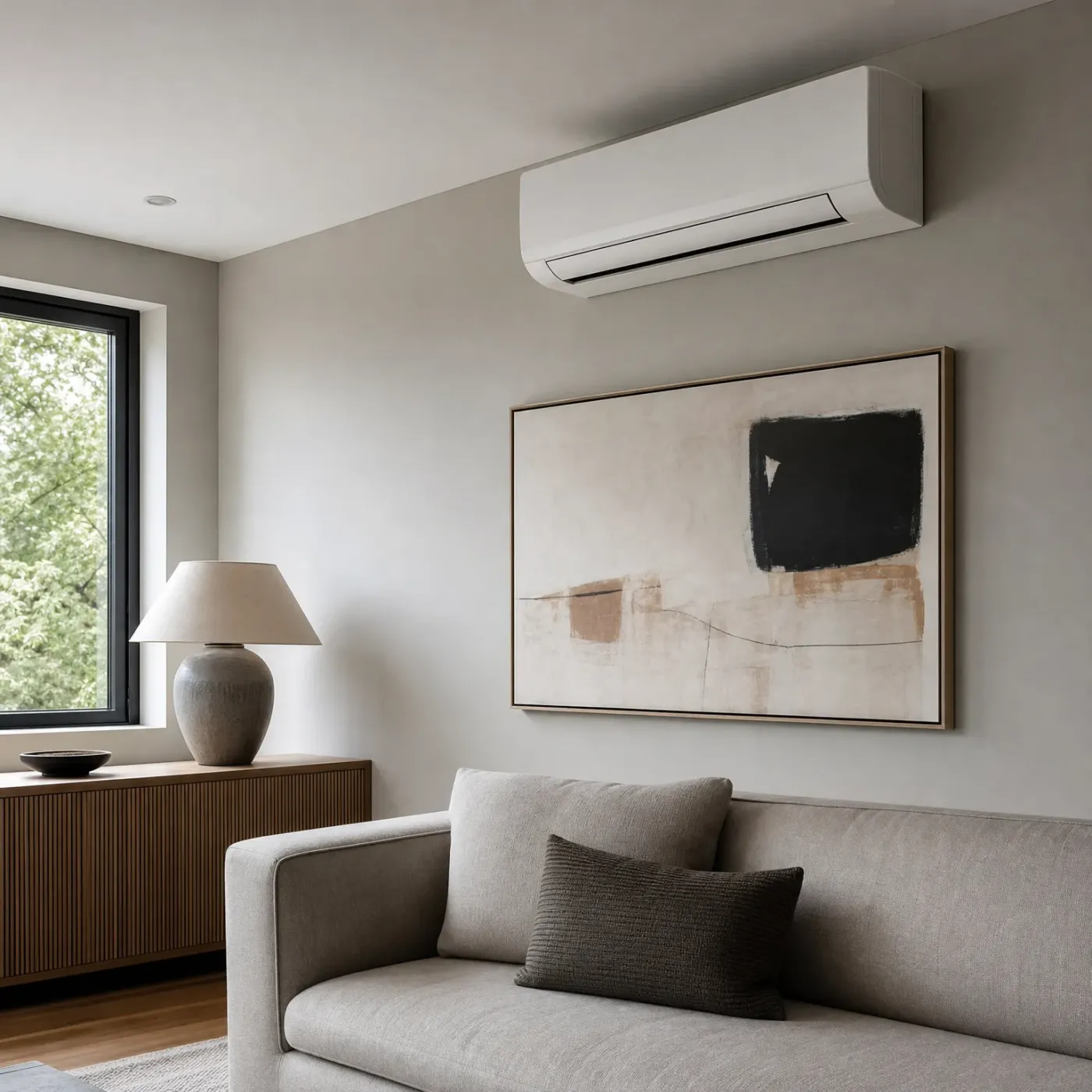
A white wall-mounted mini-split air conditioner installed high on a beige interior wall near the ceiling, with a white-framed window at the left edge.
After you get your mini split installation
Living room with a wall-mounted mini-split air conditioner near the ceiling, a large framed abstract painting, a gray sofa with a dark cushion, a ceramic table lamp on a wood sideboard, and a window showing green trees.

Let someone else find the pro

A licensed installer who works in Travis County gets your project.

Send the form and stop researching installers for the new mini split.

Find a licensed pro

It costs nothing to send, and you don't have to hire anyone.

How many months does a mini split need to carry the house

  • Cooling runs April through October

    Seven months of cooling is a long stretch for one or two heads to cover every room without a break.

  • Heat runs November through March

    Five months of heat still means every zone you're not cooling needs its own coverage from November on.

  • Power here costs 13.43 cents per kilowatt-hour

    At 13.43 cents per kilowatt-hour, running extra heads or a window unit to cover gaps adds up over a full year.

NOAA nClimDiv 1991-2020 · EIA-861 2025

One zone added to a central system

Some homes here run central air for the whole house and add a mini split to one room that never gets cold, a garage conversion or a room over the porch. The central system keeps doing its job everywhere else. The mini split only has to handle the one space the ductwork never reached well. Sizing is simple because the room's square footage and the gap between how it feels and how the rest of the house feels are known. This is the common setup around Austin, and it works because each system is carrying a load it was actually chosen for.

Mini splits standing in for central air

Other homes have no ductwork at all, or the ducts are gone, and every room depends on indoor heads instead. This takes real planning. Someone has to walk the house, room by room, and size a head for each one, then place the outdoor units where they can support all of it. Skip a bedroom or undersize a zone and that room runs warm all summer while the rest of the house is comfortable. Done right, it covers the whole house as well as central air does. Done without that planning, it doesn't.

A woman with long light-brown hair in a gray knit sweater sits in a living room looking off to the side, with a sectional sofa, houseplant, lamp, wooden table and large windows behind her.
A woman in a chunky gray turtleneck sweater sits indoors looking off to the side, with a blurred dining table, chairs, pendant lamp and window behind her.
A woman in a cream knit sweater with her hair in a bun stands near a window, looking off to the side, with a gray sofa, houseplant and open kitchen with pendant lights blurred behind her.
A woman with long brown hair in a cream knit sweater stands near a window, looking to the side, with a white sofa, shelving, and a hallway visible behind her.
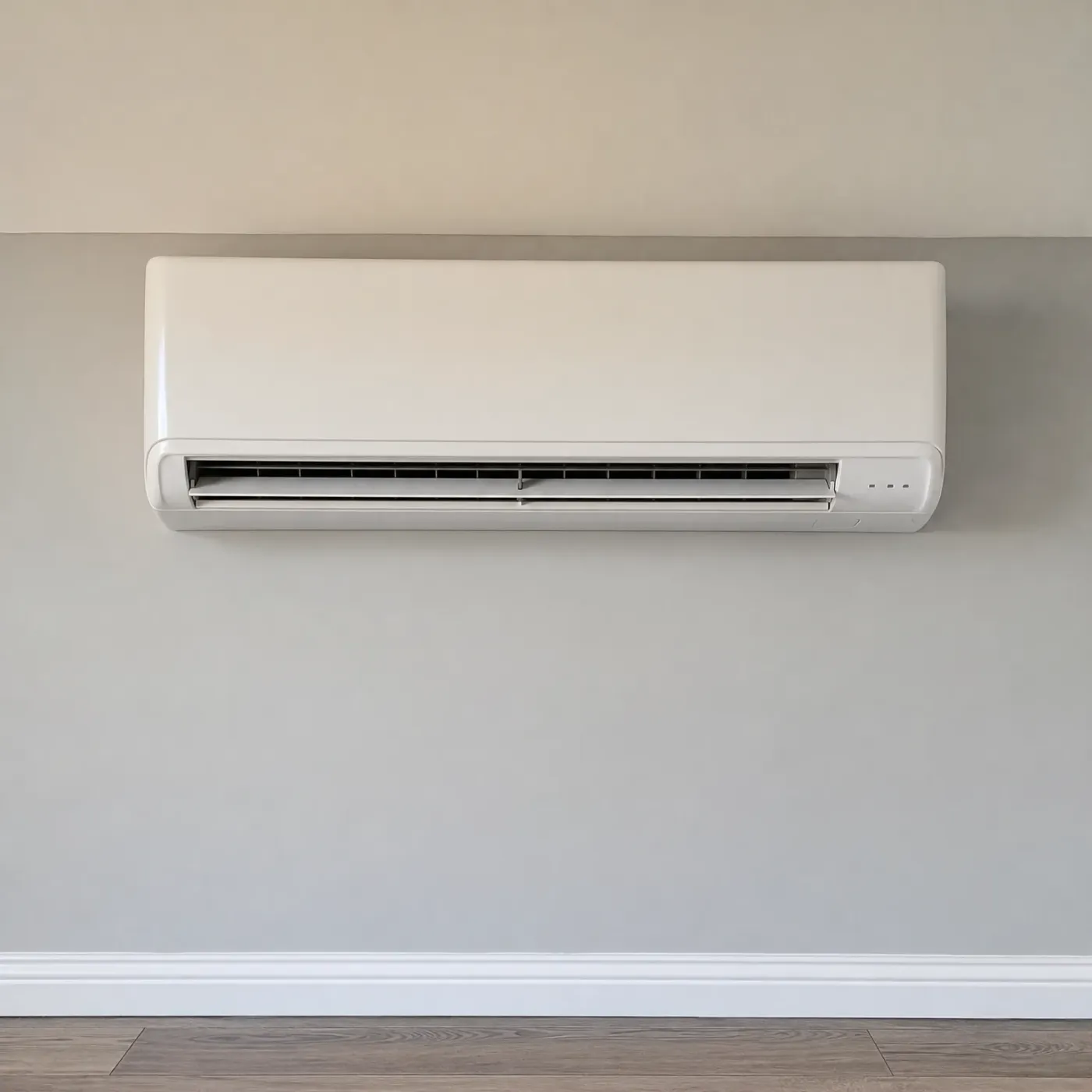
A white wall-mounted mini-split air conditioner indoor unit on a light gray wall above a white baseboard and wood-look floor.

The head is doing its job

This is what a properly sized zone looks like. The vane is clean, air moves freely across the room, and the unit isn't straining to keep up. It's covering the space it was placed for, nothing more.

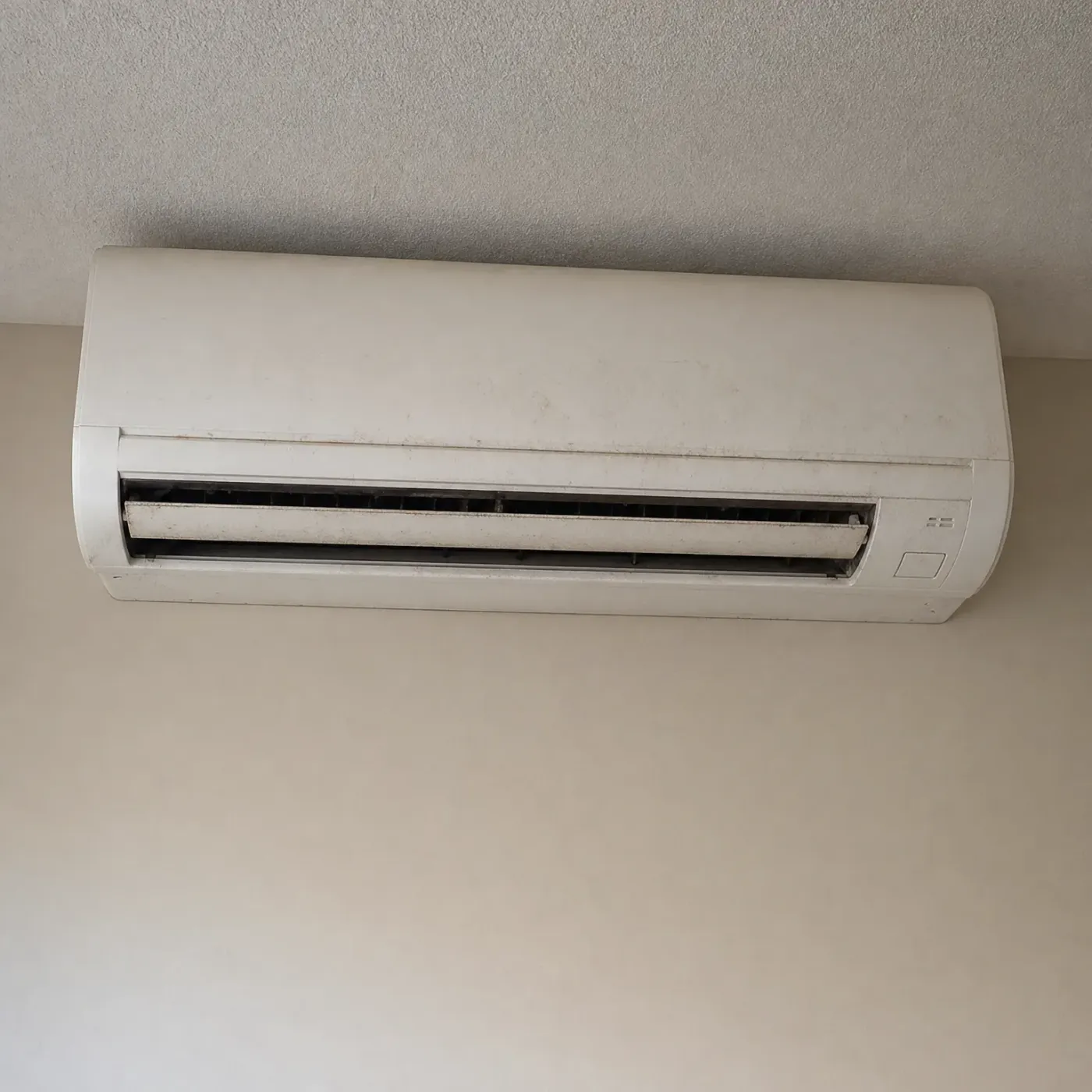
A white wall-mounted mini-split air conditioner indoor unit installed near a textured ceiling on a plain beige wall, with visible dust and discoloration on its casing and vent.

The head is falling behind

Dust like this builds up when a unit runs long and hard without a break. A mini split pushed to cover rooms beyond its reach works harder than it should, and the grime on the housing is one of the first signs.

A woman with dark hair in a bun sits wrapped in a chunky knit blanket on a couch with a child resting his head on her shoulder, eyes closed, beside a lit lamp and bookshelf indoors.
An older woman with short gray hair in a cream cable-knit turtleneck sweater smiles while looking to the side in a wooden kitchen, with a round loaf of bread on a board in the foreground and a lit candle by a dark window.

Where your house stands now

  • A mini split cools the whole house only when every room has its own head sized for that room.
  • One head covering a single room will never reach the far bedrooms no matter how long it runs.
  • Austin summers run long, so any gap in coverage shows up for months, not days.
  • A system matched to your house needs someone who's looked at the layout, not just the square footage.
  • A local installer who works on these systems all summer knows which rooms get skipped and why.
  • Sending one request gets you one licensed contractor from this area, not a pile of calls to sort through.

A mini split can cool a whole house. It just needs a head in every room that matters, sized and placed for that room, with nothing blocking the air. Short of that, you've got strong cooling in one part of the house and warm, sticky rooms everywhere else, and in Austin that gap doesn't close on its own. Summer runs long here. A room that's uncomfortable in June is still uncomfortable in September.

Figuring out what your house actually needs, how many zones, where they go, whether your current setup is close or missing the mark, isn't something to guess at from a square footage number. It takes someone who can look at the layout, see where the air stops moving, and tell you what's missing. That's a different job from someone who installs one unit and leaves.

A contractor working on mini splits around Travis County all summer has seen which rooms get skipped and why: the bedroom at the end of the hall, the addition over the garage, the room with the door that's always closed. That's the kind of read your house needs before anyone adds equipment or moves a head.

Send one request and you're connected with one licensed contractor local to the area, not a handful of companies competing for the callback. Someone who already knows this climate and this kind of system looks at what you've got and tells you straight whether it can cover the whole house or where it falls short.

A white wall-mounted mini-split air conditioner high on a dim gray interior wall, with a potted thin-leaved plant, dark curtains and a window at left and a dark sofa at bottom.

One request and it's handed off

One installer gets your project, so there's no bidding war over it.

Step 1 of 3: Equipment